

On a cold, grey day atop Mount Kaputar, a group of adults found themselves peering into the undergrowth with the excitement of children on a treasure hunt.
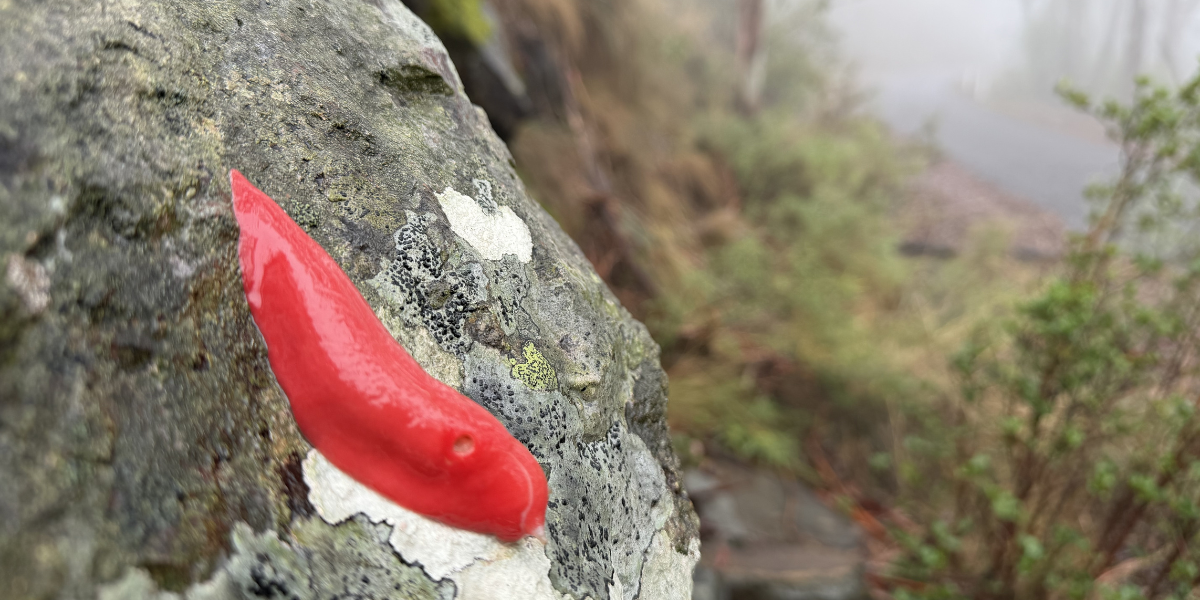
The object of their search wasn’t rare gold or a hidden landmark, but a bright pink slug found nowhere else on Earth.
When Narrabri Shire Mayor Darrell Tiemens suspected recent rain might coax the famous Kaputar pink slug from hiding, he convinced Moree Plains Shire Mayor Cr Susannah Pearse to swap a coffee catch-up for a trip up the mountain.
“I thought, I wonder whether we’re possibly going to have slugs,” Cr Tiemens said.
“It was a dreary old day and I said, instead of meeting me at the mayor’s office, do you want to drive up to the top of Kaputar, and I’ll show you exactly where the spot is where I’ve seen them in the past?”
The group made the journey up the mountain, winding through one of the most remarkable landscapes in inland Australia.
Their gamble paid off.
“We saw them,” Cr Tiemens said.
“Literally, we were like kids at Christmas. Oscar [Cr Pearse’s husband] was over the moon. I was over the moon. We all just had such a great time.”
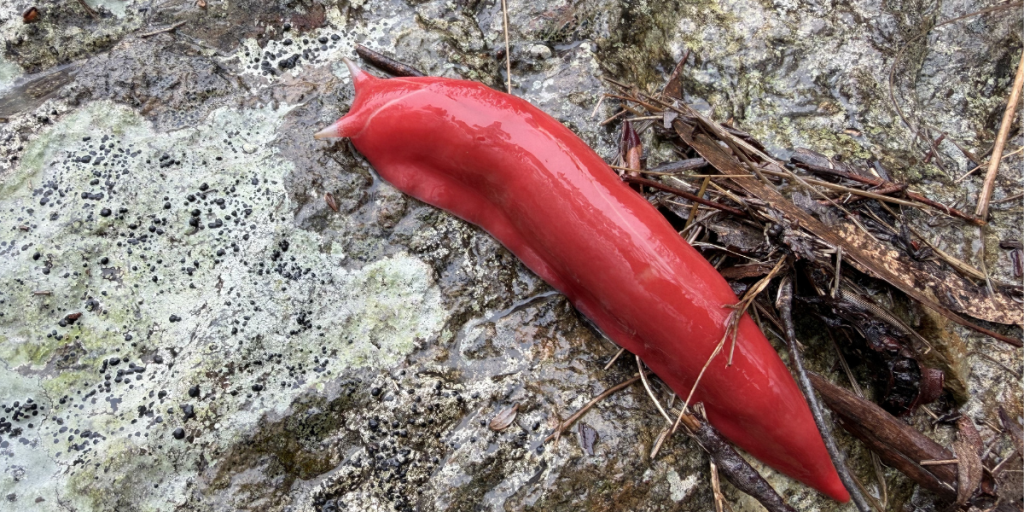
The creatures responsible for that excitement were the famous Kaputar pink slugs – giant, fluorescent-pink molluscs that can grow to more than 10 centimetres in length and live only on Mount Kaputar.
For many visitors, they are a curiosity.
For scientists, they are something much more significant.
The slugs are part of an isolated ecosystem that has evolved on the mountain over millennia. Rising more than 1,500 metres above the surrounding plains, Mount Kaputar creates a cool, moist refuge unlike anywhere else in western New South Wales, supporting plants and animals found nowhere else on the planet.
“It’s an amazing ecosystem,” Cr Tiemens said.
“Mount Kaputar has a number of very unusual creatures up there.”
“There’s a species of hairy caterpillar that exists only up there and there’s also a native dung beetle that only exists there as well.”
The mountain’s ecological importance came into sharp focus following the devastating 2019 bushfires, when concerns were raised that several of its unique species may not have survived.
“There was a lot of nervousness that the slugs had been wiped out because the fires burned around exactly where those slugs are,” Cr Tiemens said.
The recent sighting is a reassuring sign that the species continues to endure in its tiny mountain refuge.
For Cr Tiemens, however, the story is about more than a pink slug.
The mayor is very passionate about the natural assets that make the Narrabri region unique.
“I love our area,” he said.
“I feel quite fortunate having the kind of beautiful environment we’ve got – the slopes and the plains.”
Recalling observations made by an ecologist surveying his property, Cr Tiemens explained that Narrabri sits at the meeting point of several ecosystems.
“The interesting thing about areas of Narrabri is that because it’s slopes and plains, it’s where these ecosystems interface,” he said.
“You actually get more diversity in those interfacing areas than you do in the mountains or the plains because the animals interact.”
It is a perspective that challenges common assumptions about Western New South Wales.
While many people picture endless plains stretching to the horizon, Mount Kaputar offers something entirely different.
“It gets frostings of snow. There are alpine gums up there at the top of Mount Kaputar,” Cr Tiemens said.
“It’s just magical.”
That combination of biodiversity, geology and scenery is increasingly becoming part of the region’s tourism appeal.
“We do promote ourselves as a bit of a nature lover’s destination,” Cr Tiemens said.
“Not only do we have a big thumping economy, but tourism is a growing part of what we’re doing.”
As for those hoping to spot the famous pink slug for themselves, patience – and the right weather – are essential.
“The perfect conditions are when it is dreary, grey and misty,” Cr Tiemens said.
“If there’s even a glimpse of sun, they don’t usually come out.”
For most people, a cold, damp and foggy day would seem an unlikely time to head up a mountain.
On Mount Kaputar, however, those are exactly the conditions when one of Australia’s most remarkable natural wonders emerges from the forest floor, reminding visitors why this isolated peak remains one of inland New South Wales’ most extraordinary places.
Something going on in your part of the New England people should know about? Let us know by emailing newsdesk@netimes.com.au