

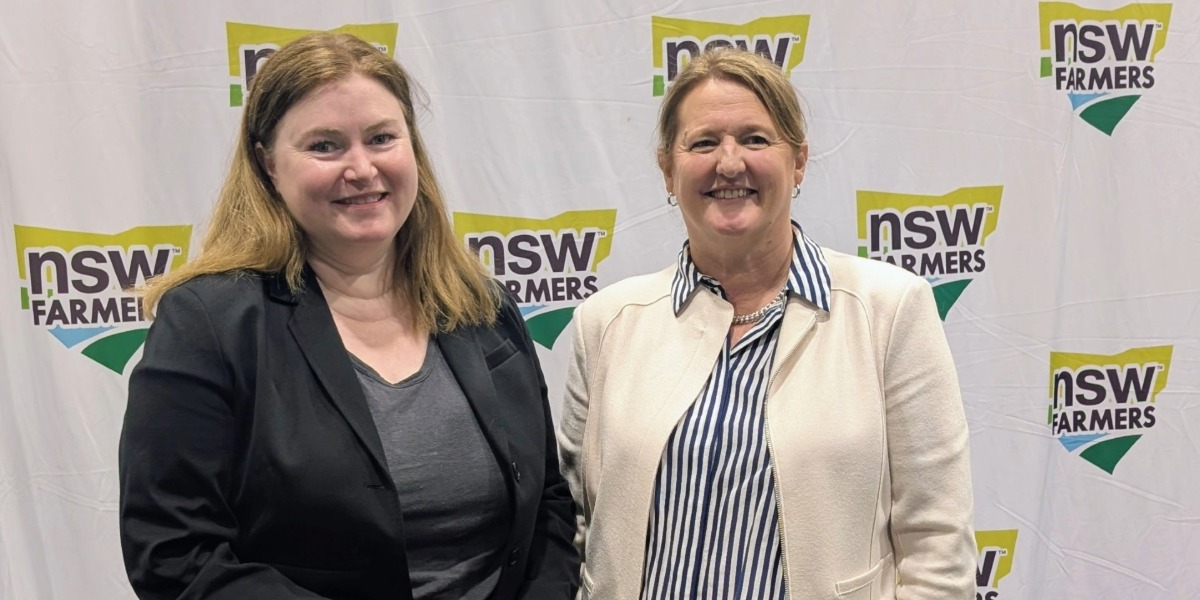
Agriculture Minister Tara Moriarty has backed technology adoption across NSW farms, launching a new online education platform and committing to continued investment in AgTech at the NSW Farmers Annual General Conference.
Minister Moriarty announced the AgTech Academy, a free online platform delivering fundamental AgTech training to producers as part of the government’s push to help farmers embrace technology and boost productivity.
“That’s why I’m proud to announce our key new initiative is the AgTech Academy, an online education platform delivering AgTech fundamentals,” Minister Moriarty said.
The academy includes 26 videos in a series called AgTech in Action, featuring real-world case studies for NSW farmers. Each video is presented by an AgTech specialist, providing practical guidance for adoption. The government has also set up demonstration sites at research stations and commercial farms so producers can see technology working in real conditions.
“AgTech spans everything from sensors and remote monitoring to drones, robotics, and software, turning data into better on-farm outcomes,” Minister Moriarty said.
The Farms of the Future program works with producers to build AgTech confidence and help make better decisions to boost productivity and manage risk in a changing climate.
Earlier this month, Minister Moriarty and Premier Chris Minns announced results of a $25 million agriculture industry innovation program that has unlocked $105 million in investment for NSW food and fibre production.
“We want to continue to work closely with you to get there,” Minister Moriarty said.
“It’s the first time a fund like that has existed in this form in New South Wales.”
The government has also invested over $100 million in a research program aimed at delivering results directly relevant to farmer needs. Investment includes $1.9 million for managing bacterial diseases in vegetable crops and $1.1 million for reducing the frost sensitivity of canola.
Alongside the government’s AgTech push, technology was a focal point of debate at the conference, with delegates passing two resolutions aimed at improving drone usage on farms.
The first resolution, moved by Bill Newcomen from the Gara Weemlar branch, calls for the government to reduce the legislative burden on farmers using drones to apply grassland pellets and other chemicals.
“Primarily, this is just to reduce the legislative burden on anyone using drones to apply grassland pellets or technically any other chemicals,” Mr Newcomen said.
A second resolution, moved by Nicholas Lyons of Wellington, addresses height restrictions on drone operations. Mr Lyons raised concerns about the 120-meter altitude limit imposed by the Civil Aviation Safety Authority, saying it creates safety risks when farmers use drones for mustering in hilly country.
“Drones are restricted to 120 meters at this stage for Casa, and obviously some hills are higher than 120 meters,” Mr Lyons said.
“So, if you take off from the bottom, you can potentially fly into a hill, and then have to go collect your drone.”
Better topographical mapping would allow drones to operate safely at greater heights above ground level in areas with elevation changes, Mr Lyons said.
The conference also touched on technology as a way to empower better outcomes on a range of issues from soil mapping to water use.
Got something you want to say about this story? Have your say on our opinion and comment hub, New England Times Engage