

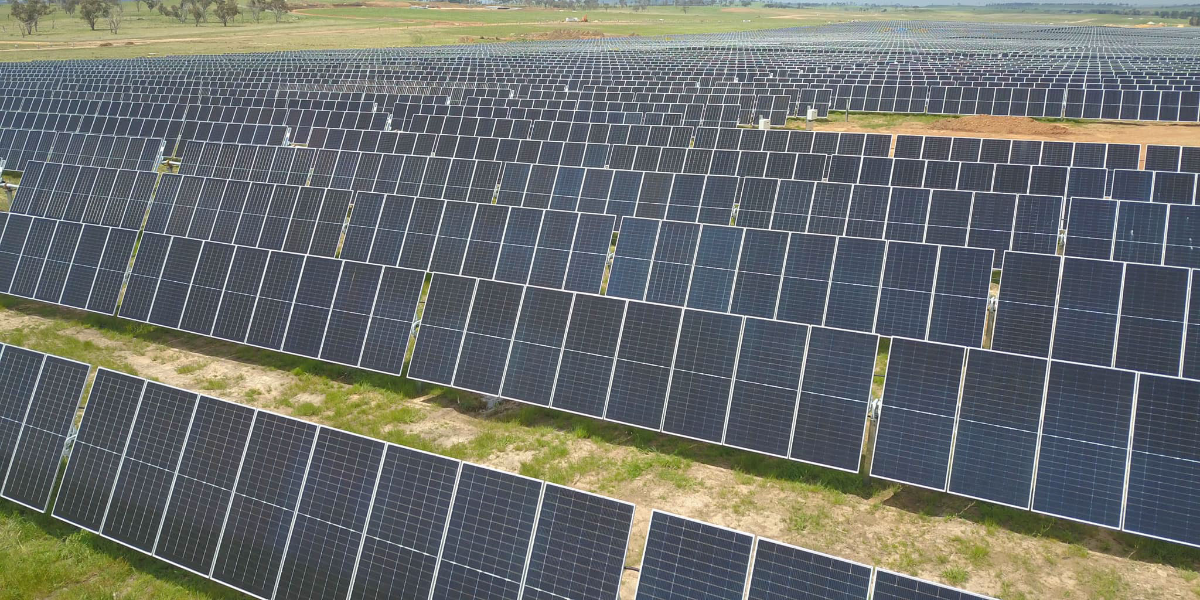
A NSW parliamentary inquiry has found the rollout of the New England Renewable Energy Zone has come with “predictable and avoidable harm” to farmers and rural communities, after a final report was tabled following hearings in Armidale and a site visit to the New England Solar Farm at Uralla.
Portfolio Committee No. 4 of the NSW Legislative Council tabled its final report on Wednesday, 29 July, into the impact of Renewable Energy Zones (REZ) on rural and regional communities across the state. The report contains 25 findings and 16 recommendations.
Over the past two years the committee visited all five REZs in New South Wales, including New England, and held a hearing in Armidale in July 2025.
The Hon Mark Banasiak MLC, Chair of the Committee, said rural and regional communities were at the heart of the inquiry.
“They are the ones facing significant change to their communities, environment and, for some, their livelihood.”
“We are grateful to each stakeholder who took time to participate in the inquiry as well as the landowners who welcomed the committee on their properties so we could witness firsthand the impacts on REZ,” Mr Banasiak said.
“The energy transition should happen with communities and not to them. However, the reality has fallen short of this.”
The committee found the government had presided over the REZ rollout without a “coherent, enforceable, whole-of-government planning framework,” and that EnergyCo had failed to perform its central coordinating role.
NSW Farmers President Rebecca Reardon said the report’s 16 recommendations went to the heart of the lack of consideration for farmers and regional communities.
“NSW Farmers members have been saying these things for years, yet the outcomes in REZ planning and construction are now exposed for all to see,” Ms Reardon said.
In New England, much of the evidence centred on the scale of proposed generation projects. Some locals participating in the inquiry called for the announced eight gigawatt capacity to be cut to lessen the impact on landholders. EnergyCo chief executive Ms Hannah McCaughey told the committee the eight gigawatt figure referred to network capacity, and that generation capacity projections currently sat at six gigawatts of network capacity supporting 12 gigawatts of generation.
Local mayors were also critical of the government’s handling of the rollout. Walcha Mayor Eric Noakes likened the New England rollout to “building an aeroplane when flying,” with communities “sitting in that plane and actually flying without staff.”
Armidale Mayor Sam Coupland called for the government to work with councils address the REZ’s impacts collectively.
“We need the government to properly assess the cumulative impacts of the REZ and work with council to either mitigate some of those problems or fund the solutions,” Mayor Coupland said.
Mr Sam Lobsey, Manager of the Development Division at Tamworth Regional Council, said the REZ planning process had occurred without the scrutiny applied to normal council rezoning, causing “confusion, the angst and some of the mistrust.”
The report recommends the government expand its compensation and benefit-sharing framework to include non-host neighbours, address land value and insurance impacts, and publish clear eligibility criteria for community benefit programs.
Ms Reardon welcomed the recommendation for greater accountability from EnergyCo.
“NSW Farmers has reached out to Energy Co constantly to help in getting better outcomes for regional communities and farmers, and keep being ignored. Its time to listen,” Ms Reardon said.
Mr Banasiak said the inquiry may have concluded, but the impact on communities had not.
“Individuals, farmers, families and host communities will continue to be impacted. The government must be accountable for this significant transition that is being experienced by many rural and regional communities throughout New South Wales,” Mr Banasiak said.
Got something you want to say about this story? Have your say on our opinion and comment hub, New England Times Engage