

Locals are waking each day to a fuel market defined by uncertainty, with the on-again, off-again blockade of the Strait of Hormuz keeping consumers on edge and prices stubbornly high despite recent falls.
In a matter of hours this weekend, Iran announced the reopening of the critical shipping channel, only to cast doubt over the move soon after, with reports of threats to reimpose restrictions and even an alleged attack on a passing vessel. The confusion has rattled global markets and reinforced just how fragile the situation remains.
Prime Minister Anthony Albanese said the reopening was a positive step, but warned it could unravel quickly.
“We want to see de-escalation, we want to see the Strait of Hormuz opened and we want to see no privatisation and no tolls,” he said.
“We want to see this fragile arrangement confirmed and we want to see those ships being able to pass.”
The Strait of Hormuz is one of the world’s most important oil corridors, and disruptions have driven sharp increases in fuel costs since the conflict between the United States, Israel and Iran escalated seven weeks ago. While global oil prices have eased slightly following ceasefire talks, volatility continues to dominate.
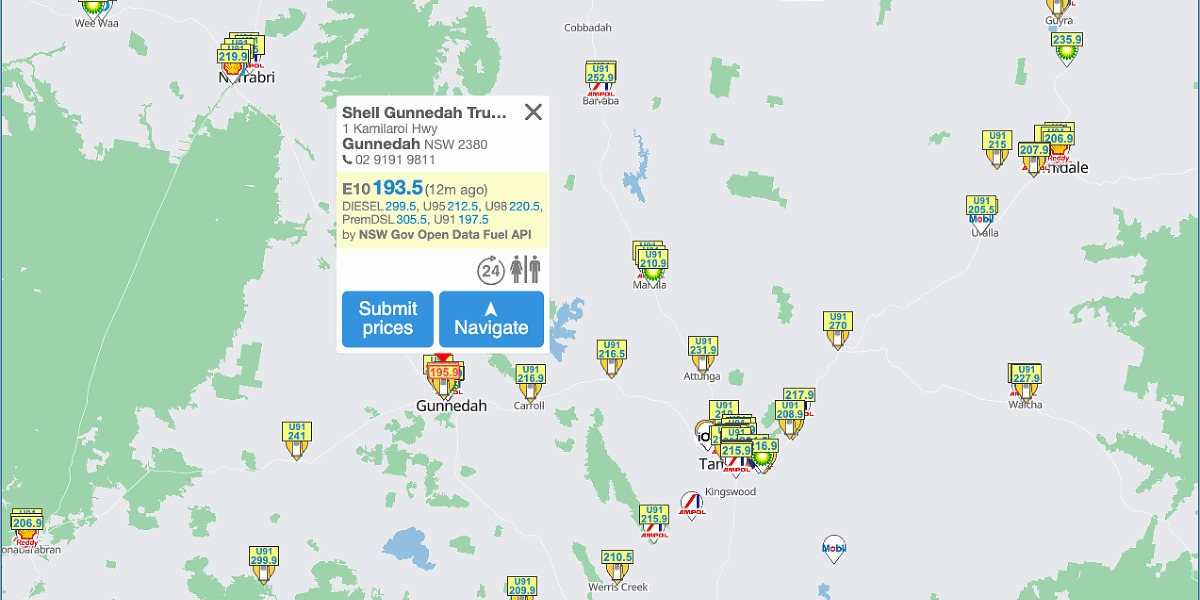
Bowser prices have begun to fall quickly, dipping below $2.10 per litre for petrol in most places and under $3 for diesel for the first time since February. Gunnedah’s Hopes Fuel and Shell service stations are the first in the region to have E10 Unleaded below $2 a litre. According to the ACCC, average petrol prices have dropped more than 40 cents per litre since late March.
But relief at the pump has been slow to reach households and businesses, and experts warn the current downward trend may not last.
National Roads and Motorists Association spokesman Peter Khoury said wholesale prices were moving in the right direction, but the situation remained unpredictable.
“Wholesale prices have been falling and they should continue to fall,” he said.
“It takes about seven to 10 days for those falls in oil prices to flow on in the Australian market.”
He urged caution about assuming prices would keep dropping.
“Trying to predict what’s going to happen in the Middle East is the quickest way to get made a fool of yourself,” he said.
“We’re really careful not to get too far ahead of ourselves but the trajectory has been in the right direction.”
Even if the Strait remains open, delays are baked into the system. Mr Albanese said it could take months for supply chains to normalise, with tankers facing long travel times, infrastructure damage in the region, and ongoing risks including sea mines and insurance barriers.
“You can’t open the Strait of Hormuz and have the ships arrive at port in Asia in the next day,” he said.
“You’re talking 90 days before the expectation, at least.”
Energy Minister Chris Bowen said Australia’s fuel reserves had improved, with 46 days of petrol and 31 days of diesel currently in stock.
He said supply levels were now higher than before the conflict began, with more than 60 fuel shipments en route and billions of litres locked in for delivery over the coming weeks.
Despite that, outages persist. About 120 service stations nationwide remain without diesel, with NSW still the hardest hit state, particularly in regional areas during the agricultural season.
Industry groups say the crisis has shifted from one of supply to one of cost.
Australasian Convenience and Petroleum Marketers Association chief executive Rowan Lee said price pressures would likely continue for months.
“It’s just really uncharted territory and that is not underplaying it,” he said.
Economists are even more pessimistic. Energy Economics and Financial Analysis spokesman Kevin Morrison said a full recovery in global supply could take weeks, even if peace holds, and warned cheaper oil was unlikely in the near term.
“I don’t think we can expect cheaper oil prices in the foreseeable future,” he said.
The impact is already being felt across the economy. NSW Farmers Vice President and Moree farmer Bec Reardon said soaring diesel prices were hitting producers hard, particularly those reliant on transport to get goods to market.
“Whether it’s milk heading to the processor or potatoes and apples being trucked to supermarkets, farmers pay the transport costs to get that food off the farm,” she said.
“When diesel prices shot up, the cost of transporting that food shot up as well – and farmers are the ones picking up that bill.”
She warned that farmers were being squeezed from both sides, unable to pass on higher costs while facing rising expenses.
“Farmers don’t get to put their prices up when costs rise,” she said.
At the same time, governments are under pressure to ensure transparency at the bowser. In NSW, a statewide compliance blitz has seen almost 200 fines issued to service stations for price mismatches and other breaches, as regulators respond to mounting consumer complaints.
Minister for Better Regulation Anoulack Chanthivong said the crackdown was necessary as cost-of-living pressures intensified.
“My message to service stations remains clear: do the wrong thing and you will be caught,” he said.
What do you need to know to get through the fuel crunch?
Tell us what information you need to make it through the fuel shortage crisis. Suggest a story!
Read other fuel crunch stories here.
Put your business in a story like this – find out more here.