

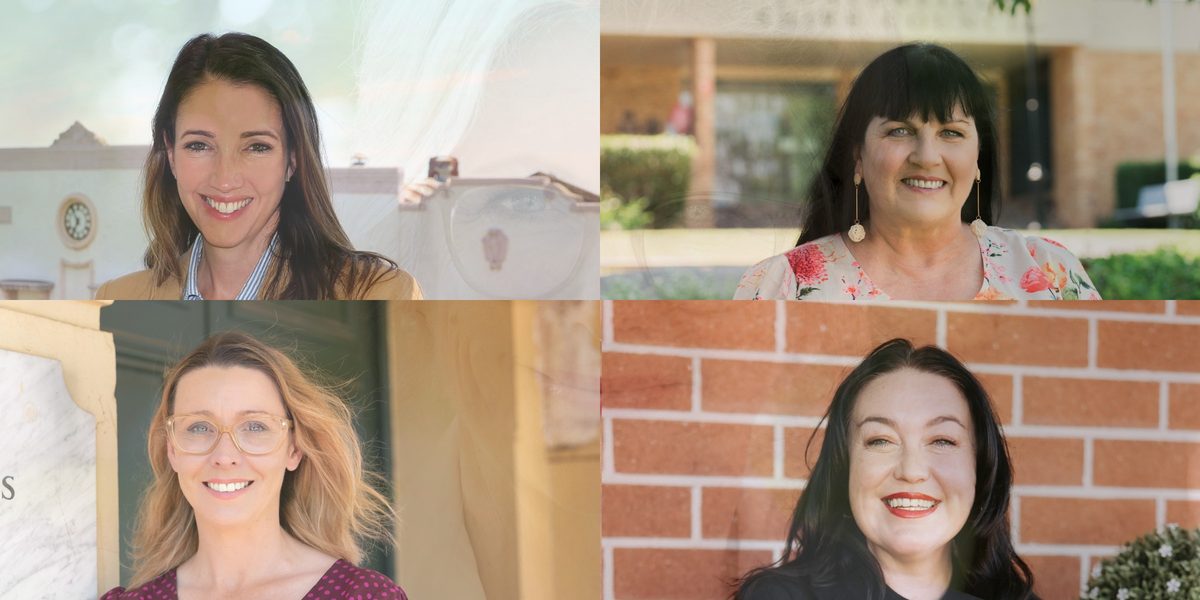
Regular abuse online. Targeted campaigns of lies. Threats of violence, rape and even death. As Australia asks how it treats its politicians after the alleged attack on Helen Haines, local female politicians say they have been living the challenge for some time now.
“We don’t have to all agree, but we can wrestle the issue, not the person, just as Helen has done throughout her time in Parliament, representing the issues of her community, and fighting for the very best,” said Governor-General Sam Mostyn.
“And it’s important to remember, words matter, whether spoken, or in written form, or increasingly in the virtual world.”
Local leaders say the same.
“We need to be able to have robust debate in the chambers and robust debate in the community, absolutely,” said Moree Plains Shire Mayor Susannah Pearse.
The trouble starts when the debate stops being about the decision.
“Where it gets difficult is where it becomes a personal attack, and batting the person, not batting the decision,” she said.
Pearse is much like Haines as a politician: intelligent, articulate, capable, across the detail, graceful, and empathetic, a standout among the region’s leaders.
It also makes her a magnet for threats.
“We all reassure ourselves that threats don’t turn into action; that they’re just idle threats.”
“I suppose the Helen Haines incident then makes people question. Well, actually, are we telling ourselves the right things when we try to reassure ourselves that they won’t turn into physical violence?”
Quick tragedy and slow violence
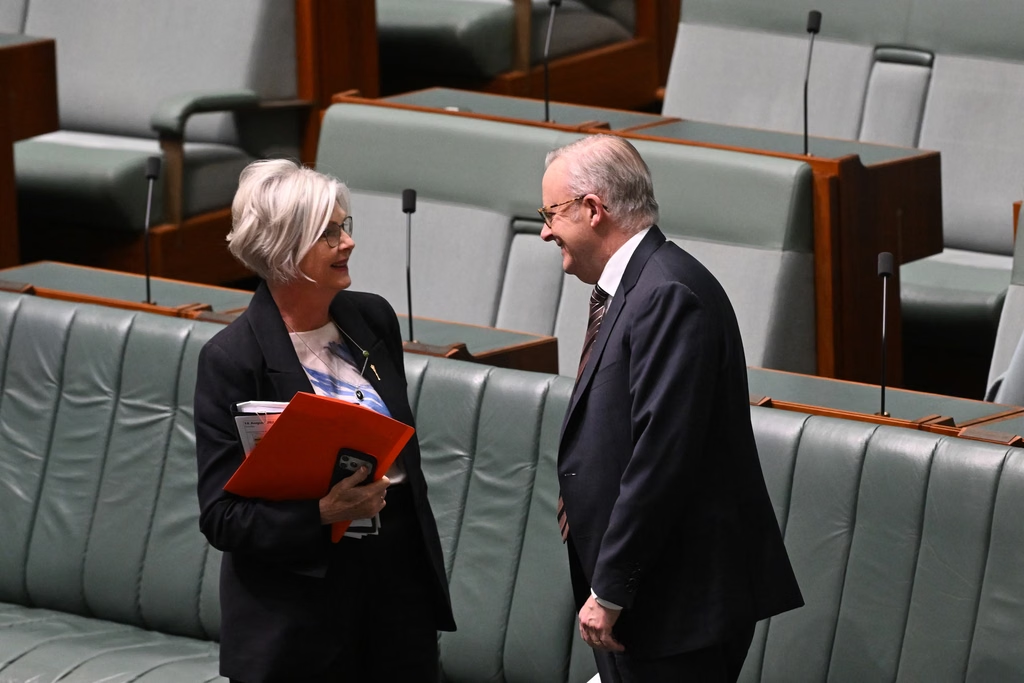
Dr Helen Haines is one of the most well liked and respected members of the federal parliament. The overwhelming response to this week’s terrifying events is that if anyone in federal parliament was going to be attacked, it wouldn’t be Helen.
Police allege a four-wheel drive intentionally hit the independent Member for Indi outside her electoral office in Wangaratta, pinning her between two cars, in an attack that did its damage in seconds. She was flown to the Alfred Hospital in Melbourne, where surgeons were able to save her life, but both her legs have been amputated. She remains in hospital in a serious but stable condition.
Brendan Nugent, 43, of the small village of Tarrawingee, has been charged with offences including dangerous driving causing serious injury, intentionally causing serious injury, and causing harm to a Commonwealth public official. Police allege the attack was targeted and deliberate. His lawyers say he has a history of mental illness. He has been remanded in custody until February.
Ms Mostyn, a friend of Dr Haines, said the attack should change the country.
“This violent attack on a much loved and respected sitting member of our federal parliament must be a moment for us to pause and to choose to be better,” she said.
The highest ranked person in the country revealed she is also a frequent victim of abuse online.
“Like any woman who has stepped up into any position across any part of our society, there is a unique and pernicious form of attack that comes our way,” Ms Mostyn said.
“There are certain things that are reserved for women in attacks that go to our gender, and they are often vicious and just despicable.”
In July, Women for Election surveyed 110 Australian women who hold or seek public office. Some 88 per cent had faced online abuse or intimidation linked to their politics. Some 76 per cent believed it had grown in the past two years. And 45 per cent had seen family members or campaign supporters targeted.
Regional women and councillors fared worst. Every regional respondent had experienced online abuse. Three in four councillors named false rumours and misinformation as their defining form of abuse.
“If capable women are choosing not to run, not to speak, or to leave public office because of relentless online abuse, Australian democracy is at risk,” said Women for Election CEO Licia Heath.
The Australian Federal Police has also reported a rise in threats against parliamentarians. A task force set up in October 2025 has charged 41 people for threatening politicians and other high office holders.
Researchers have a name for what sits behind those numbers: slow violence.
“What happens is better described as a form of slow violence, a term used to refer to harms that take place over years or generations, often hidden in plain sight, or ignored, and usually rooted in structural inequalities,” wrote University of Calgary researchers Dr Emily Laidlaw, Valerie Lennox, and Sanjampreet Singh.
Many women are used to it, and somewhat desensitised.
“Unfortunately, in the same way that when you are 12, you start learning how to deal with being harassed by men. That doesn’t change,” said Gunnedah Shire Councillor Kate McGrath.
“I do feel like sometimes women in the public eye have to almost prove their humanity,” she said.
“It’s not just assumed.”
A woman in the public eye
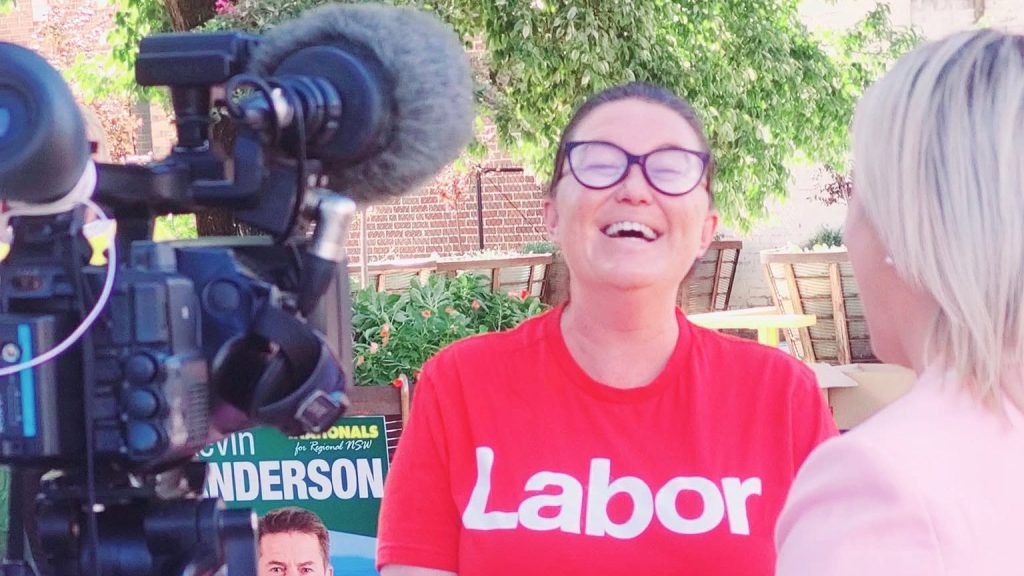
Cr McGrath was Labor’s candidate for Tamworth at the last state election. She compared notes that year with Greens candidate Ryan Brooke, now a Tamworth Regional Councillor, on the kinds of messages they each received. He was shocked, she said, by what had been sent to her. There were attacks on her appearance, and on her as a mother. Anonymous accounts hoped she would be raped and murdered.
“This is par for the course. You’re not going to find a woman with any kind of presence who isn’t receiving that kind of message,” Cr McGrath said.
If she runs again at the next state election in March, she does not believe the campaign-related abuse will be much different. That’s despite a more intense contest expected with incumbent National Kevin Anderson being threatened by One Nation, and anger over gun reform adding to the risk.
“[Being threatened with a gun] is something that is always in my head because it’s one of those situations that it happens once and it’s eternally at the back of your mind,” she said.
Cr McGrath survived a violent home invasion in Tamworth, including being robbed at gunpoint, when her eldest child was just six weeks old.
“And to be honest, the fact that I have had that experience previously is one of the reasons why I am very, very supportive of strict control over firearms.”
Tenterfield Shire Mayor Bronwyn Petrie has also had her life threatened, much more recently. She received a very clear death threat to her face, and says it changed how she lives.
“It wasn’t an anonymous thing – a young fella said he was going to come into my house and kill me,” she said.
“Since that time, I have locked gates, I lock the house – the house is always locked.”
She also has a number of dogs to help keep the house secure.
“So it does impact.”
Mayor Pearse has also had threats of people breaking into her home.
“Things that have been more concerning to me is when people have said that people should go and break into my house and my property and steal my things and terrorise me,” she said.
Others have also threatened and harassed members of her family. She downplays it.
“Some of the people that say the most heinous things. It is very easy to say these things online.”
“I also try to proportionalise the fact that it is very easy to make these comments, but they’re not brave enough to actually say them to your face. So I try to take some comfort in that.”
Slow violence from the enemy within
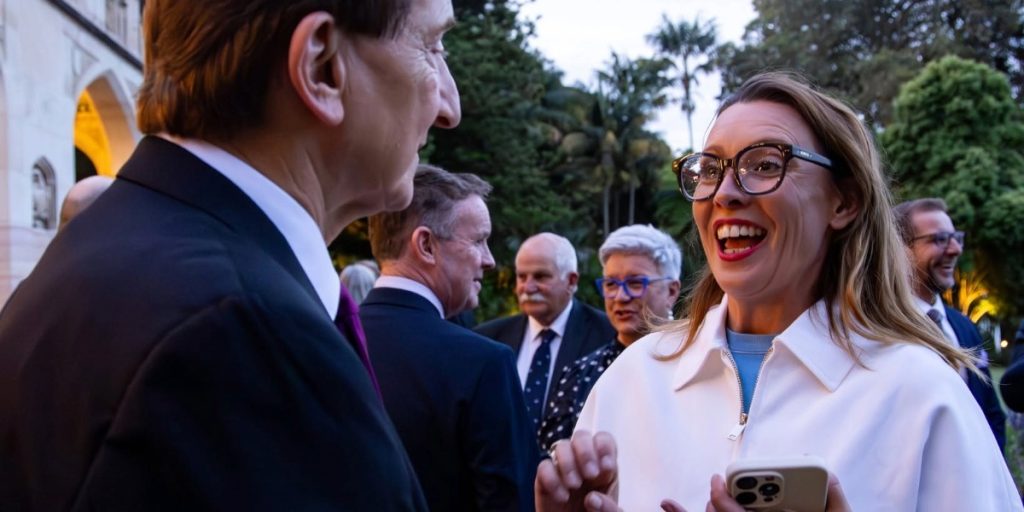
Glen Innes Severn Mayor Margot Davis has faced a relentless two-year disinformation campaign, one of the more overt cases of slow violence.
“It’s extraordinary how they can pull two things together that are completely unrelated or untrue, and then create this narrative that is the opposite of what we’re actually doing,” Mayor Davis said.
She routinely faces direct abuse, plus passive-aggressive attacks and systemic undermining she calls “white-anting.”
“This subversive sabotage or undermining of me as mayor, of me as a former council employee accused of things that I did not do, this white-anting tactic… is really hard to deal with because you can’t prove where it’s coming from,” she said.
“It’s quite malicious and insidious.”
From anonymous comments, to petitions, to open letters, to an entire fake news Facebook page, the publicly visible persistent abuse against Davis would be enough to break most people. But that’s only half of it.
“I receive a lot of abusive and conspiracy-led emails,” she said.
“I received an email only yesterday after I had posted a call out to the community post the Helen Haines incident to try and encourage the community to help build a culture that was safe for everyone.”
At one point she reached out to the eSafety Commissioner and other government offices for assistance, but got none.
“There’s no way of dealing with it,” she said.
Faced with a toxic culture and no help, Mayor Davis has tried to fix the problem herself, initiating another nation-first, a Councillor Psychosocial Safety and Wellbeing Framework.
“What is clear to me is that, as an elected body, as a councillor, you do not have the WHS protections, and it’s not as clear how to deal with things as it is for a council employee,” she said.
“The code of conduct process is arduous, lengthy. It has no teeth.”
“It doesn’t change behaviour if that person is not got the ethical and moral and professional foundation to understand that their behaviour is unacceptable.”
In Gunnedah, Cr McGrath faced a different kind of colleague problem. On Thursday, 17 September, newly elected Gunnedah Shire Deputy Mayor Rob Hooke commented on ABC radio that Cr McGrath had stepped down as deputy because she was a “working mum”.
Cr McGrath said that, despite widespread condemnation, she is yet to receive an apology from Cr Hooke.
“I do think the fact that so many people from so many sectors came out and made it clear that that was unacceptable is reassuring,” she said.
“But the fact that it was said in the first place is unacceptable.”
It also happens more randomly between politicians who don’t work together regularly, including on the campaign trail.

Guyra-based Liberal Member of the NSW Legislative Council Aileen MacDonald says she was physically intimidated at a polling booth during the Kiama by-election by a candidate and local councillor, who pressed her about why the public had been shut out of a budget estimates hearing, and physically leaned over her as he did it.
Unsatisfied by her response that it was a security issue and people could still watch the live stream, he tried to corner her away from the crowd.
“When I went to get my drink, which was in a bag away from the crowd, he then came over to me again.”
“And you know what? Some of the other members of Parliament were laughing and taking photos, saying ‘oh, Aileen’s being picked on.”
NSW Liberal leader Kellie Sloane saw what was happening and led her away by asking her to talk about something, the way women rescue a friend from a pest at a party. Ms MacDonald blamed herself, as women are cultured to do.
“I just thought, why did I let this happen?”
Out on your own
Upper house MPs like Ms MacDonald have a lower profile, and get less abuse, but they also get little staff: one member, based in Sydney. That means she often deals with online comments herself and goes to events alone, a security issue in itself.
“I don’t have staff when I’m out in the region,” she said.
Alone with voters, she tries to avoid saying things that provoke an emotional reaction.
“So maybe you self-protect in a way and think, oh, I’d like to say this, but maybe I’ll temper it down rather than causing a little bit of controversy.”
She said life as a regional MP cuts both ways.
“It’s a bit of both, because you can be more at risk because you’re isolated, but less at risk because most people know you.”
Everyone knows where she lives in Guyra, and she doubts locals would hesitate to say where she was if someone asked. Her real fear is the stranger behind a screen, who knows where she is when she does not know who they are.
“And so that’s the scary bit: whether they can take the online to being in person,” she said.
The challenges of the regions compound the problem. Policing is thinner, politicians often travel alone, and there is an assumption that country towns are safer.
Researchers say it is not that simple.
“It’s certainly not as simple as just people from rural areas are at greater risk, but I do think there are contributing factors which we can see in those areas,” said Griffith University criminologist Dr Keiran Hardy.
Local MP Jamie Chaffey agreed that security for regional MPs is a challenge.
“It is difficult to provide protection for regional MPs and their staff with the challenges of distance,” he said.
He said he welcomed the review of security, but is not sure more security is the answer.
“It’s hard to see how increased security could have prevented this attack on [Helen Haines] a well-regarded woman who was at her office, going about her work and serving her community,” Mr Chaffey said.
There is also the truth rarely openly discussed that people with mental health issues, particularly those with a paranoid or anti-authoritarian leanings, are drawn to live in our smallest and least supported communities. Places like Porepunkah and Wieambilla and now Tarrawingee are increasingly known for their most violent resident, not how special they are.
Tenterfield Shire has seen two extremely violent attacks this year that seemed random, the home invasion at Torrington and the murder at Mole River. Both involved middle-aged Australian men with a history of mental illness, just like the attack on Helen Haines.
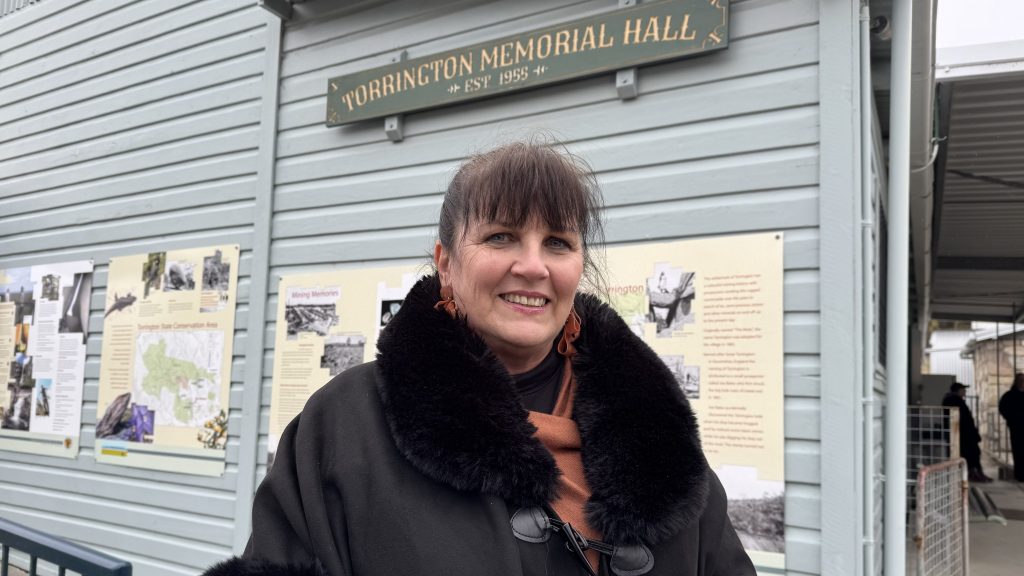
Mayor Petrie said her region lacks the services to help those who need mental health support, and the police to keep others safe.
“Well, certainly we don’t have the resources,” she said. “My community is always calling out for more. “
“We’ve got reduced police numbers at the moment, but it’s positive news that we’re getting more police stationed here shortly.”
A request for CCTV has also been made, one of the Torrington community’s clear wishes after the attack on Diane and Keith Blessing.
“We’re doing a current CCTV trial in Tenterfield, which has worked very well at two locations.
“We’re putting in another two in public spaces, and so we’ve asked for more funding for Tenterfield, plus also for some of our villages.”
Mental health is the other gap. She had just come from a local health committee meeting, she said, where the need for mental health services came up again.
“We’re talking about identifying the issues of most concern, and one of those is the need for mental health services, and that’s coming up at every center is the lack of mental health support,” she said.
She said help is hard to reach even when it exists, because “a lot of people can’t get to these services because of the cost,” and public transport is scarce.
The Mayor would like to see one other change considered to help keep people safe.
“I do have a concern, and I’ve had it for quite some time, that when some of these incidents go to court, and a person is found … innocent due to mental health,” she said.
“I think it should be guilty, but mentally incapacitated or something like that, because they’ve done it.”
“They are not innocent. They have done these crimes.”
“Once a court says innocent, it’s not on their record. They can go away, get rehabilitation, be out in the community, move to another community where no one knows them, and no one has any access to that history.”
“So the court should reflect that – it should be guilty. It stays on their record forever, but the the mental incapacity at the time will reflect in the sentencing.”
Mayor Petrie worries that extra protection for politicians will come at a cost to everyone else.
“Our general community needs security, and I would hate to see that limited resource being funneled into politicians,” she said.
The blue feed of hate
Ask any of them where the worst of the abuse and toxicity lives and the answer is the same. It is Facebook.
“I think we have to call out that it is specifically Facebook,” Mayor Pearse said.
“Facebook is now just seemingly more and more so geared at negativity, and I think it’s gone from being the social network to the anti-social network.”
“I think we’re fooling ourselves if we think that Facebook executives actually care about our community.”
“It’s a business, and anger drives engagement, drives reach, has people staying on Facebook for longer.”
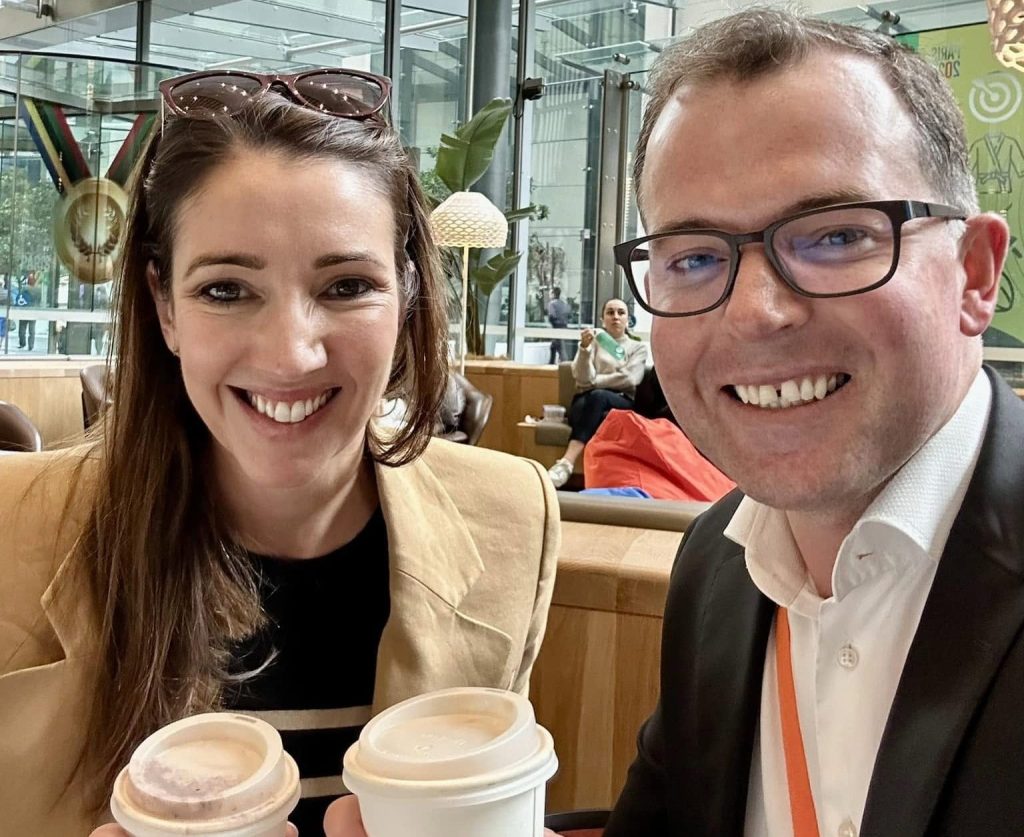
Mayor Pearse said the damage goes beyond the women targeted: “our community is being influenced” by an algorithm that “rewards anger and rewards very emotive responses to content on social media.”
“I have absolutely considered quitting Facebook,” she said, “but I don’t think we can close Pandora’s box.”
“I think there are so many people in the community who do use Facebook, and do utilise Facebook as their news source, that there is now an expectation that if you are an elected official, that you will have a presence on social media.”
“I probably post less than I used to, because it is very easy to put disproportionate weighting on what is said on Facebook, and it’s very easy to be distracted by that.”
Mayor Petrie said isolation during Covid pushed people online and into the arms of the algorithm.
“I think a lot of this dive down into conspiracy theories happened with COVID, where people were locked away, did not have that interface with other people, and they were left to their own devices purely with the internet,” she said.
“And we know how the social media algorithms work. That once you start looking at one thing, your feed then just gets flooded with similar stuff.”
Ms Mostyn came to a similar conclusion.
“I think the long tail of Covid, of isolation, the increasing decision by many to isolate themselves and to only have curated sources of information, so fact is no longer agreed between us when we debate, all those things are a threat,” she said.
In Glen Innes, the feed is where the campaign against Mayor Davis lives. She too says it was one of the outcomes of Covid.
“It’s one of the outcomes of COVID, where people became quite insular in their homes, and the way that they could communicate was more online, and there’s a protective barrier that exists when you have dissent or argument about something that either council’s done or an organisation or a business or whatever it might be.”
“There’s this there’s this barrier that people feel protected by, which means that there seems to be a trend that I can say whatever I want, and that lack of civility in the online environment means that there’s not a respectful discourse
“I just think we’ve lost the art of conversing,” she said.
Cr McGrath said the platform rewards the worst behaviour. She said there is “far too much reward for being awful.”
“Social media is purely just eyeballs and reactions,” she said.
“Bad behaviour is rewarded when we’re in an environment where notoriety equals votes.”
“Someone behaving badly and getting headlines and likes as a result, there’s no incentive there to behave better in the future.”
Ms MacDonald has found one tool that helps. Areto, a New Zealand company, offers a program called Face Forward that links to a politician’s Facebook and Instagram pages and hides abusive comments before she sees them.
“If someone makes a bad comment, it will filter that out, so that I don’t see that horrible comment,” she said. “That person doesn’t know that I’m not seeing them. They’ve made it free for female politicians, recognising that the level of online abuse has lifted.”
She asked Areto to run a workshop at NSW Parliament House so other members and councillors could sign up.
But it only goes so far. It does not filter direct messages, or emails, and it cannot hide what other people write about her elsewhere.
“Say someone else has put up a post, and other people engage with it, saying, ‘Oh, that horrible bitch, Aileen MacDonald,’” she said. “Because it’s not on my Facebook, I can’t filter that. It only filters my own page.”
Areto stated in its September report that Facebook accounted for 89 per cent of all comments and 93 per cent of all abusive content across the accounts it monitored. The abuse rate on Facebook was 43.9 per cent. On Instagram it was 33.3 per cent. On TikTok it was 12.1 per cent.
Genuine cause for anger – and action
Not all of the anger is manufactured or just fuelled by the algorithm. Several of the leaders said much of it has real roots.
Mayor Pearse said fear of crime in her shire fed it when break-ins peaked. She said “people were fearful, and I get that.”
“And when people are frightened, people behave differently and can lash out,” she said.
“And I think that’s what we’re also seeing in society. I think we are seeing that people are under pressure and they’re angry.”
Mayor Davis pointed to money. She said household budgets and businesses are under pressure from the cost of living, and “people are doing it tough.”
“There’s a lot of pressure on everyone from a lot of sources,” Mayor Petrie said.
“Then, when you see things not being dealt with to community expectations at all government levels, then you have that anger.”
None of them accepts that it excuses the abuse. Mayor Petrie said the line is crossed when it becomes personal.
“I’m happy to have the feedback, positive or negative, so we can deal with it, but have the decency to say it directly,” she said.
“We should not be seeing such awful acts of violence across society, and in this case, it has happened to a lady who’s a politician,” she said.
But all of them want something done.
“They have to find a way to make Facebook accountable,” Mayor Davis said.
Mayor Pearse wants action taken on the algorithms.
“I think we’ve got to be careful about what is happening on social media and the impact that the algorithm is having on society,” she said.
“I think governments really do need to step in here.”
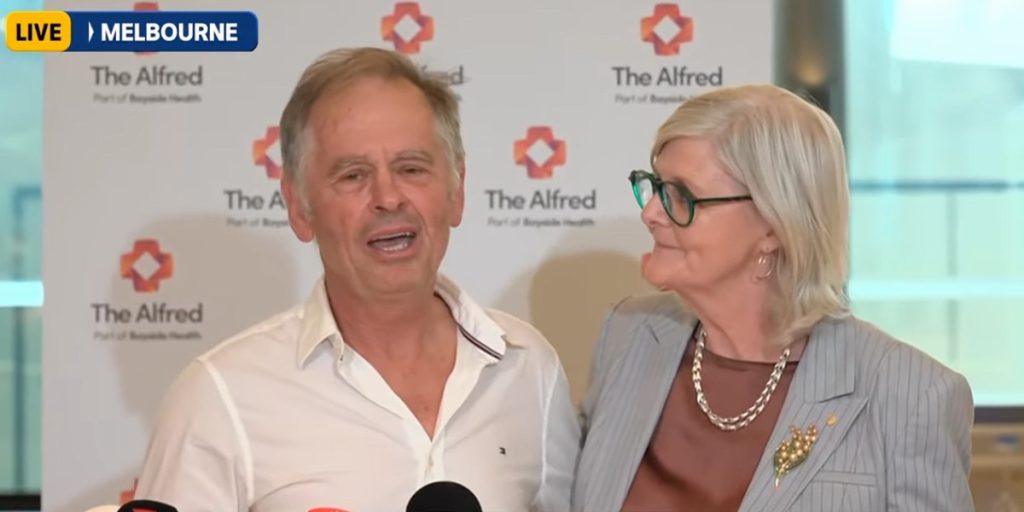
Ms Mostyn put the question to the whole country.
“What do we all do? What does our nation do now?” she said.
“Most importantly, that we learn or relearn to exercise our muscle of decency.”
“Australians are yearning for kindness and care, and they’re asking us why we’ve lost the great skill of disagreeing well and with decency to each other.”
Like what you’re reading? Support New England Times by making a small contribution today and help us keep delivering local news paywall-free. Donate now