
The terrifying alleged home invasion at Torrington has exposed a deeper crisis simmering across many New England communities: many residents simply cannot call for help.
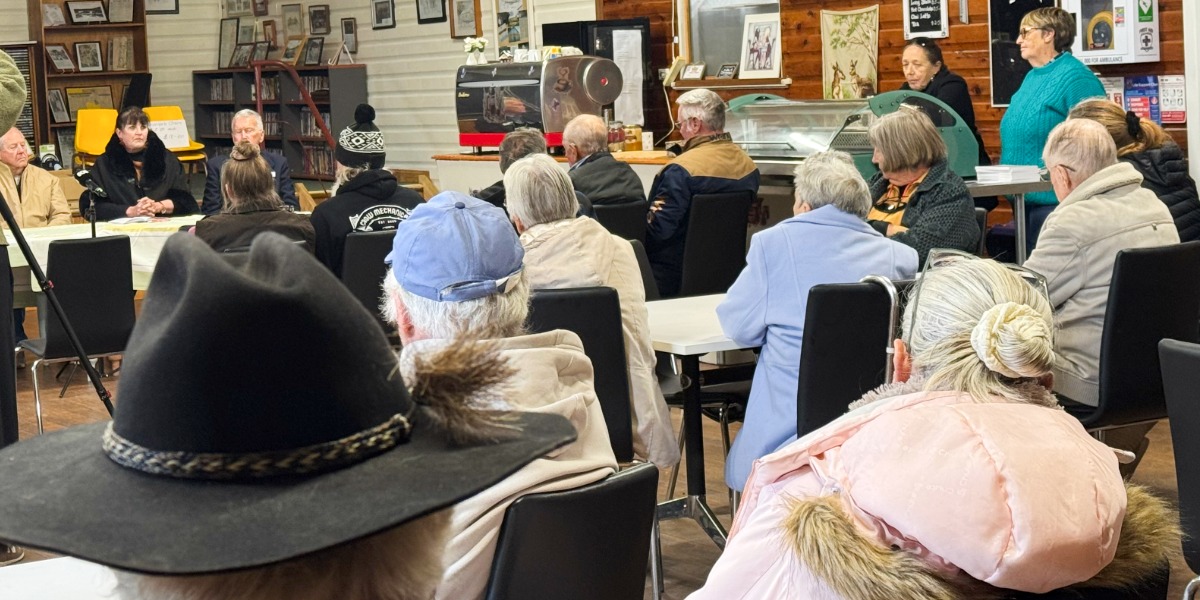
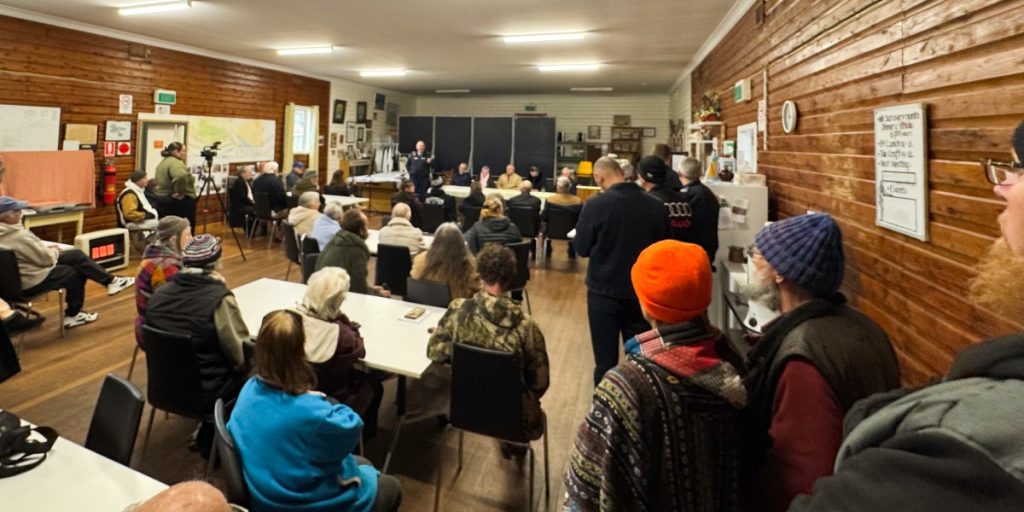
As locals packed into a community meeting following the incident, discussion quickly shifted from crime and Castle Law to something more fundamental — the lack of mobile reception, internet access, mental health services and basic infrastructure across the Tenterfield Shire.
Police Inspector James Parsons acknowledged that people were scared, but reassured there was help available.
“Whilst you’re remote, there are always systems available to you. We’re only a phone call away, and in an emergency, call Triple Zero,” he said.
He was quickly reminded that that is not always the case.
“We’ve got no Triple-0” — connectivity myth laid bare
Torrington resident Sonia Law said large parts of the district have little or no mobile reception, leaving residents effectively cut off from emergency services.
“Some people don’t actually have service at all,” she said.
“There are a couple of spots down Cattarrh Creek Road where there’s no service to the houses, so we have to come up into town every day if we want to check in with everyone or anything.”
“There’s a rock about this height,” she said motioning about a metre off the ground, “and I stand on the rock. I can talk, and if I want to do my internet, I need to hold the phone up high and wait for it to download — that is our only service.”
“After this, I thought, what if it was us? How would we call for help?”
“So if something happens, we’ve got no Triple-0, no email, no one can even message us.”
There has been significant national debate — and federal government action — over emergency calling systems in the past year after major telecommunications outages, particularly involving Optus, temporarily prevented people in cities from making Triple-0 calls. Many inquiries have been held and reforms made to ensure the ‘camp on’ system, which allows Triple 0 calls to be made through any available network when there is no service from an individual provider, always works.
But the problem in Torrington – like many other communities in our region with inadequate phone service – is fundamentally different, and is almost completely ignored in the national debate. There is effectively no Optus coverage in the area and only limited Telstra reception, with signals frequently dropping out altogether.
If there is simply no signal available from any service, no calls from mobile phones – including calls to Triple-0 – can connect at all. And the only internet available in the district is the NBN’s satellite service, which residents say is unreliable and inadequate.
Tenterfield Mayor Bronwyn Petrie said official telecommunications coverage figures did not reflect the reality facing local residents.
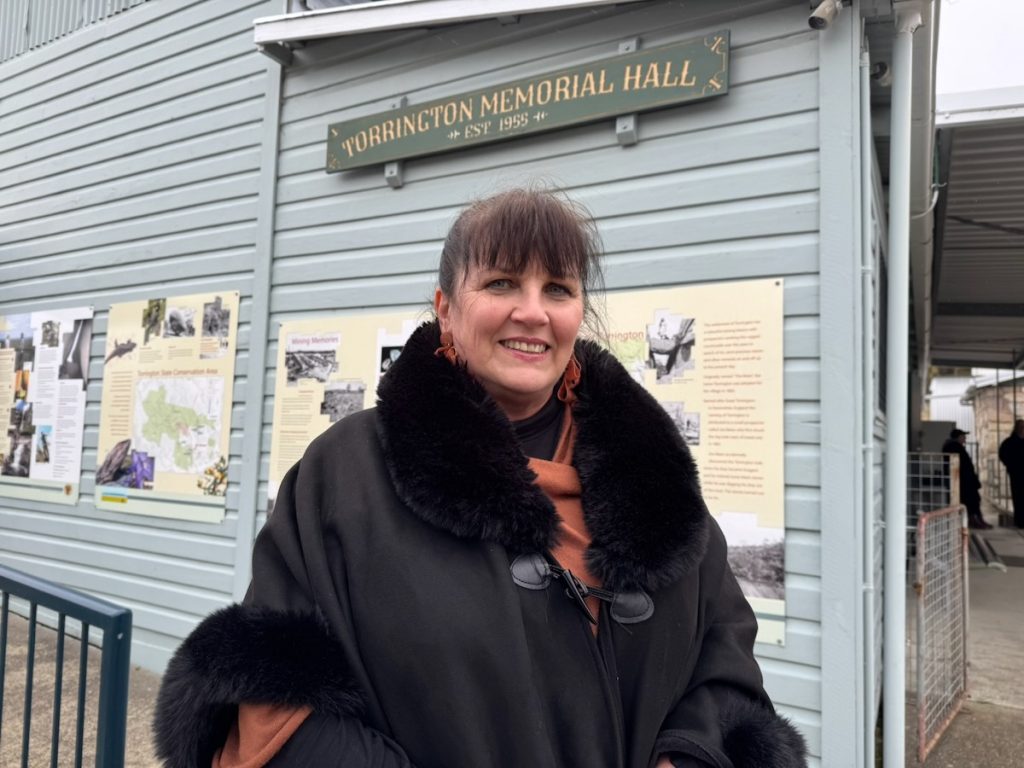
“When they say 85 per cent of Australia is covered with connectivity — it’s absolute crap,” Mayor Petrie said.
“A great part of Tenterfield Shire does not have connectivity, unless you subscribe to Elon [Starlink].”
“But it really is challenging with no connectivity. That is an issue — we can’t always call Triple-0.”
Inspector Parsons revealed that while the Blessings were able to call for help during their terrifying ordeal, there were actually two Triple-0 calls made – the first one dropped out.
Community falls back on old ways
In the absence of reliable mobile phone and internet access, Torrington residents are falling back on old fashioned community networks to keep each other safe during this confronting situation they all find themselves in.
Mayor Petrie said the connectivity crisis had reinforced the importance of community vigilance.
“Connectivity is an important issue, and for those who don’t have connectivity it’s a question of how do you get that message out,” she said.
“And that’s also why it’s really important to check on your neighbours and make sure they’re okay.”
The locals discussed having an email and phone list, using their Facebook group, calling people regularly, and making a point of checking in on people, as part of their fiercely united response to the assault on their whole community as much as it was an assault on the Blessings.
A representative of state MP Janelle Saffin’s office also committed to calling people in Torrington once a week.
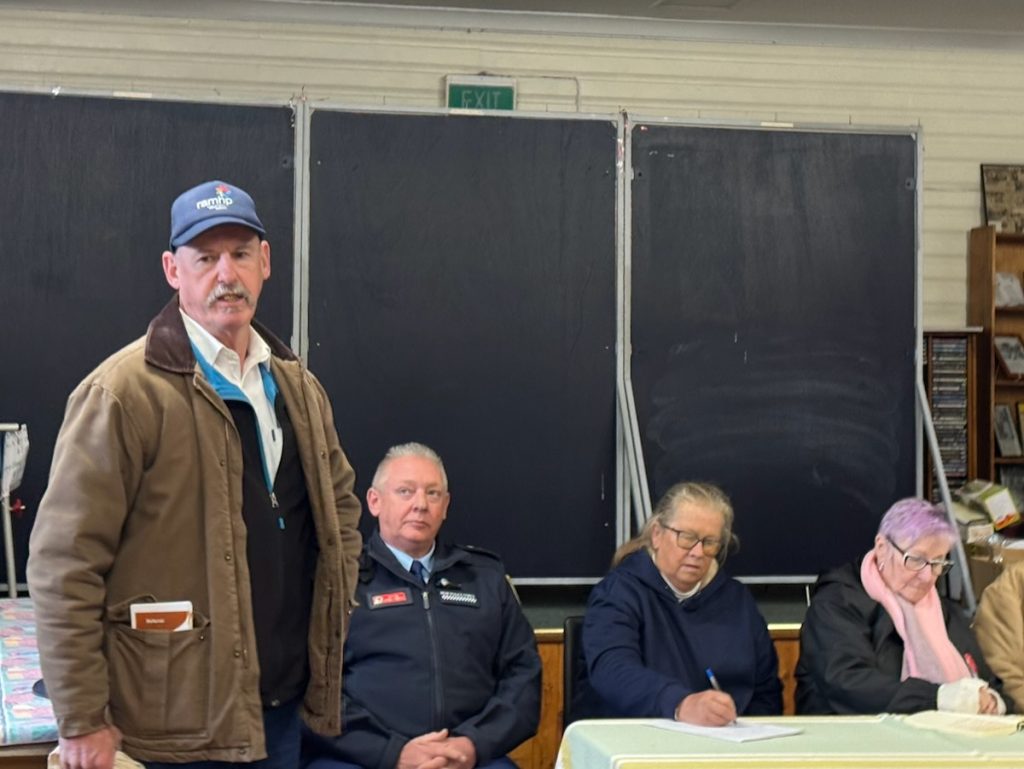
Rural Adversity Mental Health Program representative Andrew Daley said he too would be checking in on the small community as they dealt with the aftermath.
“I’m more than happy to come out over the next few weeks and just check in on people,” he said.
Mental health high on the concern list
Torrington and surrounding districts were heavily affected by the devastating 2019-20 bushfires, and for some, the fear generated by this home invasion had reopened old wounds.
Mr Daley tried to reassure that support from the Rural Adversity Mental Health Program was available, from just a chat to more significant support if required, just as they did for the bushfires.
“A lot of you will know my face from after the droughts and those terrible fires, when we were out here offering support and resources and more intensive follow-up if you needed it,” he said.
“If you need counselling, a psychologist, or just someone to have a chat with, we’re out and about and we can come and see you.”
Mr Daley said traumatic incidents could re-trigger earlier experiences of disaster and stress.
“Sometimes this sort of stuff can re-trigger stress and other things that have happened in your life.”
“People can be on edge, and that’s quite normal — to feel upset and a bit afraid, to have disturbed sleep, to lose your appetite, to have your stress levels go up, to get a bit irritable.”
“All those things are quite normal after something like this happens.”
“If those things continue on and on and on, then it would be really good to reach out for some help.”
Mental health also emerged as a possible factor in the alleged offender’s behaviour.
Locals claimed Joshua Trethewey had reportedly been behaving strangely for some time, driving around Deepwater and neighbouring localities including Torrington and Emmaville, just watching people.
“He may not have been known to police, but he was known to us,” one local said.
It has been reported by 7NEWS that Mr Trethewey’s mother had recently died, and that during the alleged attack he reportedly told Keith and Diane Blessing he held the “whole town” responsible for her death and wanted them to “pay”.
At last update from police, Mr Trethewey remains in an induced coma in Armidale Hospital, and has not yet been formally interviewed.
Inspector Parsons said police relied heavily on information from the community.
“I’ve heard, third-hand through social media posts, that people have been saying they noticed odd behaviour in recent days,” he said.
“If somebody’s seen someone behaving oddly, there’s no harm in making a call to police or mental health services to check on that person.”
Community thanks and praise
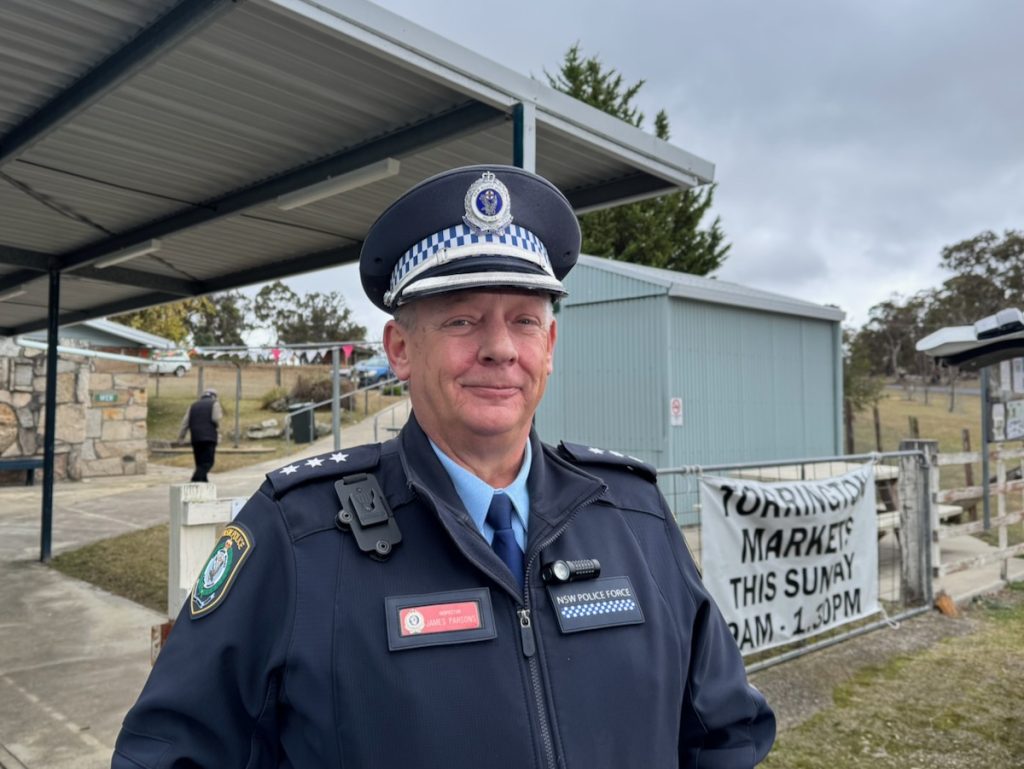
As Strike Force Solero continues investigating the alleged attack, police have praised the community for the way they have come together. Inspector Parsons said the turnout at the public meeting reflected both the anxiety and resilience within the district.
“Obviously there’s a lot of concern and anxiety amongst community members,” Inspector Parsons said.
“I think it’s a testimony to the community how many people have come together today to discuss their concerns.”
Kathy Blessing and Amanda Batchelor, the daughters of Keith and Diane, also gave their thanks to the community.
“We’d like to thank everyone who has supported our family. It has been comforting to know we have the support of the wider community,” Kathy said.
“Their neighbours are beautiful people and came forward to help and look after their little dog until the family can get get down there.
“So very grateful to them and to the people of Torrington. A big thank you!!
“We’re very proud of our parents and their bravery.”
Got something you want to say about this story? Have your say on our opinion and comment hub, New England Times Engage