
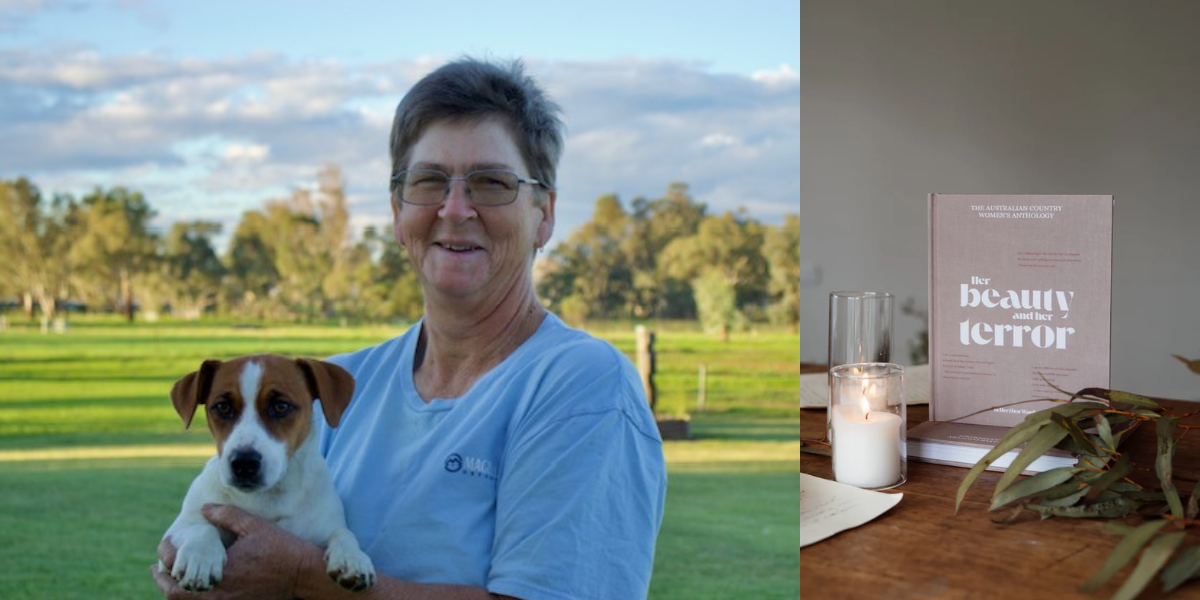
A Gunnedah agronomist who spent decades helping farmers through the worst the land could throw at them has found an unexpected new outlet for those experiences, with her debut poem selected for a national anthology of writing by country women.
Rachel Jones, who retired last season after more than 20 years as a consulting agronomist working mainly in the cotton industry, has had her poem “The Last” included in Her Beauty and Her Terror, a collection of never-before-published works by women from regional Australia.
“To tell you the truth, I am a bit overwhelmed by the interest in me,” said Jones, who moved to Gunnedah from Central Queensland in 2001.
The poem draws on the weight of drought and the agonising decisions that follow when hope runs out. For Jones, that subject matter is deeply personal. After years sitting across the table from farmers in their hardest seasons, she knew what that desperation felt like from the inside.
“I have worked with farmers during their worst and best of times, and those times are primarily influenced by the weather,” she said. “And the most useless tool a farmer has to work with is the seasonal forecast.”
Jones had long carried an interest in writing, completing online courses over recent years. During one, she wrote a short story about drought. It wasn’t enough.
“To me it just didn’t reflect the desperation I was aiming for,” she said.
When a friend sent her a link to the Her Beauty and Her Terror anthology last year, Jones was hesitant. She went back to her short story and wondered if it could become something else.
“I thought to myself ‘I’m no poet’,” she said. “But the concept stuck in my brain and one day I realised that maybe the short story I wrote could be used as inspiration to try and write a poem.”
The result doesn’t look like what Jones imagined a poem should be. Nothing rhymes. It’s short. But it does what the short story couldn’t.
“I don’t know that it is a true poem in the sense of the genre,” she said. “This is the first creative piece that I have submitted for publication and I never thought it would make it through.”
Her work caught the attention of anthology editor Lucy Manwaring immediately.
“When I first read Rachel’s poem I had a very physical reaction. It felt like someone had kicked me in the guts,” said Manwaring, who conceived the project after reading poems her late grandmother had written. “While Rachel won’t describe herself as a poet, I think that’s exactly what great poetry does. It triggers a reaction in the reader.”
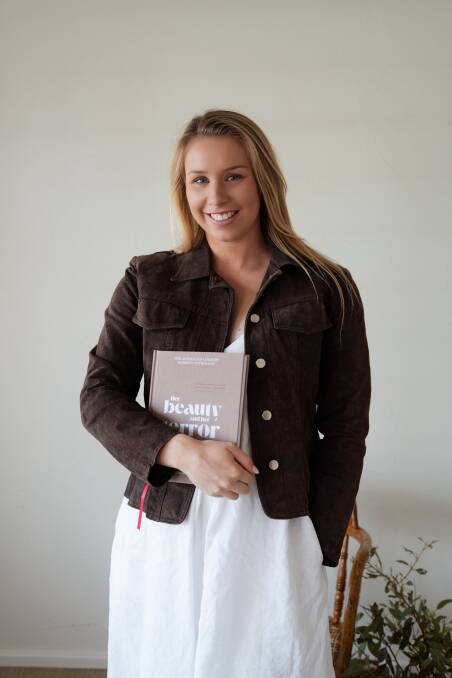
Manwaring put a call out on social media for unpublished poems by country women and received more than 500 submissions within two months. She said the response revealed just how much writing was quietly happening in regional communities, most of it never shared with anyone.
“So many of the women who submitted told me they’d never shared their work with anyone before, or had been writing privately for decades,” she said. “Poetry is functioning as a kind of private record, a way of making sense of experience that doesn’t require an audience. Until now, a lot of it has existed only in notebooks and drawers.”
Manwaring said poetry suits the realities of bush life in a way other forms of writing don’t.
“Poetry doesn’t ask you to resolve anything. You don’t have to come to a conclusion, or make sense of something, or arrive anywhere in particular,” she said. “Life in regional Australia is full of that kind of contradiction. It’s beautiful and isolating, fulfilling and relentless, often within the same day. Poetry is the one form that can hold all of that without demanding you pick a side.”
Back in Gunnedah, Jones has helped channel that same impulse into a local writing club, where members gather to write for ten minutes or so and share what they’ve produced, without critique or pressure.
“Writing is more of a personal release,” she said. “We get together and write for 10 or so minutes and then share, or not, with the group. Not for feedback or critique. Just to get ideas on a page and know that others are doing the same.”
For Jones, the whole experience has been a reminder of what writing can offer beyond publication.
“At the moment it is still just a mental health activity for me,” she said. “Anything that takes the mind off what is happening in the world right now has got to be a good thing.”
Her Beauty and Her Terror is available for pre-order now and will be in selected independent retailers from Friday, 1 August. An official launch event will be held in Orange on Friday, 14 August, with contributor readings and tickets priced at $65.
Manwaring said she hoped readers across the New England region would find something of themselves in the collection.
“I hope someone picks it up and finds a poem that sounds exactly like something they’ve felt but never said, and realises they are far from alone in it,” she said.
Don’t miss any of the important stories from around the region. Subscribe to our email list.