

Another solar and battery project in the New England Renewable Energy Zone, this time east of Inverell, is moving toward approval, with the community invited to make submissions before an independent planning body makes its final determination.
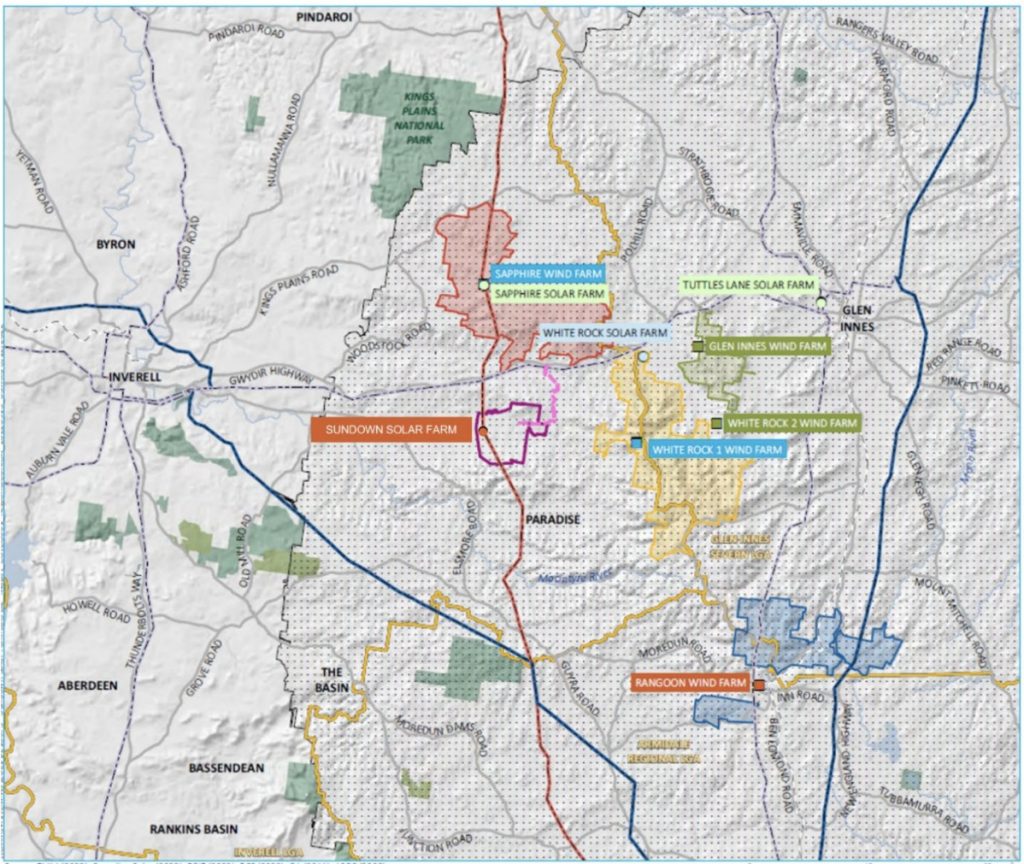
The Sundown Solar Farm, proposed by Canadian owned Recurrent Energy, would generate enough electricity for more than 150,000 NSW homes each year. The 360 megawatt solar facility would be paired with a 150 megawatt battery energy storage system (BESS) and connect directly into an existing 330 kilovolt transmission line that already crosses the site, substantially reducing the project’s footprint and impact on surrounding properties.
The project sits within the New England Renewable Energy Zone, at Spring Mountain, roughly 30 kilometres east of Inverell and 30 kilometres west of Glen Innes.
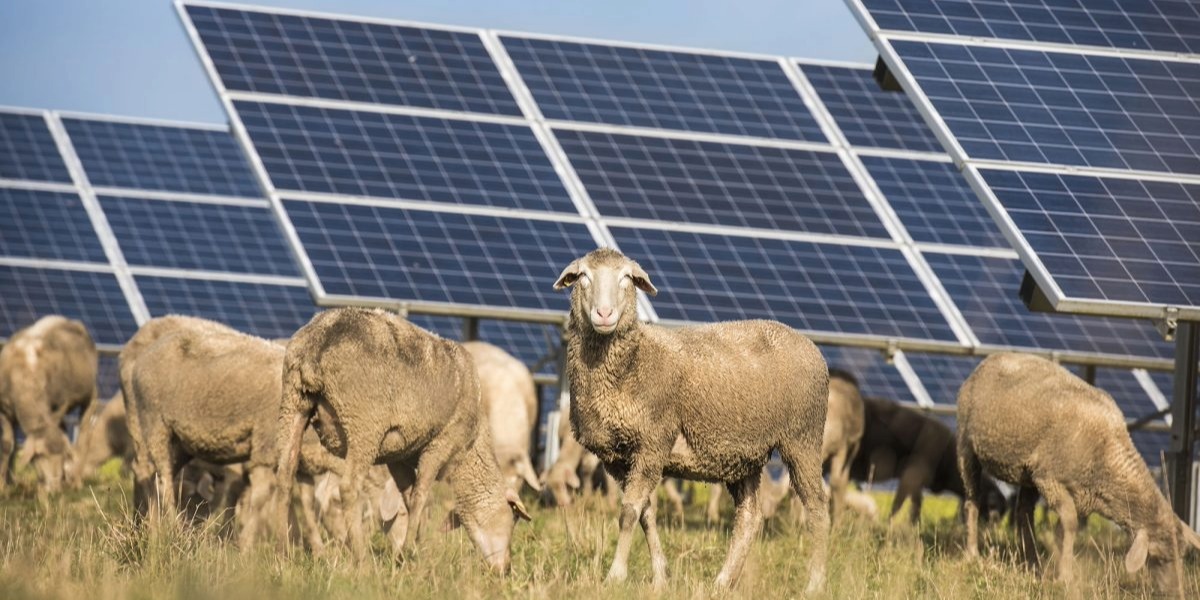
The site will remain a working farm throughout the project’s 35-year life. Sheep will graze within portions of the solar array, and the balance of the land not occupied by infrastructure will continue in agricultural use. When the project is eventually decommissioned, the site will be rehabilitated and returned fully to farming.
A community benefits fund will also be established with an annual transfer of funds to benefit the local community.
The NSW Department of Planning, Housing and Infrastructure has completed its whole-of-government assessment and referred the application to the NSW Independent Planning Commission for determination. The Commission is the consent authority because the Department received more than 50 unique objections during the Environmental Impact Statement process, however, the substantive local objections were few compared to the ideological opposition from outside the area with oppose submissions from as far away as Brisbane and Wangaratta, and the bulk from Sydney suburbs.
All of the local supporter comments to the EIS process did so anonymously, most noting the benefit to the local economy and roads improvements.
“This project is a positive step for renewable energy in NSW. It will be a benefit to the local community by boosting the local economy through utilising local businesses and providing employment opportunities during the construction phase.”
Name Withheld, Elsmore
“I fully support this project going ahead as I believe it will be a huge benefit to my local community. It will provide employment opportunities and contribute to the local economy.”
Name Withheld – Elsmore
“The solar farm project will greatly benefit all landholders adjacent to the access route by upgrading vehicular access for the construction process… access for heavy vehicles on and off the Gwydir Highway at the intersection of Spring Mountain Rd; safety upgrade of the crossing over the Swanbrook; upgrade livestock grids; and surface upgrade of the Spring Mountain and Sturmans Roads for safe school bus and reliable livestock transport access.”
Name Withheld – Matheson
Of the genuine local objections, Ben Whelan, the manager of “Warrawee”, raised substantive objections to the traffic management plan, the ability of cattle grids in the area, and direct concerns about the traffic on the road that intersects his family’s property.
“Who is going to maintain the grids, old and new, during and after construction as the grids aren’t made for constant heavy vehicle movements? Under current guidelines our family would be responsible for them but we shouldn’t need to bear the cost of replacement and upkeep after significant wear has occurred to them as a result of the proposed construction.”
Ben Whelan, Liston
While Robert Mepham, whose property is downstream from the proposed site, raised concerns about the water required by the project.
“The 75 megalitres of water proposed to be used during construction, will reduce the amount of water available for stock, and equates to watering approximately 2,400 steers per month.”
Robert Mepham, Newstead
Inverell-based landcare group Gwymac also raised concerns about the integrity of the project’s biodiversity assessment, the method used to detect the Pygmy Possum, inconsistencies in the soil reclassification data, and koala in the area.
Key issues identified in the Department’s assessment include land use compatibility, traffic and transport, worker accommodation and biodiversity.
The Commission is now inviting the public to have its say on the Department’s assessment report and recommended conditions. Written submissions can be made through the Commission’s website at ipcn.nsw.gov.au/cases/sundown-solar-farm and will be accepted until 11:59pm on Wednesday, 8 July.
Community members can also speak in person or by phone at a public meeting to be held at the Elsmore Memorial Hall, 1181 Elsmore Road, Elsmore, on Wednesday, 1 July, beginning at 10:00am. The meeting is expected to be livestreamed on the Commission’s YouTube channel. Speakers must pre-register by noon on Wednesday, 24 June using the Speaker Registration Form at the Commission’s website.
If demand is high, the Commission may schedule a second day. If demand for either in-person or telephone attendance is low, the meeting may be held entirely virtually or entirely in person. Registered speakers will be notified of any changes in advance.
For more information or to make a submission, visit ipcn.nsw.gov.au/cases/sundown-solar-farm.
Note: This story was produced with AI assistance to assess the EIS submissions and reviewed by our editorial team.
Something going on in your part of the New England people should know about? Let us know by emailing newsdesk@netimes.com.au