

Regional leaders across New South Wales and Queensland are uniting in a growing pushback against the Federal Government’s decision to halt Inland Rail at Parkes, warning the move risks leaving billions of dollars in infrastructure stranded and devastating long-term economic plans for inland Australia.
The backlash intensified on Friday after the Country Mayors Association resolved to urgently lobby Minister for Infrastructure Catherine King for clarification on the future of the project and support for communities that have already invested heavily in preparation for the rail corridor.
The association said impacted councils, contractors and businesses deserved compensation and certainty after years of planning around what had been promoted as a nation-building freight project.
That compensation may well be more than finishing the project, as it is understood billions of private sector dollars had already been sunk into various projects along the proposed line north of Parkes.
Mayor of Moree Plains Shire Susannah Pearse said many Australians did not realise much of Inland Rail had already been built.
“In our section of Narrabri to North Star, we have 163km of beautiful, 25 TAL capacity Inland Rail track. What’s remaining? Only 23km.
“That 23km services our grain and fibre handling facilities. It is the most important section.”
Mayor Pearse said Moree Plains Shire produced more than two million tonnes of wheat last year, making it the largest wheat-producing shire in Australia, and Inland Rail was critical to getting produce to export markets through the Port of Newcastle.
“It seems ludicrous that when we have major issues with fuel prices and continued pressure to reduce emissions, that this project would be halted,” she said.
“It is short sighted and we encourage the Australian Government to meet with our shires and work with us to get this nation building project back on track.”
Mayor of Inverell Shire Kate Dight said mayors across the state had unanimously backed a motion opposing the Federal Government’s decision.
“At our Country Mayors meeting today we have unanimously moved a motion to push back on the Federal government’s decision to not progress with the Inland Rail project,” Mayor Dight said.
“This is a huge disappointment for all surrounding Councils.”
“There has been years of economic project development on the back of this Federal project with a huge majority of line already built through to the Qld border.”
“Extremely disappointing decision and we must do what we can to get it reversed.”
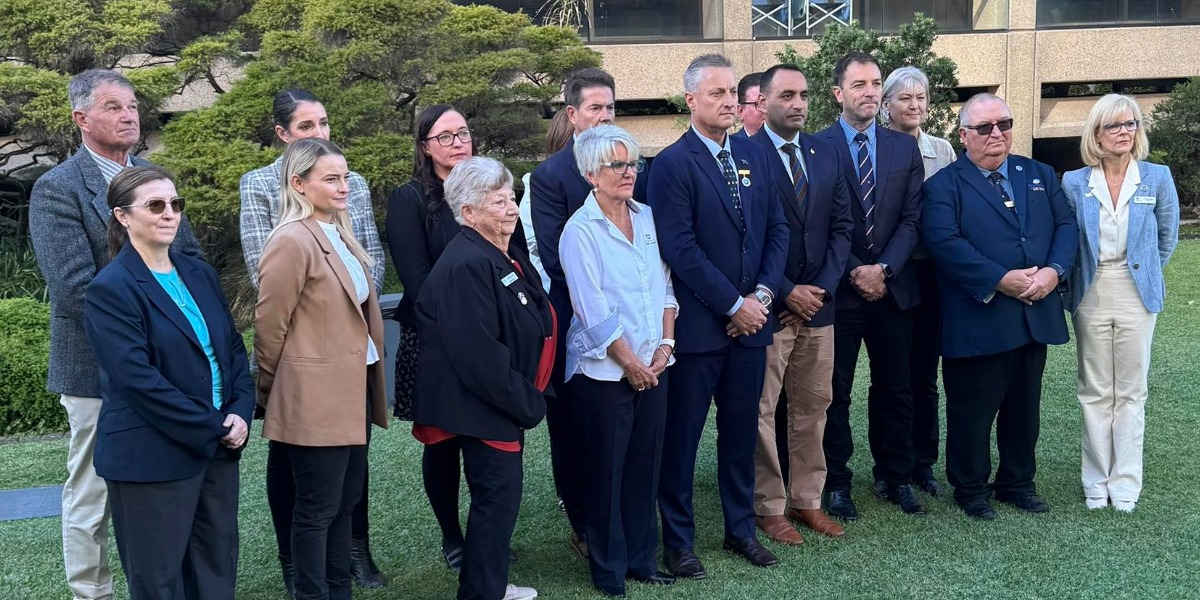
Federal Member for Parkes Jamie Chaffey joined local leaders and NSW Nationals MPs at Parliament House last Friday to demand the full project proceed.
“Labor’s decision to scrap the Inland Rail north of Parkes is a devastating blow to the people and communities who have spent decades backing this nation-building project,” Mr Chaffey said.
“After already spending $3.5 billion on this project, Labor is now walking away and leaving more than 160km of completed rail infrastructure stranded between Narrabri and North Star.
“Businesses have invested. Families have made sacrifices. Councils have planned for growth.”
“Now regional Australia is paying the price for a government focused only on metropolitan areas.”
The original 1,600-kilometre route was intended to connect Beveridge, north of Melbourne, with Kagaru south of Brisbane, creating a dedicated inland freight network designed to reduce road congestion, improve supply chains and boost regional economies.
Independent analysis found the project’s cost had ballooned to more than $45 billion, up from an estimated $16.4 billion in 2020, prompting the Albanese Government to “realign” the project and focus on sections already under construction.
But regional leaders say the decision risks creating what critics are now calling a “train to nowhere”.
Anger is particularly intense north of the border in Toowoomba, which has multiple projects that were built or planned in expectation of the Inland Rail project.
Mayor of Toowoomba Regional Council Geoff McDonald said the decision represented a major missed opportunity for Queensland and the Toowoomba region.
“Communities across Queensland were told Inland Rail would deliver faster, more efficient freight connections, reduce pressure on our road networks, and support industry growth,” Mayor McDonald said.
“For the Toowoomba Region, it represented a once-in-a-generation chance to leverage our strategic location as a major logistics hub.
“Toowoomba’s strategic advantages extend well beyond freight, given our region is within a 12-hour flight to 50 per cent of the world’s population and within a 24-hour drive to 85 per cent of Australia’s population, reinforcing our role as a critical gateway for trade and investment.”
Mayor McDonald said Inland Rail had been expected to work alongside existing regional infrastructure including Toowoomba Wellcamp Airport, the Toowoomba Trade Gateway and the Second Range Crossing to create a fully integrated freight and logistics network.
“One of the most significant benefits of Inland Rail was its potential to remove up to 6,000 heavy vehicles a day from Queensland roads which would have eased congestion, improved safety, and reduced wear and tear on key freight routes,” Mayor McDonald said.
“That reduction alone would have delivered enormous value to regional communities.
“It would have meant safer roads for families, lower maintenance costs for taxpayers, and a more efficient freight system for producers and operators.”
Mayor McDonald said local businesses, producers and transport operators had already been planning around the opportunities Inland Rail was expected to bring, and the announcement leaves many of those stakeholders uncertain about the future and questioning the long-term vision for freight infrastructure in this country.
“A project of this scale should strengthen, not sideline, regions that contribute so much to Australia’s prosperity.
“The Toowoomba Region stands ready to play its part in a modern, efficient national freight network, and we will continue advocating for infrastructure that supports growth, productivity, and regional resilience.”
Meanwhile, the man widely regarded as the “grandfather” of Inland Rail says the project can still be saved.
Everald Compton, who first proposed an inland freight route to Canberra in 1996, said he was already working on a private-sector alternative to complete the missing sections of rail.
“The Inland Rail concept is not going to die,” Mr Compton said.
“I’m not in the business of fighting governments, I’m in the business of building railways.”
Mr Compton said he had assembled potential investors including bankers, miners and shipping interests with the aim of developing a privately funded proposal to complete the northern section.
“I said to them, well, I want to negotiate for my private company to build the railway all the way to Parkes and then through to Queensland,” Mr Compton said.
He argued Inland Rail was never simply about freight, but about reshaping regional development and decentralising population growth away from overcrowded capital cities.
“Thirty years ago, we said we need that chain of development away from the capital cities,” Mr Compton said.
“The main loser is the regional development planned along the original route that will never happen.”
Got something you want to say about this story? Have your say on our opinion and comment hub, New England Times Engage