

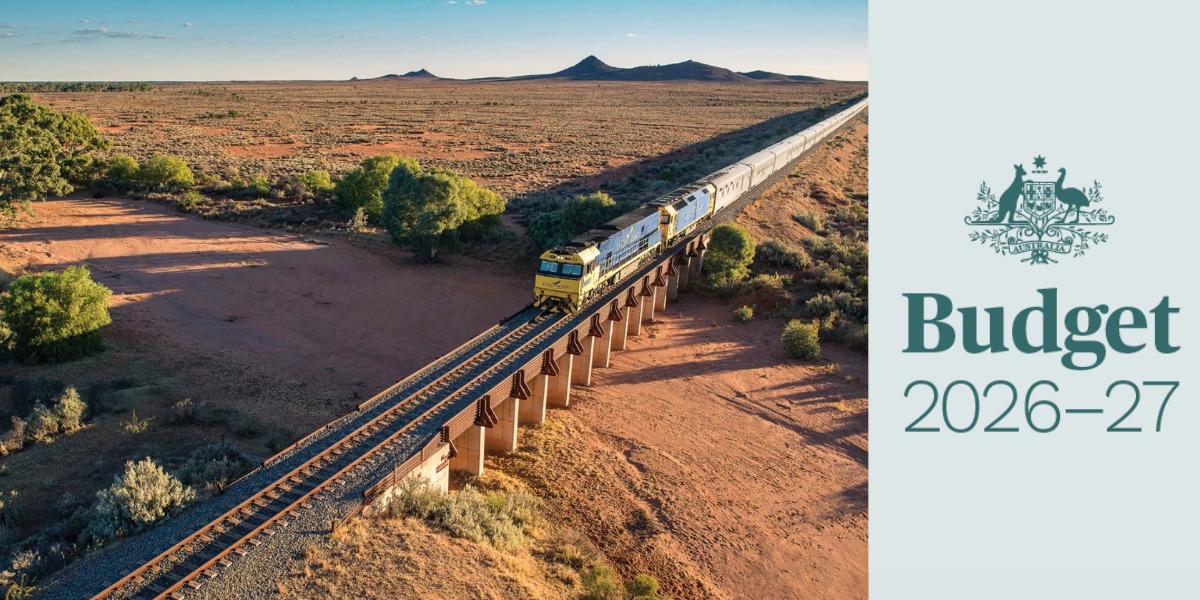
The federal government’s cost cutting ahead of the budget will include axing of the Inland Rail project already under construction, with the shocks to be felt keenly in the New England.
The federal government’s decision to halt Inland Rail at Parkes has thrown major planned developments across the New England into uncertainty, with questions mounting over what happens next for freight-dependent projects in Moree and Narrabri.
The move, to be confirmed in next week’s federal budget, ends any immediate prospect of the freight line reaching the region, despite years of planning that positioned Inland Rail as the backbone of future economic growth.
Questions will be mounting for all three levels of government about whether compensation will be paid to those who have made significant investments
Local planning disrupted, region’s rail link orphaned
The NSW Government itself may be seeking compensation from federal colleagues, as Inland Rail had been embedded in state and regional planning across the New England, with councils, state agencies and private investors aligning long-term strategies with the project.
The draft New England Strategic Regional Integrated Transport Plan, released last week and currently open for consultation, identified the Inland Rail as a central freight spine, with flow-on benefits for road networks, industrial land use and export capacity. The capacity created by Inland Rail and its function as a cornerstone for freight in the region is mentioned more than 50 times in the document.
With the Inland Rail line now set to stop at Parkes, those plans will need to be reconsidered. The Narrabri to North Star section of the line has already been largely completed, as it was existing rail line that needed upgrading rather than construction from scratch, but will no longer be connected north or south, leaving it orphaned and only able to deliver to Newcastle.
Opposition transport spokeswoman Bridget McKenzie said scaling back the project would affect regional communities and industries that had planned around the full route.
“This is a direct hit for the businesses and communities and primary producers that had all geared up for this decadal project,” she said.
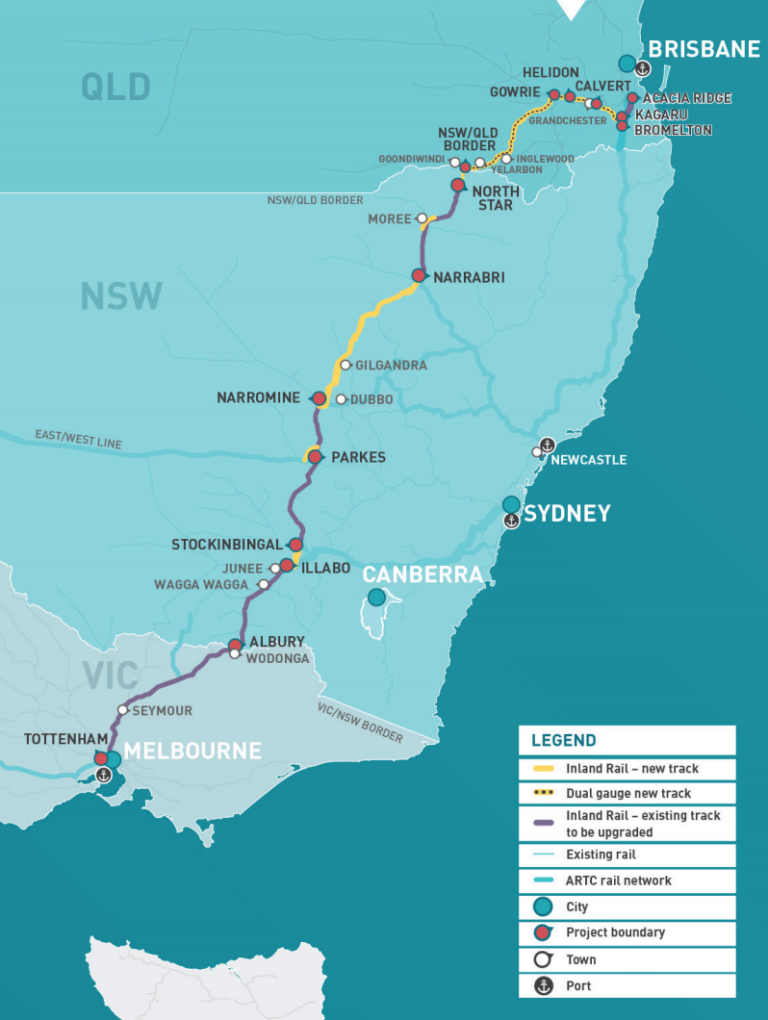
Among the projects now left in doubt is the Moree Special Activation Precinct, which has been promoted as a major logistics and agribusiness hub specifically for the Inland Rail project. The Moree Special Activation Precinct is a 4,716ha area south of the Moree township and adjoining the Inland Rail, and investment of the NSW Government of $224.8m over its duration, tipped to deliver 4,000 new jobs over 40 years.
Other freight and intermodal developments proposed around Narrabri also face an uncertain future, having been planned specifically for the rail line.
While the government has committed $1.75 billion to upgrades on the existing east coast freight network, there has been no specific detail on how that investment will address the gap left in northern NSW.
Joyce scathing, decision “total hypocrisy” and “panic economics”
Member for New England Barnaby Joyce, who was the original champion for the project in 2018, said the decision would have direct consequences for regional development and freight efficiency. Speaking on Sky News he said the decision was very sad for our nation and did not make any sense.
“You can’t have an Inland Rail that goes from Melbourne to Brisbane and stops at Parkes,” he said.
“What are you going to do after that, put them on donkeys?”
“Now we’ve got two Inland Rails. You’ve got one that goes from basically Newcastle to North Star, and another one that goes from Melbourne to Parkes.
“We’ve actually got to connect the two up to get to Brisbane.”
He said the decision came at a time when freight resilience was under pressure, and accused the government of hypocrisy in that rail would achieve the government’s climate and fuel resilience goals.
“Just recently we had an oil crisis, and our biggest concern was the apparent stopping of trucks, of diesel trucks, that move your groceries around,” he said.
“So what would be a great mitigant to that? Could it possibly be a rail line where the trains are up to 3.2 kilometres long, moving between our cities so we can actually move that product around?”
“So instead of moving things on steel with locomotives, they prefer to use tens of thousands of trucks on the road to do the job instead,” he said.
“They can find the money for the swindle factories.”
Mr Joyce was particularly scathing of the economic arguments, pointing out the project pays for itself.
“It’s about panic economics. They just don’t have a vision for that. They have no economic sense.”
“I’m an accountant. You have to build up your balance sheet if you want to pay back your debts. And so you look for substantial assets that actually provide you the return: coal‑fired power stations, ports, freight rail, Inland Rail,” he said.
“What they’re trying to build up a balance sheet with is “swindle factories”: intermittent power precincts of wind towers and solar panels.”
“You’ve got suburban rail—lovely stuff. The tickets don’t even pay for a third of the cost of the rail. So it doesn’t make money. It’s a convenience thing that doesn’t make money.”
“Roads and freight rail, they actually make you money, and they don’t seem to comprehend that. They can’t comprehend the realities of how a real business works, with real assets that drive the economy along.”
He alleged that the numbers were fabricated, saying the Government can’t give the details of how they got to that figure.
“This is just to terrify you, and give them an excuse not to do it.”
“And so what it shows is the total hypocrisy—no matter how you look at them—the hypocrisy, the inadequacy, and the lack of planning of the government that apparently is considering wanting us to vote for them again.”
“I would not trust these people with my cat, let alone our economy,” Mr Joyce said.
Government cites cost pressures, ignores environmental cost
Transport Minister Catherine King said the decision followed updated costings that showed the full project could not be delivered within budget.
A review of the project in 2022 found Inland Rail could reduce emissions by up to 750,000 tonnes a year by 2050 by shifting freight from road to rail. However, it also concluded the project was “late and over budget” with further blowouts likely. A recent appraisal by ACIL Allen increased the projected cost to $45 billion and extended the delivery timeline by several years, prompting the government’s decision to halt the northern section.
“This is more than three times the current budget allocation and this work also confirmed that the project cannot be delivered until at least 2036,” King said in a statement to the Australian Financial Review.
The government will retain the corridor north of Parkes, leaving the way clear for the project to be reinstated, and likely making the issue a key election issue for both the NSW election next year and the next federal election in 2028.
Federal Member for Parkes Jamie Chaffey, whose electorate is home to a huge section of the project, campaign hard on the issue at the last election.
The issue will also impact the by-election in Farrer to be held this Saturday, which the Labor Party is not contesting. The initial anger flash is likely to negatively affect independent Michelle Milthorpe who has been cast as a Labor favouring “teal”, a description she rejects. Barnaby Joyce indicated he believes the decision was targeted at the by-election.
“Why not kick Farrer in the guts just before the election, and shut it down.” Mr Joyce said.
Got something you want to say about this story? Have your say on our opinion and comment hub, New England Times Engage