

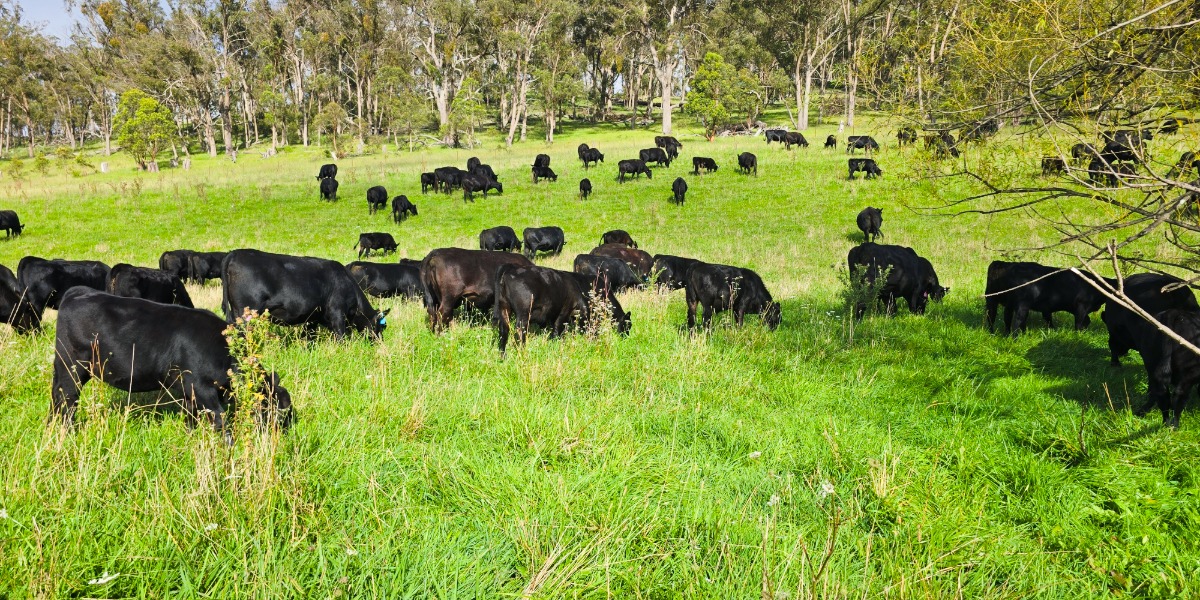
A grazing enterprise near Uralla has been issued more than 5,000 Australian Carbon Credit Units after independently verified increases in soil carbon across the property.
The McClean Carbon Project at North Mihi, owned and managed by Justin Hoad, has received 5,012 Australian Carbon Credit Units (ACCUs) under the Federal Government’s ACCU Scheme.
The project was developed in partnership with AgriProve and covers about 350 hectares of Mr Hoad’s 400-hectare mixed Merino sheep and cattle operation.
The ACCUs recognise measurable increases in soil organic carbon achieved through changes to grazing management, pasture improvement and biological farming practices.
Mr Hoad said the farming changes were originally driven by a desire to improve resilience and productivity, rather than simply generate carbon credits.
“People should be going towards biological farming and improving soil carbon regardless of a project,” he said.
Over more than a decade, the property has undergone major operational changes, including expanding from 15 paddocks to almost 70 subdivisions, installing additional water infrastructure, consolidating livestock mobs and replacing synthetic fertilisers with composted organic matter.
The changes have supported more controlled grazing practices, with shorter grazing periods and longer recovery times for pasture.
Stocking rates on the property have also increased significantly, growing from about 1,900 mostly dry wethers in 2012 to more than 1,000 self-replacing Merino sheep and 200 cattle today.
Mr Hoad said the improvements had become particularly noticeable during extreme seasonal conditions.
The district recorded its driest year in seven decades in 2019, receiving just 280mm of rain, before recording more than 1,200mm the following year against a long-term average of about 780mm.
“We seem to be able to respond quicker to rainfall than the neighbours and hang on a bit longer when it stops raining,” Mr Hoad said.
“We’ve also carried the most stock in the last few years compared to when we first started.”
He said the process of establishing a soil carbon project required patience and detailed record keeping.
“There is a fair bit of work involved, and it does take longer than you might expect,” he said.
“But once the project is up and running, it becomes more straightforward. My advice is to have your records in order before you start and to work with a team you can trust to handle the regulatory side of things.”
Kieren Whittock said the project highlighted the link between productive farming systems and carbon outcomes.
“The McClean Carbon Project demonstrates what is achievable when a focused commitment to biological farming is backed by rigorous soil carbon measurement,” Mr Whittock said.
“Justin has made significant infrastructure and management changes, and the ACCUs issued are a formal validation of those outcomes.”
He said improving soil health could also improve pasture utilisation, lift stocking rates sustainably and strengthen resilience during difficult seasons.
The project adds to growing interest across regional Australia in soil carbon initiatives as farmers look for ways to diversify income while improving long-term farm productivity and drought resilience.
Read all the way through to the end of the story? So did lots of other people. Advertise with New England Times to reach New England locals who are interested and engaged. Find out more here.