

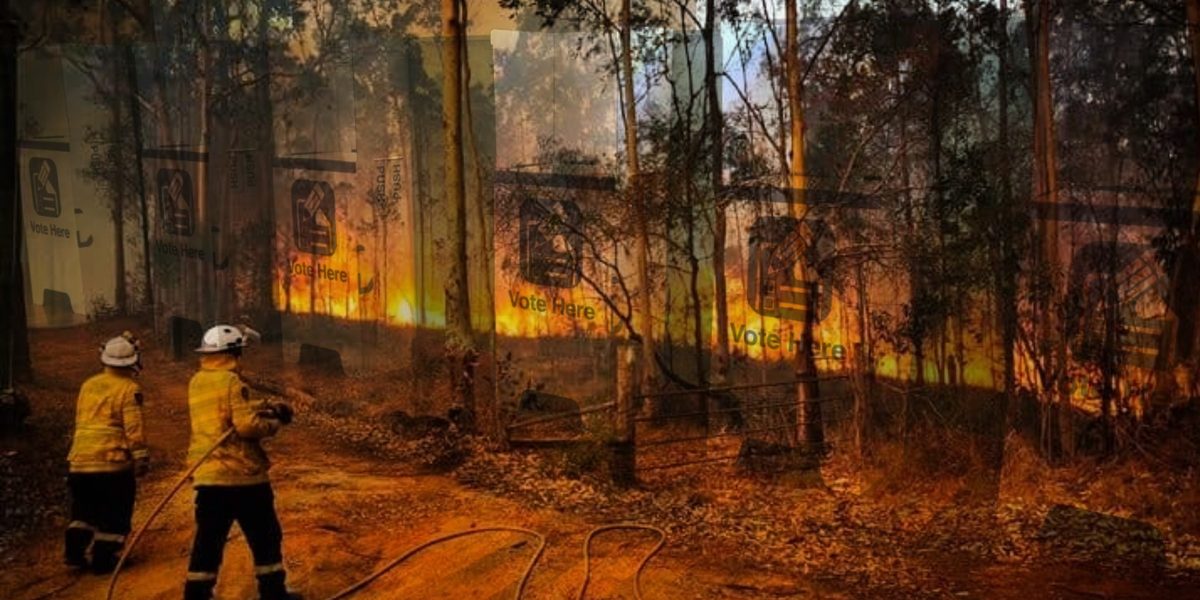
A strong El Niño forecast is promising a bad summer of unpredictable weather, storms, and likely bushfires. On the other side of it, NSW goes to the polls in March to elect a new state government.
A parliamentary inquiry that wrapped up this week found the way the state pays for its emergency services – the Emergency Services Levy – has to change, but nobody can agree on what replaces it. New England councils fear the bill will land on farms and ratepayers.
Every time someone in Inverell, Narrabri, Gunnedah, or Armidale renews their home insurance, part of the premium goes to those emergency services we rely on. And when they pay their council rates, a little bit more goes the same way.
Most never notice. The charge sits inside the insurance policy price, with GST and stamp duty added on top. It also doesn’t appear as one of the itemised things on the rates bill. It’s a hidden tax, but it’s an important tax, because it pays for most of our essential emergency services: the Rural Fire Service, the State Emergency Service, and Fire and Rescue NSW.
This week, a parliamentary committee recommended that emergency services no longer be funded through insurance. It could not agree on what should replace it.
That leaves a hard question for politicians to ponder while campaigning for re-election in the middle of a forecast bad fire season. If they cannot settle on a fair way to pay for emergency services, will a difficult summer force the issue onto the election agenda?
A summer that raises the stakes
On Tuesday, 10 November, the Bureau of Meteorology stated that “A strong to very strong El Niño is underway.” It expects El Niño conditions to last into autumn 2027, alongside a positive Indian Ocean Dipole, which tends to dry out south-east Australia.
In August, the national spring bushfire outlook named north-eastern NSW among areas facing a higher chance of fire. A wet October has been very handy, but the forecast for a bad summer hasn’t budged.
The pressure goes beyond one season. The committee’s first finding was that emergency services funding needs “are likely to continue increasing because of population growth, climate change and the increasing frequency and severity of natural disasters.”
The agencies’ funding target has grown by about 8 per cent a year since 2017–18, well above inflation. Treasury modelling suggests the yearly cost of damage from floods, bushfires, storms, and cyclones could rise by about 70 per cent by 2065–66. In the region, the $13.1 million Namoi Gwydir Fire Control Centre at Narrabri was designed with lessons from the 2019–20 Black Summer fires in mind.
Insurance is part of how communities recover, and the current Emergency Services Levy arrangements make it dearer. The Net Zero Commission, which advises the government on climate resilience, backed removing them. A broad property levy, it said at the inquiry’s hearings, “is likely to promote greater uptake of insurance coverage to households that are not insured or under-insured and drive tangible progress towards making NSW more resilient to a changing climate.”
How NSW pays now, and what the inquiry found
NSW funds emergency services through a tax on insurance, the Emergency Services Levy, or ESL.
The ESL collected about $1.89 billion in 2025–26. Insurers pay 73.7 per cent, councils 11.7 per cent, and the State 14.6 per cent. Insurers pass their share on to customers through premiums, and councils fund theirs mostly out of rates. Treasury says the levy adds an average of 18 per cent to home insurance premiums, and 34 per cent for businesses, farms, and other non-residential properties.
The unfairness is simple. People who insure pay. People who don’t insure pay nothing, though the fire truck still comes when their house is on fire.
Anyone who does not insure “makes no direct financial contribution to the funding of emergency services, even as they benefit,” the committee wrote. “This should be rectified by the next Parliament.”
Reform has been tried before. In 2017, the Coalition Government passed a property levy, then shelved it weeks before it started. Then Premier Gladys Berejiklian admitted the modelling was wrong and the cost to small and medium businesses unfair.
The Minns Labor Government promised to try again in November 2023. Treasury’s options paper, released in April 2026, set out five ways to replace the ESL with a levy on land values paid by all property owners. Treasury said the government had no preferred option.
All five work the same basic way. Every property owner, insured or not, would get a yearly bill based on the value of their land as set by the Valuer General, not the value of the house or buildings on it.
Properties would be sorted into bands, or tiers, by land value. Everyone in the same tier pays the same fixed amount, and each higher tier pays more. Homes, businesses, industrial sites, and farms each have their own tiers and charges.
The five options differ in how many tiers there are, how big the jumps between them are, and who gets a discount. The examples below are for homes.
- Option A is the simplest. Each property type has four tiers. Homes would pay $175 a year on land worth up to about $302,000, $225 up to $728,000, $300 up to $1.41 million, and $523 above that.
- Option B also has four tiers, but with bigger steps between them. Lower-value properties pay less and higher-value ones more. The cheapest homes would pay $158 and the dearest $573.
- Option C has six tiers, so charges track land values more closely. Homes would pay from $141 on land worth up to about $170,000 to $623 on land worth more than $1.94 million.
- Option D uses four tiers like Option A, but adds discounts outside Greater Sydney: 20 per cent in regional towns and cities, 40 per cent in large rural areas, and 50 per cent in rural areas. To pay for those discounts, Sydney properties pay more, with homes charged $189 to $564 before any discount.
- Option E sorts properties by type. Units pay $50 a year more than houses on the same land value, and mines are charged separately from other industrial land. A mine on land worth between $2.5 million and $100 million would pay $200,000 a year, and a mine on land worth more than $100 million would pay about $1.9 million a year.
All five include a $60 pensioner discount on the family home and a 40 per cent discount for vacant land.
A select committee chaired by independent Member for Pittwater Jacqui Scruby examined the paper. It had three Labor, three Coalition, and two crossbench members, received 95 submissions, and heard from 51 witnesses. Its report was tabled this week.
“There is strong stakeholder support for reforming the current Emergency Services Levy,” the committee wrote. “However, there is no clear consensus on support for any of the five options proposed in the NSW Treasury Options Paper.”
Its six recommendations say the next Parliament should adopt a new funding source that is “equitable, efficient, simple and sustainable over time”, separate from insurance premiums and spread fairly. Pensioners and vulnerable people should be protected, and Revenue NSW, not councils, should collect it. It did not pick a model.
“Although there was no consensus in the evidence or within the Committee regarding how this should be achieved, the report explores a number of scheme designs that could achieve this,” Ms Scruby wrote in her foreword.
What New England councils told Parliament
New England councils already pay their share out of rates. Whatever replaces the levy will land on their ratepayers, farmers, and main streets.
Inverell, Narrabri, Gunnedah, and Armidale councils all made submissions. They agree on what is wrong. Armidale does not agree with the others on the fix.
Inverell did the most detailed homework, running Treasury’s options against Valuer General land values for about 8,905 properties in the Inverell Shire.
“Council supports sensible reform of emergency services funding, but it is essential that any replacement model is fair, affordable and recognises the realities faced by rural and regional communities,” said Inverell Shire Mayor Kate Dight.
“Our submission makes it clear that local government should not continue to shoulder an unfair share of this burden, and that any new system must avoid creating unreasonable costs for farmland, businesses and other regional landowners.”
Inverell backs Option D. About 1,495 of its properties, roughly 17 per cent, are farms. The council found 349 would fall in the top two farm tiers, paying $1,487 to $3,390 a year each before discounts.
Shire-wide, Option D would raise about $3.02 million a year before discounts, $2.42 million with a 20 per cent discount, or $1.51 million with the 50 per cent rural discount.
Nobody knows which discount Inverell would get. The options paper names only examples: Armidale is a regional town or city, with a 20 per cent discount, and Tenterfield a large rural area, with 40 per cent. Treasury concedes the classes were not based on actual emergency service levels, as in Queensland, and that more data is needed to classify regions “accurately and transparently”.
“Consequently, the actual levy outcomes for Inverell Shire cannot be accurately determined until the classification methodology is released,” the council wrote.
Inverell also found 393 properties would move up a tier between 2022 and 2024 on land value growth alone, almost half of them farms. It warned this “bracket creep” could lift bills with no change in income. A commercial property moving from tier 3 to tier 4 under Option D would jump from $2,628 to $13,637 a year.
Keeping the council contribution alongside a new levy, Inverell wrote, “would result in landowners effectively contributing twice towards the funding of emergency services, once through the proposed levy and again through their annual rates.” If councils must collect the levy, it wants a fee of at least 5 per cent.
Gunnedah Shire Council’s two-page submission modelled every option against July 2024 land values. Landowners would pay about $2.83 million a year under Option E, $2.44 million to $2.46 million under A and B, and $2.07 million under C. Under Option D, assuming a 40 per cent large rural discount, the total falls to about $1.79 million.
“Council supports the Option that will reduce the financial impact on regional and rural areas,” the council wrote.
Gunnedah wants regional classes based on the Office of Local Government’s council categories, and does not want councils collecting the levy.
Narrabri Shire Council was the reform’s strongest backer, saying the current levy is widely seen as one of the most economically inefficient taxes in NSW.
“This reform presents a generational opportunity to correct long-standing structural inequities in how emergency services are funded,” the council wrote.
Narrabri backs Option D and wants the council contribution removed. It said many residents “face above-average exposure to natural hazards”, and that councils should not become “the public face of the levy”. In a shire with major mining and gas interests, it flagged the lack of a settled approach to mining land as a concern.
Armidale Regional Council is the only one of the four not to back Option D. Its main worry is business, not farms, reflective of its larger urban centre.
“Council’s overriding concern is that commercial and industrial property owners in regional NSW may face materially higher levy burdens under the proposed options, despite already operating in markets with tighter margins, higher freight costs, labour constraints and more limited local demand than many metropolitan businesses,” the council wrote.
It said this “may weaken business confidence, constrain investment and place additional pressure on employers”, listing sites from Beardy Street shops to the Airside Business Park. It prefers Option A, plus a cheaper units category from Option E, and more, smaller tiers for business land.
Armidale said the levy rose 53.1 per cent between 2022–23 and 2023–24, while the rate peg allowed just 3.7 per cent. Councils absorbed the difference. It wants a formal regional impact assessment before any model is chosen, and vehicle registrations to carry part of the cost.
All four councils want Revenue NSW to collect any new levy. Armidale, Inverell, and Narrabri want the council contribution removed, and Inverell and Armidale want tiers indexed.
But Treasury’s modelling assumed the contribution stays. “The Committee, therefore, understands that each of the options presented would continue to depend on the 11.7 per cent local government contribution to fund emergency services,” the report stated.
Regional Cities NSW, whose 15 members include Armidale and Tamworth, wants that changed. It put councils’ contributions at $207.2 million in 2023–24, a cost “largely invisible to the ratepayers who fund it”.
The councils did their own sums because Treasury would not. It refused committee requests for figures by postcode or council area.
“In the absence of this information, the Committee has been unable to determine the extent to which different communities would be affected by a replacement levy,” the report stated.
Five options, and who pays more
The split is statewide. Local Government NSW could not back any single model. Its Vice President, Councillor Khal Asfour, said members differed, “… for example, some councils favour option D because of the regional discounts.”
“Other councils support option C, due to its stronger emphasis on equity and capacity to pay. Others prefer composites, like option E, with surcharges for property types, including mining and potentially home units.”
The core worry is whether ending insurance-based funding just moves the cost onto farmers, homeowners, businesses, and councils.
For households, mostly not. Between 56.6 and 58 per cent of insured homes would pay less, leaving about 42 per cent paying more. Treasury did not model uninsured owners. The benefit also depends on insurers cutting premiums by the full amount of the levy, which the pricing regulator, IPART, will monitor.
“… if you’re not paying insurance, it generally means you can’t afford insurance,” said Fire Brigade Employees’ Union State Secretary Leighton Drury.
Regional homeowners do better, because they pay more for insurance relative to land value and their land is cheaper. Treasury estimated 77.9 to 85.4 per cent of insured homeowners outside Greater Sydney would pay less, against 37.2 to 44.1 per cent in Sydney.
Option D widens the gap. In regional cities such as Armidale, the share paying less rises from 75.9 per cent under Option A to 83.5 per cent. In large rural areas such as Tenterfield, it rises from 89.5 to 96.5 per cent.
Farms are harder. Treasury set insured farms to pay about what they pay now on average, around $772 a year, but only roughly half would pay less. Under Option D, farm charges run from $669 on land worth up to $1 million to $3,390 above $4.01 million, before discounts. A top-tier farm with the 50 per cent rural discount would pay $1,695.
“Agricultural land is a productive business asset, and land value alone does not necessarily reflect farm profitability, cash flow, capacity to pay or use of emergency services,” said NSW Farmers Rural Affairs Committee Chair Sandra Hawken, who farms sugar cane, cattle, and soybeans in northern NSW.
NSW Farmers policy director Elen Welch said Option D was the only option “… that attempted to recognise the differences for regional communities, providing discounts in reflection of the access to services that are different”.
But the group would only back it with changes: capped and concessional charges for farmland, at least a 50 per cent discount for farmers who are active RFS volunteers, farms on several titles under one ABN treated as one enterprise, transparent regional modelling, and monitoring of insurance savings. It also wants discounts for all farms wherever they are, and no exemption for national parks and state forests. Its first preference is funding from general revenue, because everyone pays tax.
Ms Hawken said any system needed safeguards “to ensure rural and regional communities do not do more than the fair share of the heavy lifting on costs – a narrative that is all far too familiar for those in the bush.”
The Country Mayors Association, representing 89 rural and regional councils, wants the State to cover any increase above 10 per cent for five years. Victoria shows why. When its property levy started in July 2025, Regional Cities NSW said, primary producers’ charges roughly tripled. Within a fortnight, Victoria froze farm rates at a cost of about $73 million.
Not everyone accepts regional discounts. Prosper Australia argued regional land is already cheaper because of differences in services, demand, and risk, so discounting it again risks “… counting those factors twice”.
Businesses face the sharpest rises, with 60 to 75 per cent of insured commercial and industrial properties paying more under every option. The Tweed shows what that means at the Queensland border.
“We’ve given an example of a typical business located on the Tweed side of the border with a land value of over $3.31 million,” said Tweed Shire Council General Manager Troy Green.
“They will have an emergency services levy charge of $42,000 per annum or greater under what’s proposed, where in Queensland the same business located just a few hundred metres on the other side of the border with the same land value would pay $3,600.”
The tiers create “cliff edges”. Under Option A, land worth $1,405,000 would pay $300, while land worth $1,415,000 would pay $523. NSW Farmers, Inverell, and Armidale all flagged the problem, and the Valuer General said fixed tiers could lift valuation objections by up to a third.
Then there are the volunteers who make up much of New England’s firefighting force.
“… asking those volunteers to pay a levy to fund the very service they provide is … neither necessary nor fair,” said NSW Rural Fire Service Association President Scott Campbell.
“Some recognition of the contribution that regional communities make to volunteerism, not just to the RFS but more broadly in supporting regional communities, is something that I think the Committee should be alive to and should be considering,” said NSW Rural Fire Service Commissioner Trent Curtin.
The politics of who pays
The decision now falls to whoever wins on Saturday, 27 March 2027.
The insurance industry says the call to replace the levy has support from across Parliament.
“Whoever forms government after March, the people of New South Wales should be confident that both sides of politics now agree this tax is unfair and must go, and the next parliament needs to make delivering a fairer way to fund emergency services an early priority,” said Insurance Council of Australia CEO Andrew Hall.
“The households hit hardest are in regional areas and communities exposed to bushfire, flood and storm, along with small businesses, strata owners and renters, and families on tight budgets, and too many of them are being forced to cut back their cover or go without it altogether,” he said.
Agreeing the tax must go is the easy part. The Minns Government wants a property levy but has no preferred model. Coalition committee members pushed to avoid a new levy on homes and businesses, arguing emergency services should be funded out of general revenue. The Australian Paramedics Association warned that general revenue funding can be cut by the government of the day.
Neither major party has said which model it would adopt, or what protections it would offer regional councils, farmers, and towns.
New England councils have told Parliament what they need: no more cost-shifting onto ratepayers, protection for farmland and pensioners, and a model that recognises the realities of rural and regional communities.
Whether any party commits to that before March may depend on how hot and how long this summer turns out to be.