


Armidale has a reputation for being cliquey, and big local employers have a reputation for struggling with toxic work environments. At Hillgrove Mine, somehow, the opposite has happened.
The genuine affection for both workplace and colleagues that was evident during the official opening event on Thursday wasn’t planned and it wasn’t for show. As six minibus-loads of contractors, shareholders, bankers and journalists rolled out to tour a mine that had just come back from the dead, the Larvotto Resources staff riding along were bubbling with happiness, cracking jokes over the two-way radio and pointing out the view over the gorge like they’d never quite got used to it.
“This would have to be one of the prettiest mine sites in Australia,” said Deputy Operations Manager Andy Harrington, who has worked in mining for 41 years.
“I can’t think of a more picturesque place than this one.”
The safety briefing beforehand set the tone. If an operator approached the vehicle, visitors were told not to wind down the window and pat them, because they were unpredictable. Please, everyone was reminded, do not feed the workers.
“On another note, we do have electricians working out there. If anyone sees an electrician sweating, can you let us know? Because we’d like to get a sample of that sweat, for scientific research,” Mr Harrington said.
The continued jokes, laughter and smiles, down to the waves from happy mine workers as the tour made its way around the site, continued through to the formalities. Even the Anaiwan elders seemed to be in on whatever magic is happening at Hillgrove, Aunty Cheryl who did the welcome to country, Aunty Rhonda, and Uncle Darryl who did the smoking ceremony, all cracking jokes of their own with signs of a warm and friendly relationship with the Hillgrove team.
“The Anaiwan people have put on a brilliant day for you today,” Aunty Cheryl said.
“We were going to have rain, but we thought because you’re special people, we’re going to let the sun shine today.”
“So I had Aunty Rhonda out here doing a corroboree and making sure she danced up this beautiful weather for you.”
Welcome to work
The smiles, constant laughter, and the genuine joy visible among the staff – even those who were not part of the formalities – prompts a simple question. Why is everybody so happy?
Tasha Cole is Larvotto’s Health Safety Training Specialist at Hillgrove, the antimony and gold mine 20 minutes from Armidale that resumed production this week after a decade in care and maintenance. She said morale was key.
“Essentially, this is our workplace, we’re rocking up every day here,” Tasha Cole said. “We just want to make it worthwhile.”
“It’s just vital that you rock up pleasant, because I’m going to see more of my colleagues than I do of my own family.”
“That’s probably not as well spoken as I could put it, but that’s sincere.”
She is new to mining, but not to watching teams under strain. Before Hillgrove, she worked in health and safety for Armidale Regional Council, and before that, she was a paramedic.
Ms Cole, Procurement Specialist Tina Williams and Commercial Manager AJ Larkin were still laughing and joking when approached after the tour for a quick chat about working at the mine, and the thing that was most striking wasn’t any single answer. It was how the three of them talked about each other – and the vibe.
“It’s pretty cool to have that vibe where you’re like a year in,” Ms Larkin said.

AJ Larkin runs the commercial side of the operation, covering accommodation, IT, light vehicles, procurement, warehousing, inventory, contracts and logistics. There were just 40 people on site when Ms Larkin joined the team, the head count more than quadrupling since then.
“When you come through construction commissioning into operation, it gets tense. It’s a pressure cooker, but the vibe has just always been so upbeat and helpful and sincere.”
“There are genuine, sincere people here. People with a good value set, good integrity.”
“I’ve got a fantastic team, of which Tina is one of a wonderful one,” she said. “It really is a good team.”
Tina Williams moved to Armidale from Cobar last September, and aside from the cold, has no complaints.
“It’s freezing. It’s great here, though.”
“Coming here, it’s great because you know, sometimes you see the sunrise, and then you see the sunset, and it’s over the gorge, and it gives me tingles. I love it.”
Ms Williams is a strong believer that work is like anything else in life: it is what you make it.
“I always say this: create your own circus. Create your own happiness,” she said, “you don’t want to come to work dragging your feet.”
The diversity of the team and the values of the people were also top on the list of the things they liked about working at Hillgrove.
“I think there’s a good mix of new and old,” Ms Cole said.
“We’ve got some really experienced people here, just trying to teach the young generation how to improve their mining careers as they grow up.”
“It is a unique team,” Ms Larkin said. “I’m about a dozen years into mining, and this is by far the best team I’ve worked with in my mining career.”
None of the three describe a workplace where people merely get along. They genuinely like each other.
“We see each other, and we dance,” Ms Williams said. “We bust out a move.”
She isn’t exaggerating for effect.
“I like to sing people into work some mornings,” Ms Cole said, demonstrating by singing: “Welcome to work.”
A unique team for a unique site
Hillgrove has been mined on and off for about 140 years. The mine most recently produced gold and antimony from 1969 to 2002, with intermittent operations between 2004 and 2015 before being placed into care and maintenance. Larvotto Resources acquired the site in December 2023 and spent the past two and a half years turning a mothballed hole in a gorge into a fully commissioned processing plant, before resuming full production just this week.
Managing Director Ron Heeks, who has worked on mine builds around the world over a 42-year career, said Hillgrove stood out from anything he had done before.
“We’re combining a unique metal, two unique metals, a unique location and a unique community,” Mr Heeks said.
“I think every mine site I’ve worked on and built a few around the world, they’ve been pretty flat. I think we’ve got something like 50 different levels.”
The site sits on the edge of a 500 metre cliff. If you are so inclined, you can go to the Metz lookout on the other side of the gorge and watch the trucks go up and down the steep drop.
Operations Manager Scott Davis was the first person hired for the restart, arriving from Western Australia almost two years ago. His first visit to the site left a lasting impression.
“I came to the most magnificent mine site in Australia,” Mr Davis said.
“I was taken around. I saw the gorge… and I thought, how on earth am I meant to run this safely? Because it is very confronting when you see it.”
He said he has never seen a mine project planned as thoroughly as this one.
“I can confidently say I have never seen one start with the planning, preparation, and professional attitude that this one is undertaking,” he said.
Mr Davis said building the senior leadership team early, then bringing in the underground contractor Pybar on a four-year contract, had set the tone for everything that followed.
“They set the standard,” Mr Davis said of Pybar’s crews.
“We brought in quality leadership and quality workmanship from them, and as we built our own crew up, they were completely up to the races.”
Larvotto’s Chief Operating Officer, Sonja Neame, said the company had gone out of its way to mix experience levels and diverse backgrounds to build the best team possible.
“We brought together people with a wide range of ages, skills, and experience,” she said.
“People who have spent decades in mining, people starting their careers, women in leadership, technical and operational roles, and experienced operators mentoring the next generation.”
“That diversity makes us stronger, it makes us safer, and it helps us make better decisions.”
Smart choices and strategic benefits
“One of the decisions that we had earlier was that we wanted Hillgrove to be a residential workforce,” Ms Neame said.
“We wanted people living in the region, supporting local businesses, joining sporting clubs, sending their children to local schools, and being a part of the community.”
“We’ve employed locally where we can, even though Armidale is not a mining town per se.”
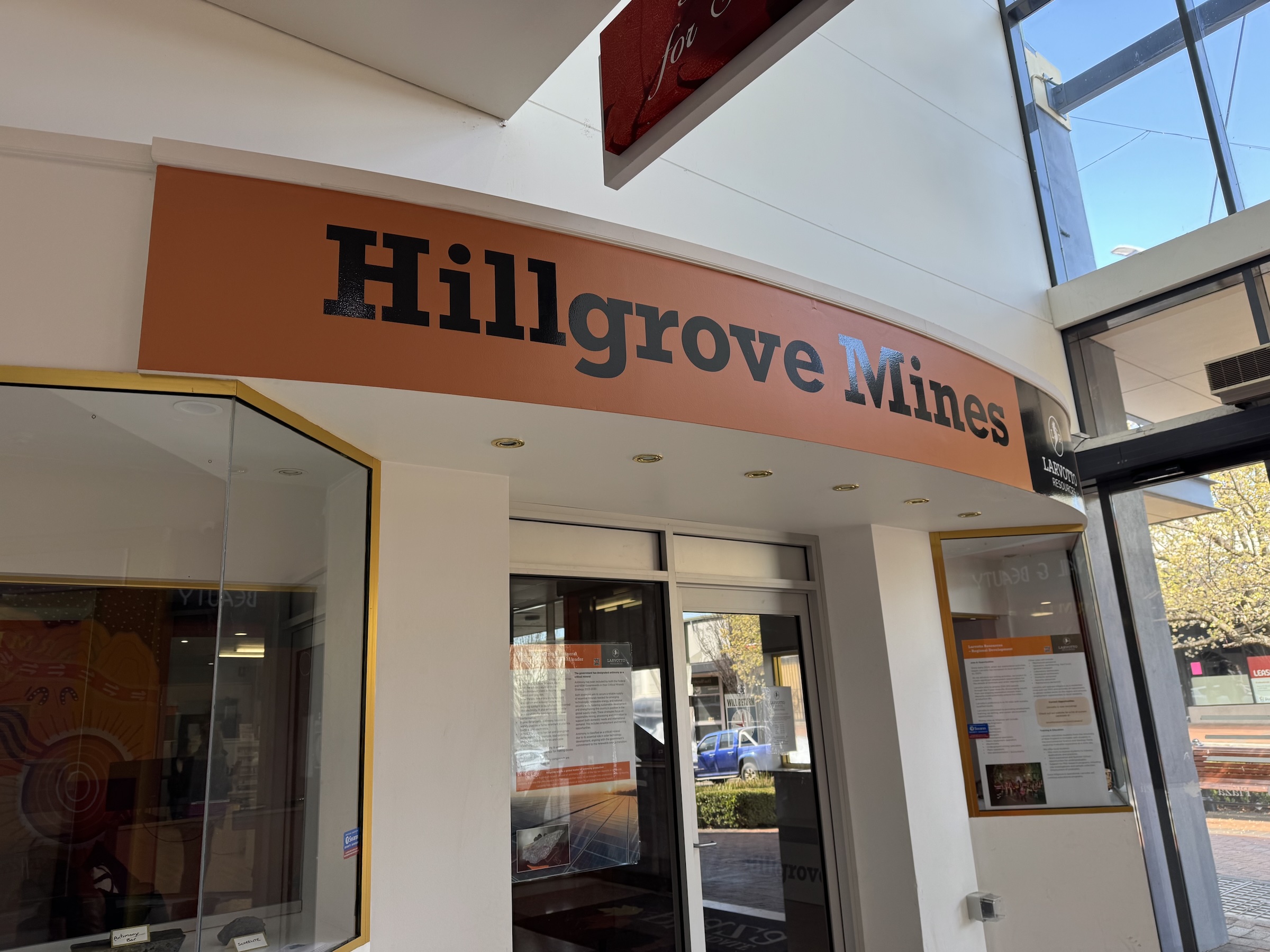
Eighty-three per cent of that workforce lives locally, and most roles are now filled. Recruitment for the few roles still open is running through Seek. The company also runs the Hillgrove Hub, a dedicated shopfront in Armidale that opened in April 2025, where residents can engage directly with Larvotto representatives, get up-to-date project information, raise concerns, and take part in community discussions.
Ms Larkin said the region’s position had made the build easier than it might have been elsewhere.
“We’re in a good position, six hours from two capital cities,” she said. “Our supply chain is seamless.”
“We’ve got about 150 million dollars worth of operational contracts in place now, again, because of our team, and we’re in a good position to feed the mine everything that it needs.”
By the September reopening, Larvotto’s Hillgrove workforce had grown past 175 people, not counting the roughly 60 contractors working alongside them. Board Chair Mark Tomlinson said the willingness of specialist and leadership staff to move to Armidale was unusual.
“Schools, university, you can go home every night,” he said, rattling off the list of benefits not usually on offer for miners.
“That started from when we employed the senior execs of the team out here at Hillgrove. Everyone went ‘oh, no, I’ll move to town’.”

The fly-in fly-out (FIFO) staff they do have also get to stay at Echidna Gully, the mine’s accommodation camp at Metz, bought by Larvotto after it operated for years as a beloved local function venue. As mining camps go, this one is pretty luxurious, but there aren’t many people staying there.
“We thought we would have if it was a 200 workforce, there was going to be 100 plus FIFOs, and we’d had to have enough accommodation for them. We’ve got a handful.”
Ms Neame also reiterated that all that Armidale has to offer made recruitment so much easier.
“We’ve been able to attract really good quality people to the region. So we’ve been very fortunate there, and that’s thanks to Armidale because it’s easy to break schools, great community, fantastic coffee shops…”
“We are very grateful to have the support of the community and we consider ourselves part of the community,” she said.
Mr Davis said they are also focused on what they give back to the community, and not just jobs.
“We’re bringing wealth. We’re bringing training. We’ve got lots of new people coming,” he said.
“It all makes a huge difference.”
The Armidale curse and how they broke it
Armidale does have plenty going for it: beyond the usual highlights of great education and affordable living, it’s unique for a small country town to have so much going on. There’s active networks for arts and music including orchestras, choirs, and theatre companies, endless sporting clubs and outdoor recreation, a variety of service clubs, even a strong queer community, a remarkable sustainable living network with multiple events a year, and much more.
But it’s also notoriously a very cliquey place, where what’s on is often only communicated by word of mouth within the clique.
The success of the city’s Ezidi refugee community, and other micro-communities within Armidale, is evidence of how well those cliques can be beneficial to support a vibrant life and high levels of diversity within a fairly small community. As the saying goes, find your people and your life in Armidale will be very full.
But the flipside is that cliquiness also creates an environment that allows for exclusion and division. Those who don’t find their people experience high levels of loneliness, reporting that “people are friendly but it’s hard to make friends”, leading to general unhappiness and even depression. Some leave town in a short period of time. Local psychologists call it Armidale’s curse.
It’s a dynamic that has historically clashed with workplace culture in some of Armidale’s larger workplaces, with consequences well beyond office friction. The Australian Pesticides and Veterinary Medicines Authority, forcibly relocated to Armidale from Canberra in 2016, commissioned an independent culture review in 2022 after a staff survey found 11 per cent of employees had witnessed or experienced harassment, and 13 per cent had reported discrimination.
The University of New England has faced its own reckoning a number of times, and seems to always be having culture reviews and restructures. A National Tertiary Education Union survey in 2022 found 40 per cent of staff reported burnout symptoms, more than a quarter showed signs of severe depression or anxiety, and 29 per cent said they experienced workplace bullying daily. The union’s Dr Matthew Allen called the results “really distressing to read.” SafeWork NSW intervened after a reported suicide of a staff member related to issues at work.
Armidale Regional Council also went through its own very public toxic culture issues. Between 2018 and 2020, the organisation cycled through nine different people in its top job, and was put into administration. Staff reportedly avoided wearing their council uniforms in public for fear of being abused. A multi-year culture transformation followed, run with consulting firm Dattner Group, to try and repair the damage.
But while Armidale’s other major employers struggle with interpersonal issues, Larvotto’s Hillgrove operation has so far avoided all of it. The people on site describe something more specific than luck. They describe a company that worked to plug new arrivals into the town, rather than leaving them to find their own way in.
“We get the community events emails sent out from the council as well, so we always know what’s going on. We’ve got our community liaison officer, so that helps,” Ms Cole said.
“We’re working really hard to input into any events from the Larvotto perspective as well.”
“As we’ve employed local, there is a vested interest not only in the success of this mine, but for what it brings to the community as well,” she said.
Ms Cole and Ms Williams were some of the Hillgrove team that took part in the mine’s first entry in to the Autumn Festival earlier this year. Off the clock, the team hang out together too.
“It’s great here. It’s a great community,” Ms Williams said. “It’s a small community, but there’s so much to do.”
“They get behind community events, and I’m kind of proud to be a part of a lot of the stuff that I attend.”
“If there’s a comedy show on we’ll go to it, or yeah, a park run every Saturday morning, or camping,” Ms Williams said.
“Even from the people that don’t reside here is it’s wonderful to live and work in this community because it’s not like your typical mine site because we get to be enjoy the town community,” Ms Larkin said.
Learning from the past and the locals
Ms Neame said the company had learned from watching previous owners get Hillgrove’s relationship with the town wrong.
“Companies before us didn’t engage with the community,” she said. “The feedback we still receive is that they might have, but they didn’t do it well.”
She said the question the leadership team kept coming back to was a simple one.
“How are we going to be different to everyone else?” she said. “For us, it’s been engaging early, listening to the community, and being a part of the community.”
The Hillgrove Hub is the physical manifestation of that commitment, providing a shopfront in Armidale where people can find out information and connect.
“The point of the hub was just to provide a community base in town,” Ms Neame said.
“Somewhere people can drop in, find out what’s going on. We don’t see that going away anytime soon.”
“The Hillgrove Hub will be a permanent presence for us for a long time to come.”
The same inclusive approach extends to the mine’s successful relationship with Anaiwan people, the traditional custodians of the land Hillgrove sits on. That they got that right was also confirmed by the Anaiwan elders at the opening.
“We’re not standing on the outside of the fence,” Aunty Cheryl said.
“We’re actually sitting down here with you, having a yarn about what’s best for our community and for communities right across our region.”
“We emu people, we echidna people… we’re not like those other fellas who walk backwards. We walk forwards, and we want to walk forward with new fellas.”
Uncle Darryl, who led the smoking ceremony, also confirmed the meeting of minds on working together as one community.
“We don’t push our things like our ceremony stuff on people,” he said. “We like to join people, join in with us, be part of it, be one.”
All of the staff present took the opportunity to be part of the smoking ceremony. Mark Tomlinson’s eyes lit up talking about how special and valued that relationship is.

“No one’s done a smoking ceremony like that the way you actually go and be involved rather than just sit there and listen,” he said.
He acknowledged that mines having such a warm relationship with traditional owners is not something that usually comes so easily.
“It could be really bad, and obviously we would work really hard to avoid that, but no, they’ve been great.”
“This is such a beautiful spot,” he said, “you just want to take care of it.”
Keeping the magic alive for as long as possible
The buzz between staff that was so evident at Hillgrove may be more than just great culture fit and a collective sense of humour. It’s also the sense of opportunity, and excitement about mining tungsten as well as antimony and gold.
The processing plant sits on only part of a much larger mineralised system, and Larvotto holds exploration tenure across 255 square kilometres of the surrounding area, including two already-identified targets at Metz and Midas Lode that the company believes could extend operations well beyond the current mine plan. The company is also examining whether it can process tungsten, which is present in the same ore body, alongside the gold and antimony already coming out of the ground.
“Our ambitions for Hillgrove extend well beyond the commencement of production,” Mr Heeks said.
“We are focused on establishing Hillgrove as a multi-decade mining centre through continued exploration across the broader project area, while assessing opportunities to expand its critical minerals profile through the potential recovery of tungsten.”
The possibility of a longer life than the currently promised eight years made the staff we spoke to very happy.
“With tungsten, we could potentially double the life of the mine, which would be really great,” Ms Williams said.
“Eight years doesn’t include Midas either,” Ms Larkin said. “Clark’s Gully and Midas could throw it out as well.”
“That could take me to retirement,” Ms Cole said with a smile.
“Yep, here to stay,” Ms Williams said.
Like what you’re reading? Support New England Times by making a small contribution today and help us keep delivering local news paywall-free. Donate now