

The NSW Government has released an Australian-first Critical Minerals Skills Plan, timed to coincide with Sydney hosting the International Mining and Resources Conference (IMARC) this week.
The conference attracts more than 12,000 attendees from 120 countries. The government says it highlights the strength of the mining sector.
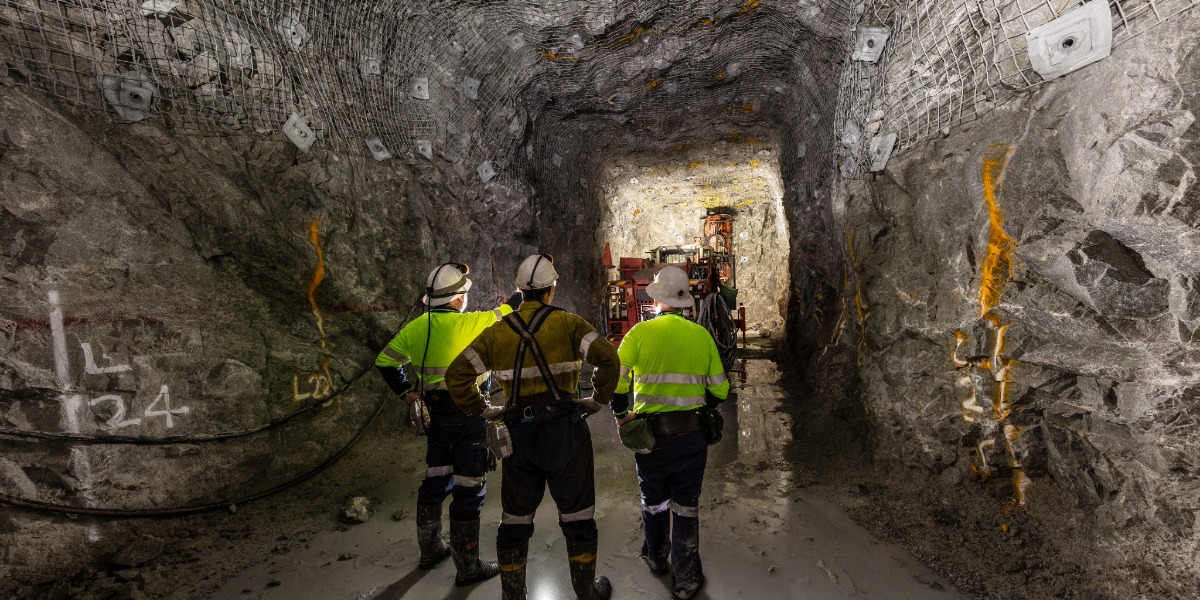
Mining in NSW directly employs about 31,000 people. Another 7500 businesses form part of the wider supply chain, and the industry invests more than $14 billion a year, largely in regional communities.
Coal mining remains the state’s largest export. Gold, copper, silver, and other critical minerals and high-tech metals are also important contributors and employers.
The Skills Plan sets out actions to build the critical minerals workforce of the future. It aims to inspire the next generation of geoscientists, engineers, and tradespeople, and to expand understanding of earth sciences.
It includes initiatives to grow awareness of career opportunities in the sector. University students and emerging professionals will get work experience, project, and research opportunities. Local companies will also get help to pitch to investors.
The plan was developed after talks with industry, education providers, and unions. It targets skills in geoscience, minerals processing, engineering, trades, and environmental, social and governance practices.
“Our new Skills Plan leans into what is already one of our key competitive advantages – that we have a broad and dynamic skills base for the mining industry,” said Minister for Natural Resources Courtney Houssos.
“Continuing to invest in the critical minerals industry is good for workers, investors and regional communities.”
The government also signed a renewed memorandum of understanding with the Japan Organization for Metals and Energy Security (JOGMEC). Japan is the state’s largest coal market, taking about 71 million tonnes in 2025-26. That was almost half of all exports.
The Hunter Valley supplies Japan with thermal coal for electricity generation. The Illawarra coal fields have long supplied metallurgical coal for steelmaking.
The government pointed to other steps it has taken for the sector:
The NSW Coal Industry 2026-50 policy document, which recognises that coal mining will keep playing an important role in the economy for decades.
The NSW Critical Minerals and High-Tech Metals Strategy 2024-35, which includes a $250 million royalty deferral scheme to help eligible projects move into production.
Welcoming the Independent Planning Commission’s approval of the Hunter Valley Operations coal mine, which supports 1500 jobs and about $1 billion of investment in the coming year.
Proposed legislation, due in Parliament next month, to protect 400 coal workers at the MACH Energy Mt Pleasant mine while the project moves through the planning system.
A $2.5 million co-investment seed funding commitment under the Critical Minerals Exploration Program, to encourage more exploration.
The Critical Minerals Skills Plan can be viewed at https://www.nsw.gov.au/critical-minerals-skills-plan
Don’t miss any of the important stories from around the region. Subscribe to our email list.