

Member for Barwon Roy Butler has added his voice to mounting concerns about proposed changes to disaster funding, saying a federal proposal to lift the trigger for natural disaster funding from $240,000 to $2.7 million would be a financial disaster for small councils.
The proposal is part of a package of reforms developed in response to the Independent Review of Commonwealth Disaster Funding, which would also move to a 50/50 funding split between the Commonwealth and state and territory governments.
“The higher trigger may work for an urban council with a budget of hundreds of millions of dollars, but the proposal is an insult to smaller communities,” said Mr Butler.
“Councils in Barwon are already stretched due to their small population base and the need to fill the gaps in services like childcare that metropolitan councils don’t have to think about,” said Mr Butler. “They can’t be expected to handle disaster recovery too.”
Mr Butler said he expected both the NSW and Federal Ministers would see the problem and reject this aspect of the disaster funding report.
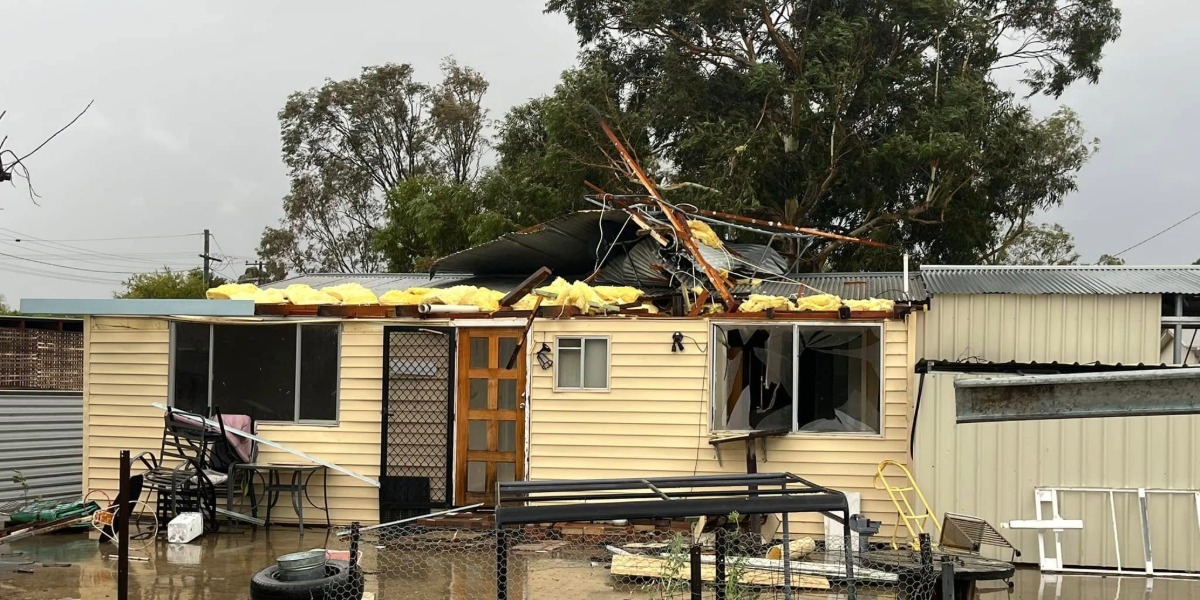
Walgett Shire General Manager Andrew Brown said ferocious storms hit Rowena and Carinda several days apart in 2024, and the two incidents had to be combined to reach the current $240,000 threshold.
“Natural disaster funding allowed us to repair infrastructure and rebuild the communities of Rowena and Carinda,” said Mr Brown.
“We wouldn’t have been able to do it otherwise, as Council is stretched thin and doesn’t have any reserves that allow for disaster response.”
Mr Brown said a $2.7 million threshold would leave many smaller communities without support altogether.
“If the natural disaster trigger is raised to $2.7 million, we could lose the entire infrastructure of many of our communities like Burren Junction and still not qualify for support,” said Mr Brown.
“In that case, we’d be left with a damaged town that’s unable to function.”
“A $2.7 million trigger is too high for us to even repair flooded roads so we could travel between our communities,” said Mr Brown.
Tenterfield Shire Mayor Bronwyn Petrie has raised similar concerns, warning her council is “entirely dependent” on federal and state disaster recovery funding as the Albanese Government pushes ahead with the changes.
Mayor Petrie raised the issue at a press conference in Canberra last month, held during Local Government Week and led by Nationals Leader Senator Matt Canavan and Shadow Minister for Emergency Services David Littleproud.
“We are a shire that has had compounding natural disasters in the last five years, from flooding and storm events to bushfires, and most notably the Black Summer bushfires started in my Shire,” said Mayor Petrie.
Tenterfield Shire has previously relied on state and federal grants to recover from those disasters, and Mayor Petrie said the council could not fund the work alone.
“So we are very grateful for the federal and state government assistance for grant recovery. However, we are entirely dependent on that,” she said.
“At the moment, we are waiting on approval for several of those events, and works cannot commence until we can get that funding, because our Council is not in a position to be able to fund that.”
Mayor Petrie said the changes were of particular concern given the financial position of the New South Wales Government, arguing that Minister for Emergency Management Kristy McBain should be very familiar with the problem.
“So as the Emergency Minister, as a previous mayor of a disaster hit shire, she should be extremely well aware of how councils cannot cope.”
“And to compound that, in New South Wales, our state government has been short-changed on the GST by some $25 billion in this current and next financial year,” she said.
“So, how are they going to be in a position to step in to meet any shortfall from the federal government?”
Senator Canavan said the government had blindsided local communities with the announcement.
“This decision from the government a few weeks ago, which was not supported by the Colvin Review, which is not recommended, has called into question whether that support would, in fact, be there when communities need it the most,” he said.
Mr Littleproud said councils needed certainty the arrangement would remain between the states and the Commonwealth.
“They need certainty from this Minister, and I call on the Minister today to give local government the confidence that it will remain a bilateral agreement, that local government will not have to foot the bill for natural disasters into the future, and that she negotiates with the states in good faith,” he said.
The Federal Government says the changes respond to the review, led by Andrew Colvin AO APM, which found Australia’s disaster arrangements had not kept pace with the changing scale and cost of disasters.
Minister for Emergency Management Kristy McBain said the new framework would speed up support for communities.
“Our reforms will create certainty about the support available to communities and ensure it flows as quickly as possible,” said Minister McBain.
“I look forward to working constructively with jurisdictions to deliver a system that is simpler and fairer for all Australians.”
The Australian Local Government Association has also raised concerns about the changes. ALGA President Mayor Matt Burnett said councils in Queensland and New South Wales had flagged serious concerns about the reforms.
“We are seeing serious concerns raised in Queensland and New South Wales, and we know local governments in other states and territories are concerned about how the proposed changes will affect them,” said Mayor Burnett.
“Disasters do not stop at borders, and the ability of a community to recover should not depend on where it is located or the financial capacity of its local council.”
Got something you want to say about this story? Have your say on our opinion and comment hub, New England Times Engage