

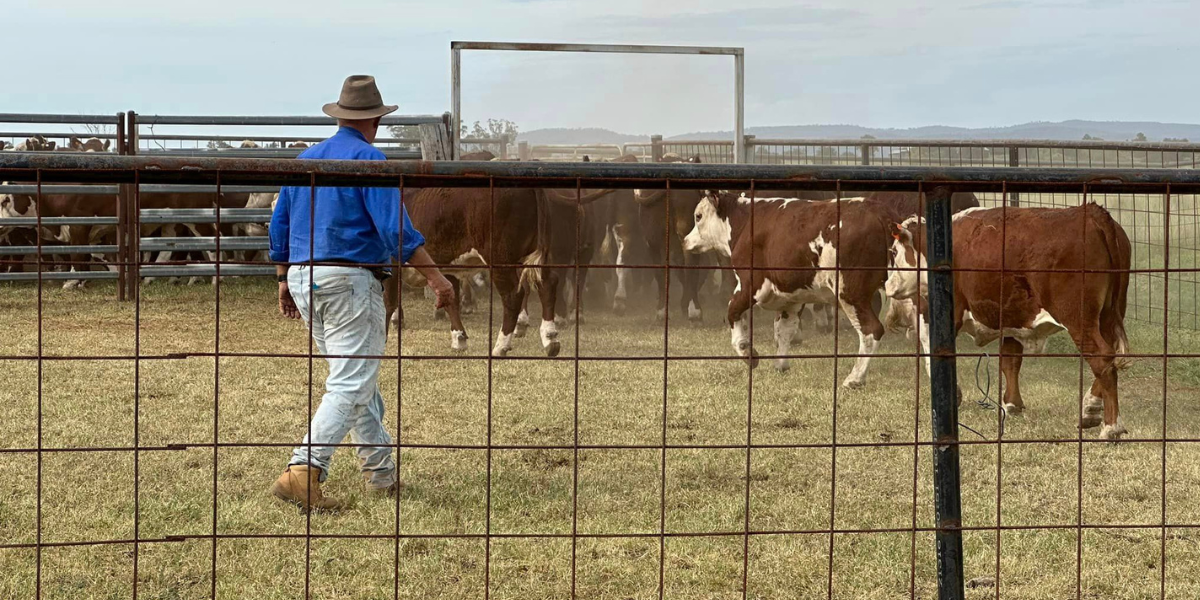
Farmer confidence across the New England North West has plunged to its lowest level in recent memory, with drought and surging input costs hitting producers harder than anywhere else in New South Wales, new survey data shows.
The latest Rabobank Rural Confidence Survey, released on Monday, 16 June, found NSW recorded the weakest farmer sentiment of any state in the country this quarter, with the state’s net confidence index falling to -55 per cent, down sharply from -20 per cent last quarter.
For farmers in the North West of the state, the result was even more stark. That region recorded the largest confidence decline of any area in NSW, crashing to a net reading of -85 per cent, compared to -27 per cent last quarter. Farmers on the Northern Slopes and Plains fared only marginally better, dropping to -54 per cent from -7 per cent.
Rabobank state manager for NSW Toby Mendl said drought was the chief concern driving the pessimism in these regions, in contrast to other parts of the state where high input costs were the primary worry.
“Many livestock producers in the New England, where it has been particularly dry, acted to reduce pressure on pastures via an early sales program making the most of strong commodity prices or by assessing agistment opportunities, largely within the western districts,” Mr Mendl said.
Saleyard figures underline the scale of the response. Mr Mendl said cattle throughput in NSW reached levels not seen in a decade.
“Reported saleyard numbers for New South Wales were the highest seen in the last 10 years with some yards setting new records,” he said. “Fortunately, more favourable conditions in Victoria, South Australia and parts of Queensland have seen active buyers from these regions purchase some of the northern New South Wales cattle. This buying activity has managed to support cattle prices despite the large volumes providing only marginal price reductions.”
Across NSW as a whole, the proportion of farmers expecting business conditions to worsen in the coming year rose to 64 per cent, up from 39 per cent last quarter. Only 10 per cent expect conditions to improve, down from 19 per cent.
Rising input costs were cited as the top concern by 58 per cent of NSW farmers surveyed, up from just 31 per cent the previous quarter. Worry about drought climbed to 47 per cent, while energy security, linked to disruptions in the Strait of Hormuz, surged as a concern from three per cent to 21 per cent.
Mr Mendl said the Middle East conflict had amplified cost pressures that were already running hot.
“The pressure created by the conflict on the price and availability of key farming inputs has compounded farmers’ existing concerns around higher costs, which had already moved structurally higher,” he said. “The overall margins for farming businesses are under pressure, machinery, fuel, energy, fertilisers, crop protection chemicals, labour and water costs have all been elevated, and this is weighing on farmers’ minds, along with interest rate concerns.”
Mr Mendl said producers would be watching closely for any outcome from the announced US/Iran war peace agreement and its potential to reopen the Strait of Hormuz.
Among commodity sectors, NSW cotton growers reported near-total despair, with confidence falling to -94 per cent. No cotton growers surveyed expect economic conditions to improve in the next 12 months, with high input costs and soft commodity prices cited as the key drivers.
Dairy farmers also reported a sharp deterioration, with sector sentiment dropping to -84 per cent from -19 per cent last quarter. No dairy farmers expect business conditions to improve, and 84 per cent now expect conditions to worsen over the coming year.
Beef producers in NSW recorded sentiment of -52 per cent, down from -8 per cent, with exactly half of those surveyed nominating drought as their major worry. Sheep producer confidence also fell, to -40 per cent from -7 per cent, with the combination of high input costs and dry conditions the key factors.
Grain growers provided a rare bright spot, with confidence actually improving slightly to -39 per cent from -48 per cent last quarter. The proportion expecting business conditions to improve in the coming year edged up to 21 per cent, from 17 per cent.
Mr Mendl said recent rainfall would likely lift that number further.
“This sense of optimism will be further buoyed by the recent rainfalls, with many growers now committing to a much larger winter cropping program,” he said.
Beneficial rain that fell across the Central West in late May arrived after the survey was completed, meaning its impact on sentiment was not captured in the results. Mr Mendl acknowledged the rain had already shifted the mood for some.
“Widespread rain in recent weeks across the Central West has been welcomed by farmers, and for some, delivered a serious season turnaround,” he said. “However, there are still many producers, particularly in the New England and north western cropping regions, dealing with the effects of below-average rain through summer and autumn.”
Despite the gloomy headline numbers, there are signs farmers are holding steady on investment. More than half of those surveyed, 53 per cent, said they plan to maintain current investment levels, up from 51 per cent last quarter.
Those planning to increase investment fell to 22 per cent from 35 per cent, while those planning to cut back rose to 20 per cent from 11 per cent. Planned investments remain focused on on-farm infrastructure, with 60 per cent of those intending to invest nominating that as a priority.
Mr Mendl said the approach reflects a careful and deliberate mindset in a difficult environment.
“Farmers were taking a cautious and strategic approach to spending at present, honing in on those key investments that deliver long-term benefits to businesses,” he said.
The Rabobank Rural Confidence Survey is conducted quarterly by an independent research organisation and has been running since 2001. It surveys an average of 700 primary producers across Australia. The next results are due for release in September 2026.