

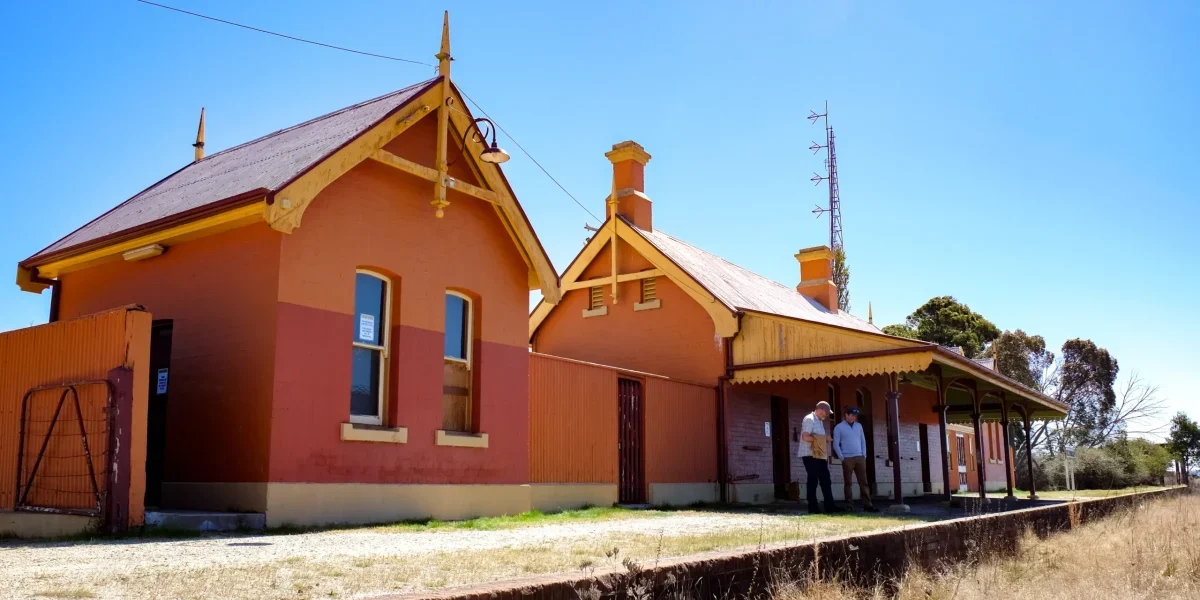
After years of sitting vacant, the Deepwater Railway Station is set to come back to life, with the Deepwater Progress Association securing a formal licence to occupy the heritage-listed building.
Glen Innes Severn Council voted unanimously at its meeting on Wednesday, 28 May to accept the Association’s expression of interest and enter into a Licence to Occupy for the station, for an initial term of three years, with an option to extend to 30 November 2030.
The licence was granted on a peppercorn basis, recognising the Association’s commitment to carry out general maintenance that would otherwise fall to council.
President of the Rail Subcommittee of the Progress Assocaition, Chris McIntosh, said the milestone marked the end of what had been a longer road than anyone expected.
“Our understanding was that council has a lease on the site and would be able to sub-lease it to us. We imagined it would be pretty straight-forward,” said Mr McIntosh. “When I spoke with then-mayor Rob Banham, he thought it would be a ‘box-ticking exercise’. We didn’t anticipate the complexities of anything to do with rail in NSW.”
Mr McIntosh said the group had since come to understand that their experience was not unusual.
“Since we started this process we’ve heard rumours of other communities in NSW taking 5 years or more to get access to their stations, so considering that we’ve actually done okay,” he said.
The resolution, moved by Cr Tim Alt and seconded by Cr Max Elphick, was carried with seven votes to zero, authorising the General Manager to execute the licence and associated documentation on behalf of council.
With the licence now signed and returned to council, the Association is waiting only for an ingoing inspection before receiving the keys to the building.
The station has been vacant for as long as 17 years, according to Mr McIntosh, and the building has not gone without incident during that time. A ceiling in one of the rooms recently collapsed after a water leak went undetected, and the Association has already had to board up broken windows and fundraise for security cameras.
Mr McIntosh said the experience highlighted exactly why heritage buildings needed to be occupied. “Empty buildings deteriorate, and that deterioration can accelerate over time, especially if water starts getting in,” he said. “It’s really important that our heritage buildings are occupied so that regular maintenance can keep them in good condition. Using an historic building also keeps the local community connected to its story.”
Despite the long wait, local interest in the station has remained strong. Residents living nearby have been keeping watch over the site, and Mr McIntosh said it was rare for a day to pass without someone pulling up for a look.
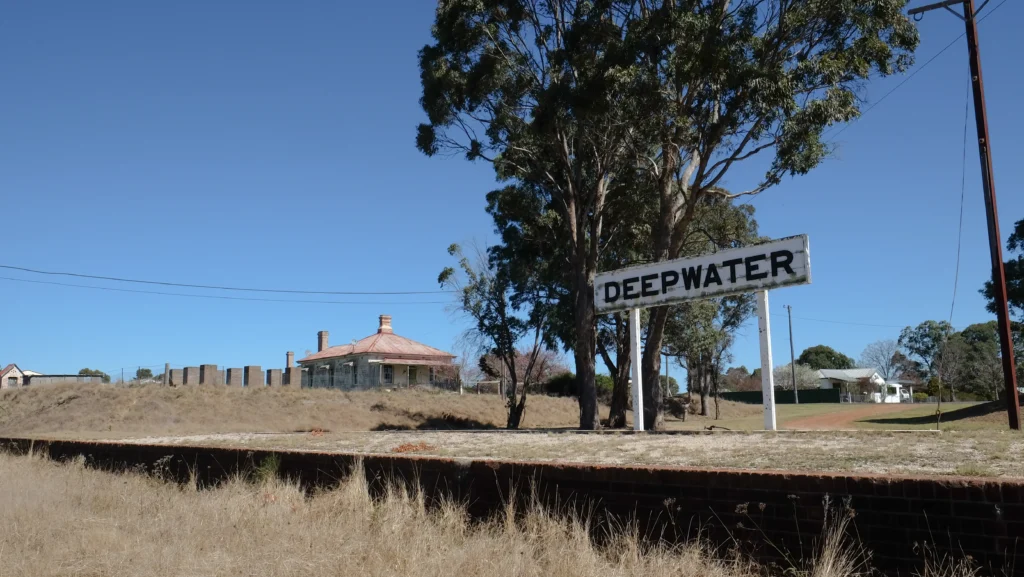
“There’s been a lot of interest across the board, really. I think most people are just excited that ‘something’ will be happening, that the building will be used again, and properly maintained after being vacant for so long,” he said.
Plans for the station include establishing a railway museum, with historical displays, markets, community events, functions and repair workshops, all among the ideas that have been discussed. The group has already located a copy of the building’s original structural plans, which are intended to go on display, along with old photographs and other local railway history.
However, Mr McIntosh was careful to keep expectations measured in the short term. “There won’t be any sudden, dramatic changes. Our first priorities will be cleaning the interior of the building and doing a thorough assessment of what repairs and renovations need doing,” he said. “At some point we might have an open day, to let the community take a look inside. A lot of local residents would never have seen inside the building, and even long-term residents might not have been in there for a couple of decades.”
Some aspects of the original vision have had to be adjusted. The Association was unable to obtain permission to use the track area, meaning no displays will be possible on or near the tracks. There are also sections of the building the group has not yet had access to, so a full assessment is still to come.
The building is heritage listed, and the Association will need to work with council on any alterations, though Mr McIntosh said preserving its original character had always been the intention. The mayor has also expressed hope that the state government could assist if any significant structural work is required, with council’s own finances stretched.
On the funding front, Mr McIntosh said the Association was reasonably confident. “I don’t think funding is probably going to be too much of an issue for us. We’ve been able to fundraise pretty easily,” he said, pointing to a range of grants the group intends to pursue, including the Heritage Rail program.
The station sits just a few hundred metres from the New England Highway, and the Association is hopeful a revitalised building will give passing travellers a reason to stop in Deepwater.
“Using an historic building also keeps the local community connected to its story,” Mr McIntosh said.
Something going on in your part of the New England people should know about? Let us know by emailing newsdesk@netimes.com.au