

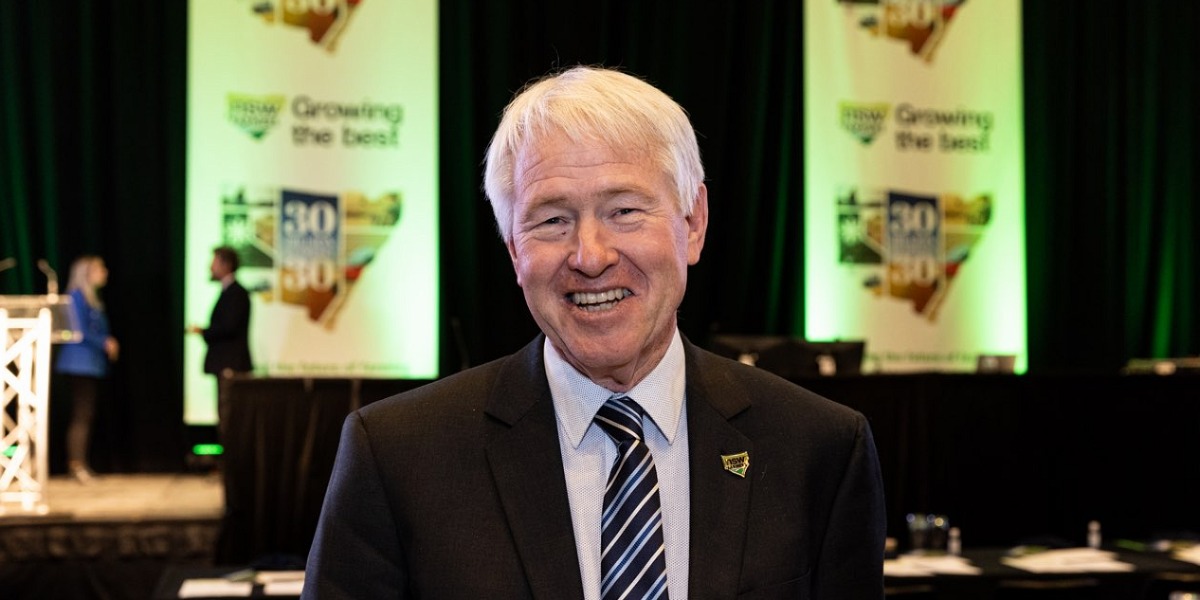
More than 300 farmer delegates from every corner of the state will converge on Rosehill Gardens Racecourse this week for the NSW Farmers annual conference, a two day gathering that will elect a new president and set the peak body’s fighting agenda on energy, water, drought, and the rising cost of doing business on the land.
NSW Farmers CEO Annabel Johnson said the conference was designed to turn those paddock frustrations into policy.
“Our Annual Conference is about hearing directly from farmers about the issues in the paddock and deciding on the solutions needed,” Ms Johnson said.
“Our members decide on the issues we need to solve to continue to provide fresh local food and fibre and how best to use our united voice to grow the future of farming.”
“It’s a critical time, with the State election coming up in March next year and no shortage of challenges currently facing farm businesses and rural communities in 2026.”
That frustration runs right through the conference paper. Delegates will debate 105 motions across livestock, plant industries, economics, environment, rural affairs, organisation, and workplace relations, along with any urgency motions, and New England branches have driven many of the biggest.
Nearly half the motions sit under the environment banner, and the energy transition is at the heart of them. With the battle about developments and existence of the Renewable Energy Zones largely lost, the fight persists almost exclusively on transmission lines.
The Armidale branch wants the proposed capacity of the New England Renewable Energy Zone cut from 8 gigawatts to 3 gigawatts, stating a full build out “would result in a major industrial transformation of the New England region”, with new transmission lines cutting “directly through agricultural land and about 100 farms”. Existing projects in development in the New England Renewable Energy Zone have a generating capacity of 11GW; it is believed the motion is attempting to reflect the Coalition election pledge to reduce the transmission capacity and hobble the planned development. They also have a lengthy motion to essentially demand what already exists: a responsible renewable energy framework that protects farming and requires contributions of developers, including proper site decommissioning.
Walcha’s motions have a similar theme, seeking that NSW Farmers advocates against compulsory acquisition of land for the transmission lines, and a somewhat confusing motion that asks Energy Co to reassess and adjust all REZ transmission infrastructure requirements.
Water is another flashpoint, with delegates to debate nine separate motions ranging from calls for more water for irrigated agriculture to opposition to Murray Darling Basin buybacks. To the region’s west, the Tambar Springs/Gunnedah branch wants the NSW Government to drop support for the Narrabri Gas Project, stating the project would “risk contamination of the Great Artesian Basin”.
Drought is back on the agenda too. The Armidale branch wants it recognised as a social as well as an economic crisis, backed by long term funding for rural mental health services, while the Guyra branch is pushing for drought declarations based on objective rainfall and seasonal data rather than ministerial discretion.
Research cuts, farm safety, workers compensation, and fuel security all feature, with the Glen Innes and Monaro branches fighting to keep CSIRO and DPI research stations open, including the Chiswick facility between Armidale and Uralla, and the Tamworth and District branch calling for Australia to hold 90 days of onshore fuel supply, at least 30 per cent of it in regional areas.
Fuel is front of mind for the association’s leadership too, after global shocks tore through farm margins.
“Our farmers saw their profit margins evaporate almost overnight due to the Middle East conflict, which also exposed the vulnerability of our fuel and fertiliser supply chains to global shocks,” Ms Johnson said.
“Protecting the supply of food, fuel, and fertiliser requires urgent policy action, including onshore fuel reserves.”
“This will be one of the key issues at this year’s Conference and aligns with its theme of ‘A Stronger Farming Future – Grow your Voice, Grow our Future’.”
Ms Johnson will join other industry experts at a pre-conference panel on Monday evening examining how Australia can future-proof its food, fuel, and fertiliser supply chains.
Red tape and market fairness get their share of attention as well. The Guyra branch wants the ChemCert training requirement dropped for access to 1080 pest control products and trade implications weighed before mRNA vaccine technologies are approved, the Walcha branch wants ruminant methane counted as zero in the emissions reporting farm businesses now face, and the Moree and Croppa Creek/North Star branches are pushing to unlock the reserves held by research and development corporations so levy funds can flow back into research.
The Tenterfield branch has saved some of the strongest language for second and third tier lenders, which it wants bound by the same APRA rules as the major banks, stating they promise competitive rates “to suck in particularly young farmers with high debt ratios who have been turned down by the major banks”.
“These pariahs exhibit predatory behaviour and are getting people into a terrible mess,” the branch stated.
The state’s political leadership will be there to hear it all. Premier Chris Minns, Agriculture Minister Tara Moriarty, Climate Change and Energy Minister Penny Sharpe, and Opposition Leader Kellie Sloane will all address delegates across the two days, with the Premier also helping present the association’s tertiary scholarship awards.
Mullaley farmer Xavier Martin will finish up his term as President during the conference, presenting his final report Tuesday Morning while voting is underway on the next President of the critically important state farming body. Moree farmer Rebecca Reardon is rumoured to be the frontrunner to replace him, retaining the leadership in the New England as it has been for much of the organisation’s history.
Alongside the presidency, delegates will elect a vice president, three board directors, and councillor positions before the conference wraps up on Wednesday, 22 July. The conference runs from 8am to 6pm each day, with a livestream available here.
Got something you want to say about this story? Have your say on our opinion and comment hub, New England Times Engage