

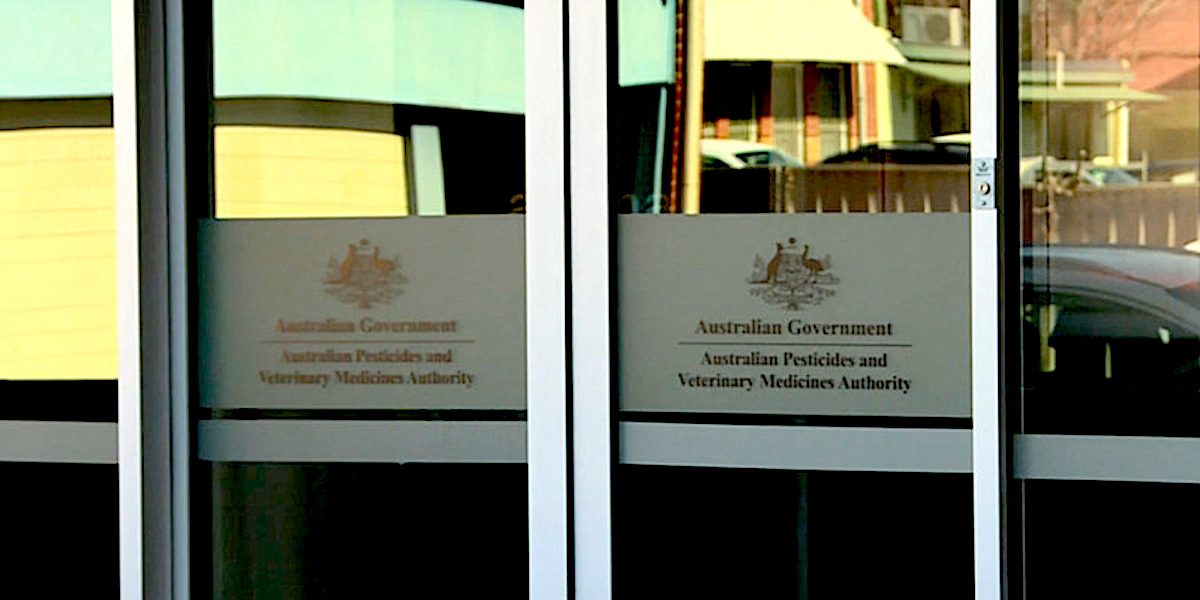
New performance figures from the Armidale based Australian Pesticides and Veterinary Medicines Authority (APVMA) have prompted renewed criticism from industry, with concerns delays are limiting farmers’ access to new products at a time of heightened pressure on the agricultural sector.
The authority’s quarter two report for 2025–26 shows 74.4 per cent of applications were completed within statutory timeframes, down from 80.2 per cent in the previous quarter and below the 90 per cent target.
The results cover approvals of active ingredients and labels, product registrations and permits, and come as the regulator continues to work through a backlog of applications.
CropLife Australia chief executive Matthew Cossey said the latest figures raise serious questions about the regulator’s performance.
“The results are as bad as they have been since the former government moved the APVMA to Armidale,” Mr Cossey said.
“While the government has been working to improve the regulator’s performance, the persistence of poor performance continues to cripple farmers in accessing new technologies that deliver enhanced productivity and sustainability at a time when we need it more urgently than ever.”
CropLife said the on-time assessment of new and innovative products and uses had fallen to its lowest level since June 2017, with only 36 per cent of those applications completed within statutory timeframes.
Mr Cossey said the delays were acting as a brake on productivity in agriculture, particularly as farmers face broader supply chain pressures.
“With the shadow of the current global energy crisis looming over all agricultural supply chains, these unnecessary regulatory delays are something that Australia’s farmers should not have to tolerate,” he said.
“More than ever, our farmers need faster access to new technologies and products that enable improved productivity and sustainability. Importantly, these will enable downward pressure on food production costs.”
He said the impact would extend beyond the farm gate.
“With pesticides essential to the commercial growing of almost all of Australia’s fruit and vegetables, these delays create another production risk to farmers. The flow on will ultimately be felt by Australian families at the check-out.”
CropLife also pointed to the cost burden on the sector, arguing regulatory fees and levies were among the highest globally.
“The plant science industry already incurs some of the highest regulatory costs in the world in fees and levies for the APVMA,” Mr Cossey said.
“The Government should be ensuring, in both performance and cost, that the APVMA’s operations do not disincentivise the plant science industry from doing business in Australia and providing Australia’s farmers with the latest crop protection innovations.”
The APVMA declined to respond directly to the criticism, referring instead to its published statement on the quarter’s performance.
In that statement, the authority said it completed 1,358 regulatory decision activities during the quarter, including 546 product registrations or permits and 20 emergency permits, an increase of almost 100 product registration completions compared to the previous quarter.
It also completed 73 compliance investigations and initiated the removal of 378 unauthorised products from online marketplaces.
The authority said the lower timeframe performance partly reflected the completion of a large number of previously overdue applications, which had affected headline figures even as overall throughput increased.
It said the highest number of technical applications in more than 18 months had been finalised during the quarter, indicating increased operational activity, and that stakeholders should expect poor timeframe performance to continue, potentially declining slightly further before improving, with backlog pressures continuing across most assessment areas and recovery likely to take more than a year.
Industry insiders said the performance of chemical approvals was also expected to decline following the departure of the highly respected Maria Trainer, who recently resigned from the role of Executive Director, Science and Assurance, after seven years with agency. Trainer’s strong and sensible leadership was largely credited for the stable performance of the pesticide registration team while the administration side of the building was consumed in internal strife that resulted in a police referral, independent review, and the exit of the Board Chair and CEO.
Mr Cossey said while the industry acknowledged reform efforts, improvements were needed quickly.
“While we acknowledge the APVMA has been undertaking significant internal reform over the past two years, the question now for the APVMA is: when will it get back to hitting the minimum performance targets that are set out in its statutory timeframes?” he said.
“Farmers are facing enough challenges at the moment. An immediate improvement in on-time product assessment is needed more than anything else.”
Like what you’re reading? Support New England Times by making a small contribution today and help us keep delivering local news paywall-free. Donate now