

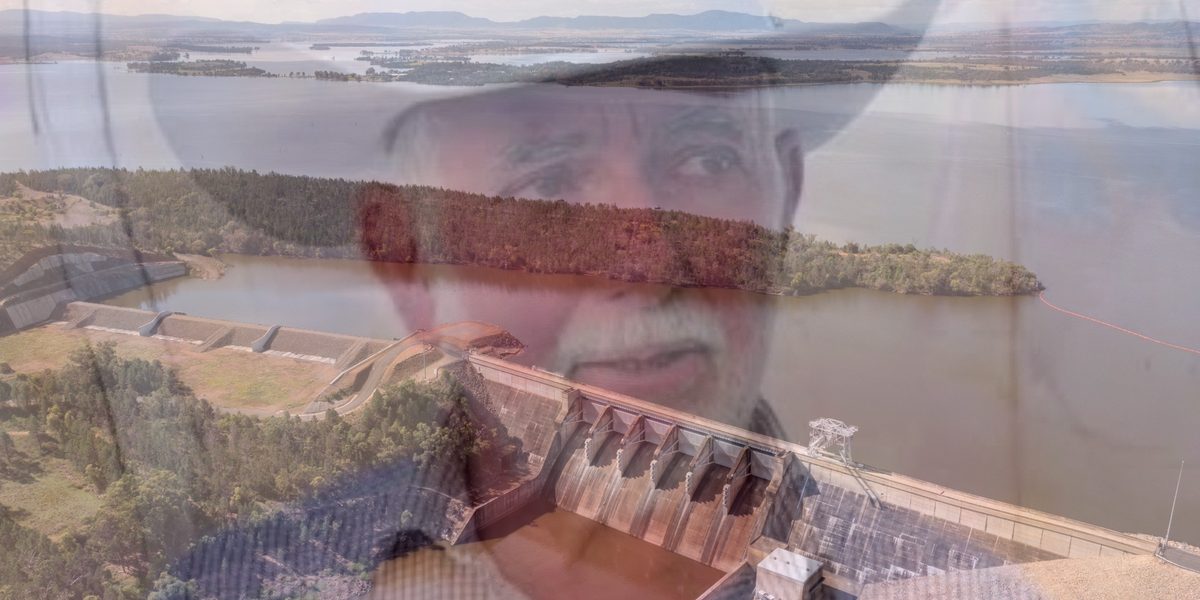
Tamworth spent years planning its drought insurance around a pipeline to Keepit Dam. Downstream communities fought it every step of the way, and this week the NSW Government pulled the plug. So where does that leave the region’s biggest city when the dry comes back?
On Thursday morning, Tamworth Region Mayor Russell Webb faced the cameras with news he had only just received.
His council’s draft water security plan had been on exhibition barely a week. At its heart was a pipeline from Keepit Dam to the Calala Water Treatment Plant. That morning, Minister for Water Rose Jackson had stopped work on it.
“Look, for me, it comes as a bit of a shock and somewhat surprising, and a major disappointment,” Mayor Webb said.
“That preliminary business case identified a pipeline from Keepit to Tamworth as part of our water security plan for the future.”
“And of course, for that to go any further, there had to be a proper business case, a full business case, and that’s been canned as of today.”
In Gunnedah, Narrabri, Walgett, and the farming towns along the Namoi River, the news landed very differently.
The decision ends one chapter of a long dispute between Tamworth and its downstream neighbours. It does not answer the question that started it.
How the Peel and the Namoi got here
Tamworth Regional Council area’s population is forecast to reach 80,769 by 2041, according to council’s draft Tamworth Water Security Plan.
The city relies on one main storage, Chaffey Dam on the Peel River. Council holds 16,400 megalitres (ML) a year of entitlement, against average demand of about 10,200ML.
The Peel joins the Namoi below Keepit Dam, which sits upstream of Gunnedah. In the last drought, Chaffey fell to 12 per cent in February 2020, and Tamworth went into emergency Level 5 restrictions. A pipeline was built from Chaffey to carry water straight to the city, rather than losing much of it along the Peel.
A second plan, a new and larger Dungowan Dam, became a political fight. Member for New England Barnaby Joyce championed the dam from 2016. The Coalition committed up to $675 million in federal funding towards the project, with NSW expected to match the Commonwealth contribution.
In 2022, a water expert disputed whether the dam would help Tamworth at all. That August, Infrastructure Australia found too little evidence to back the $1.3 billion project. It pointed to cheaper options, such as buying back irrigators’ licences and reserving more town water in Chaffey. Mayor Webb rejected them at the time, saying they would hurt Peel Valley irrigators.
After Labor won government federally in 2022 and in NSW in 2023, the dam was scrapped in May 2023.
The NSW Government then spent $3 million on the Tamworth Intervalley Pipelines and Off-River Storages Project business case.
Downstream, the alarm went up early. In April 2025, Gunnedah Shire Mayor Colleen Fuller raised concerns that none of the project’s community engagement had been held in Gunnedah.
A month later, Gunnedah Shire Council backed a motion to the Murray Darling Association stating that taking water from Keepit or Split Rock was not “an appropriate or effective solution”. It called for new infrastructure instead, “specifically the augmentation of Dungowan Dam”, two years after the state had scrapped the new dam.
“We’re not against Tamworth getting more water because they’re going to have 100,000 people living there within a short time,” said Gunnedah Shire Council’s Cr Robert Hoddle, who moved the motion.
“But we’re against the removal of water from Keepit Dam to pump it back to Tamworth.”
Cr Hoddle told the meeting Narrabri Shire Council had endorsed the same motion that week, and Walgett had offered its support. Within months, those councils would form the Triple R alliance.
Gunnedah then took the fight to the state’s peak council body. In September 2025, councillors considered a draft motion for the Local Government NSW annual conference asking for the Keepit and Split Rock options to be withdrawn outright. The motion they put forward urged the state not to top up any council’s supply with water from other catchments where that could compromise the source region’s water security. The conference passed it in November.
Replying to the conference motions in August this year, Ms Jackson wrote that “no decisions have been made” on whether any option would go to a full business case.
What Tamworth’s plan asked for
Councillors voted unanimously on Tuesday, 27 October to put the draft plan on exhibition until Wednesday, 25 November.
The plan wants Level 5 restrictions no more often than once every 50 years, or once in a generation. The NSW Government’s own models put Tamworth in Level 5 about once every 14 years, rising to once every four years as demand grows.
“Our community needs confidence that our existing water allocation can reliably support residents and businesses now and into the future,” Mayor Webb said.
“We are calling on the NSW Government to agree to a clear plan for delivering that reliability, including progressing planning for a pipeline from Keepit Dam.”
The plan rules out groundwater, an off-river storage, and a Manning River transfer as unable to meet that target. Of the two pipelines, it prefers Keepit for its larger catchment and higher inflows.
Planning would start now, since it would take at least three years. Construction would begin only if Chaffey Dam fell to 20 per cent. The pipeline would be sized to deliver about 10GL a year, the volume Tamworth would need if Chaffey failed.
“The most important part of this plan is to agree to an option so that our community is not left wondering what happens next, and decisions aren’t being made in times of great stress,” the plan states.
The same night, council resolved to seek approvals to run the Chaffey pipeline long-term, and more often outside drought.
The view from downstream
The Triple R Water Security Alliance is made up of seven councils: Liverpool Plains, Gunnedah, Narrabri, Walgett, Brewarrina, Bourke, and Central Darling. On Friday, 30 October, they voiced their “strongest opposition” to the Keepit plan.
“Let us be absolutely clear. We support Tamworth securing its water future,” said Narrabri Shire Mayor and Alliance Chair Darrell Tiemens.
“But you cannot solve one community’s water security problems by creating or worsening those same problems for communities further downstream.”
For Mayor Tiemens, the sticking point was the 20 per cent trigger, when downstream towns might also be running short.
“During the last major drought, Keepit Dam was effectively empty. Our communities remember what that meant for families, farmers, businesses and the environment,” he said.
Mayor Fuller, the Alliance’s Deputy Chair, said the dam was the lifeblood of the valley.
“Keepit Dam is not an endless supply of water,” she said.
At the end of the system, Walgett relied on bore water to keep the taps running in the last drought.
“If Tamworth begins taking water from Keepit Dam during the next major drought, what guarantee do we have that there will be enough left to reach Walgett?” said Walgett Shire Mayor Jasen Ramien.
Irrigators went further. Namoi Water Executive Officer Mick Coffey said his group opposed any pipeline, storage reservation, or allocation change that would send Namoi water to Tamworth.
“It is not surplus water waiting to be redirected,” Mr Coffey said.
He also rejected the claim that Gunnedah is unaffected because its town water comes from bores.
“Tamworth’s discussion appears to stop at Gunnedah. However the Namoi River does not,” he said.
“If Wee Waa proposed a pipeline from the Barwon to underpin its future growth, taking water from communities in hotter, drier country and pumping it back towards a cooler, wetter area, it would be laughed out of the room.”
Namoi Water backed further work on a Manning-to-Peel transfer instead.

Member for Barwon Roy Butler represents many of the downstream communities, including Narrabri and Wee Waa. He said Tamworth should take any growth in water use from Peel Valley irrigators, not from downstream.
“Why should irrigators in the Lower Namoi be forced to subsidise Tamworth, when the impacts could be confined to Tamworth’s own Peel Valley?” Mr Butler said.
“The obvious solution, which doesn’t require construction of any new infrastructure, is for Tamworth to use the Chaffey pipeline much of the time.”
Dean Foley of Barayamal, a First Nations community development organisation based in Gunnedah, called on Tamworth Regional Council and Cr Marc Sutherland to give downstream First Nations communities a real say in the plan.
“The test of Sutherland’s promise is what downstream communities can change before council decides,” Mr Foley said.
The minister’s call
On Thursday, 5 November, Ms Jackson announced her decision. The preliminary business case had recommended the Keepit pipeline, but she stopped work on a full business case, estimated to cost $13.6 million, for a pipeline likely to cost more than $340 million.
The government cited “significant objections” from downstream communities and water users, and cost. It also ruled out an advanced water treatment plant to make recycled water for industry. Instead, it asked Water NSW to prioritise the approvals needed to run the existing Chaffey pipeline.
“Right now, Tamworth’s water storages remain in a strong position,” Ms Jackson said.
“This is the right time to make some decisions about how to address future challenges, before they emerge.”
“The Chaffey Pipeline was built in 2019 at a cost of tens of millions of dollars, but it has been sitting un-used for years because the work to secure necessary approvals wasn’t prioritised.”
“I also want to assure other communities and water users in the region that I have heard their voices and will not be pursuing options that put more pressure on stretched water resources like Keepit Dam.”
The Department of Climate Change, Energy, the Environment and Water will publish a summary of the business cases.
Downstream, the reaction was relief. The Triple R thanked Ms Jackson, Mr Butler, and Member for Tamworth Kevin Anderson. It said its communities rely on Tamworth for services and jobs, and supported the city’s continued growth.
Mr Foley also welcomed the decision.
“Common sense has prevailed at Lake Keepit. One community’s water security should never come at the expense of another’s,” he said.
“This is an opportunity to develop a regional approach that gives proper weight to downstream towns, farmers, river health and First Nations communities.”
He said his challenge to the Tamworth councillor still stood.
“My call to Cr Marc Sutherland remains: help give downstream First Nations communities a meaningful role in shaping whatever comes next,” Mr Foley said.
“Shared power should extend beyond Tamworth’s boundaries. This decision gives him and council an opportunity to put that principle into practice.”
Tamworth hits back
In Tamworth, a clearly angry Mayor Webb called it something else.
“I think this decision made by the water minister is pretty much a political decision,” he said.
“I’ll put it to you this way: if you put together the capacity of Keepit Dam and Split Rock Dam when they’re full, 960 gigs.”
“Tamworth uses about 10 gigs in a water year. That’s probably 1.1%. That’s with the dams full.”
Council’s own draft plan lists Keepit at 419GL and Split Rock at 394GL, or about 813GL combined.
Mayor Webb saved his sharpest words for Gunnedah.
“You’ve got to understand that Gunnedah don’t get their water out of Keepit Dam; they get their water out of the ground,” he said.
“The only water that Gunnedah residents use that will come out of Keepit Dam are the irrigators.”
“What should be our first priority for water security in this state and in this nation? It should be water security for critical human need. I think that’s been lost in the transaction there somewhere.”
He said Gunnedah had put “$10,000 of community money aside to fight us and try and stop us from getting that water”.
“I think that tells you what that relationship’s like,” Mayor Webb said.
Gunnedah Shire Council’s records bear out the figure. In May, it allocated $10,000 to an advocacy and communications strategy opposing the pipeline, and asked the other Triple R councils to contribute.
He said the downstream campaign had been built on inflated numbers.
“I do know that there’s been a lot of figures thrown around in the western communities that we were going to take 30 percent or whatever it was going to be,” Mayor Webb said.
“That has never been the case.”
Downstream estimates have varied. In April, Mayor Tiemens told a Narrabri Shire Council meeting the alliance feared the outcome was already decided.
“We are very concerned as a council that it might be a fait accompli that Tamworth gets their hands on 20 gigalitres of water,” he said.
He said the water would be taken “from this side of the state” and channelled “back to Tamworth for their industrial chicken processing farms and their residents.”
“Our residents also need the water,” Mayor Tiemens said.
Council’s draft plan sizes the pipeline at 10GL a year, and says Tamworth would not need that volume every year.
The pipeline nobody uses
That leaves the Chaffey pipeline, now the state’s answer to Tamworth’s water security. Mayor Webb welcomed the work, but said it was not enough.
“I just want to point out that that is great, but it’s not a silver bullet for our water security,” he said.
“We need more water to supply us as we grow into the future.”
The pipeline has sat full of water for years.
“It’s what they call black water or stale water. We can’t just let that go on the paddock or down into the creek,” Mayor Webb said.
Asked whether it had been switched off after the last drought, he said, “No, it was never activated.” Both Mr Butler and WaterNSW say the pipeline has been used during drought – once, for just over a month in June and July 2020.
A council staff member put its capacity at 45ML a day. Mayor Webb said the Peel Valley Irrigators had written to say they were happy for Tamworth to run water through it occasionally to keep it flushed.
“Initially they were telling us 18 months to two years,” he said of the approvals.
“Now they’re telling us they’re going to fast track it. I’m not quite sure how long a fast track is on something like that.”
Even with the pipeline running, Mayor Webb said real security would mean a “floor” in Chaffey, a level below which water is kept for the city.
“If we put a floor in Chaffey Dam so that we do have a little bit more guarantee around our water security for the city, the irrigators in the Peel Valley will suffer from that,” he said.
Mr Butler has argued the Peel Valley, not the Namoi, should carry that cost through a voluntary buyback. Council’s draft plan cites modelling showing that even removing every general security licence from Chaffey would not meet Tamworth’s 50-year target.
The long political fight
For now, the dams are full, and Ms Jackson says that makes this the right time to decide. But time is what the region has had, and spent. Failure to act on water infrastructure is a perpetual issue on a national level, but as the time needed to build new infrastructure is far longer than an electoral cycle, kicking the can down the proverbial road is a popular answer.
Tamworth is not alone in grappling with these issues. Armidale, the region’s other major city, has been stuck on the same problem since the 2017 to 2020 drought, when Guyra and Uralla ran out of water and Armidale came close to Day Zero. The NSW Government rates the area’s supply as Category 5, its highest risk. The fix has barely changed in years: restore Oaky River Dam, pipe its water to Armidale, and raise Malpas Dam.
Armidale Regional Council has run out of patience. In May, it voted to withhold its water from renewable energy projects until the state commits to fixing the regional shortfall. Mayor Sam Coupland sums it up as “no water, no REZ”. In August, council lodged a scoping report for the Oaky River work, but construction is not expected to start until late 2028. Uralla is now weighing a pipeline from Armidale as the leading solution for its own supply woes.
In Canberra, the federal Coalition has formed a water taskforce, chaired by Shadow Minister for Water Michael McCormack, promising proposals for new dams and storage.
“A huge problem is that Labor isn’t trying to build dams or capture more water supplies to grow more food,” said Leader of The Nationals Senator Matt Canavan.
“A future Coalition Government will be hyper-focused on building more dams and unleashing the food growing potential of our nation.”
Mr McCormack said it had been too long since Australia invested in water infrastructure for the future.
“The Taskforce will work with the state and territory governments across Australia to identify water projects that will support our towns and industries,” he said.
“When you take water from a community, it withers and it dies. It struggles to maintain its population,” said Member for Parkes Jamie Chaffey.
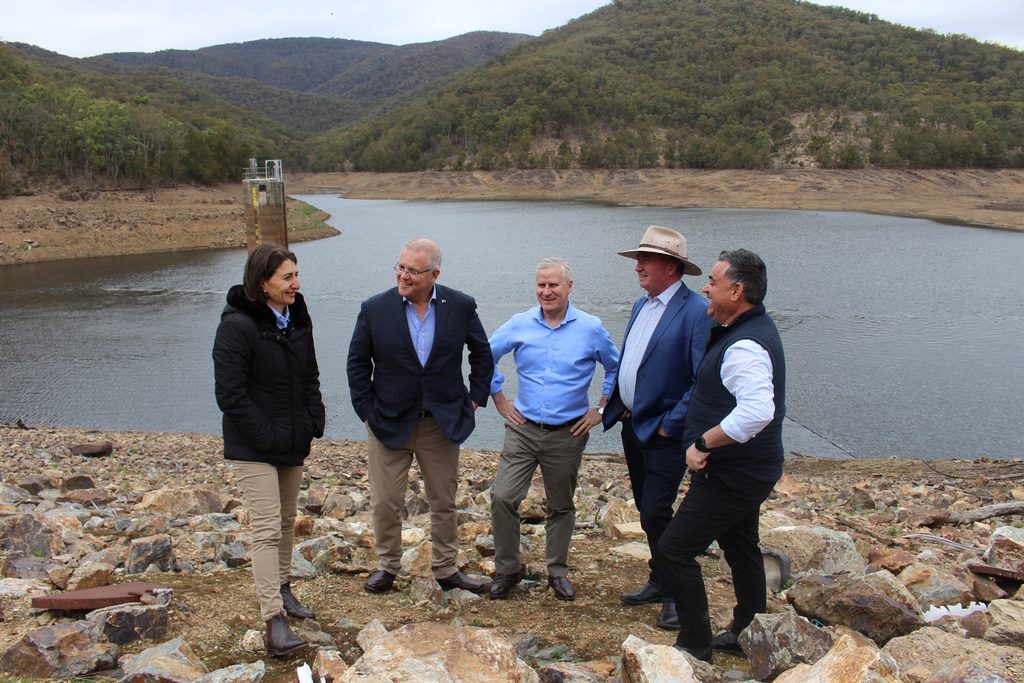
But the Coalition has lost its biggest champion of new dams. Barnaby Joyce, committed half a billion for New England dams in 2019, and in 2023 said Dungowan Dam would come back if the Coalition won the next election. He has since left the Nationals for One Nation, and can no longer make promises on such projects on behalf of a party of government.
Back to the drawing board
The draft plan is still on exhibition, but its preferred option is now off the table. Mayor Webb said council would need to decide its response quickly, with a state election due in March.
“We’ll have to go back to the drawing board and see where we go from here, and we’ll see what happens with the next government after March,” he said.
“If we do go into another drought and we do start running out of water, and people step into level three, four, and five restrictions, it’s certainly not our fault because we’ve tried,” Mayor Webb said.
Tamworth’s own plan spells out the risk. It warns that Chaffey can fall from full to critical levels in less than three years, while planning a new pipeline would take at least three.
That is why Mayor Webb fears what comes next.
“We’ve got a few years up our sleeve,” he said. “But if we step into a three or four or five-year drought, what’s that going to look like?”
Like what you’re reading? Support New England Times by making a small contribution today and help us keep delivering local news paywall-free. Donate now