

Armidale Regional Council has lodged a scoping report for its long-awaited water security project, formally starting the state assessment process for a scheme designed to give the region a second independent water source and drought-proof its supply for decades to come.
The report, lodged with the NSW Department of Planning, Housing and Infrastructure (DPHI), begins the State Significant Infrastructure environmental assessment process under the NSW Environmental Planning and Assessment Act 1979. It sets out the environmental and community impact assessments required for a full Environmental Impact Statement (EIS), which will be publicly exhibited once complete.
The lodgement follows Council’s decision in May to withhold its water supplies from the New England Renewable Energy Zone until the NSW Government committed to funding and delivering the water security package, a position Mayor Sam Coupland previously summed up as “no water, no REZ.”
“The 2019 drought highlighted just how vulnerable our region’s water supply could be and reinforced the need to take decisive action to improve our water security,” Mayor Coupland said.
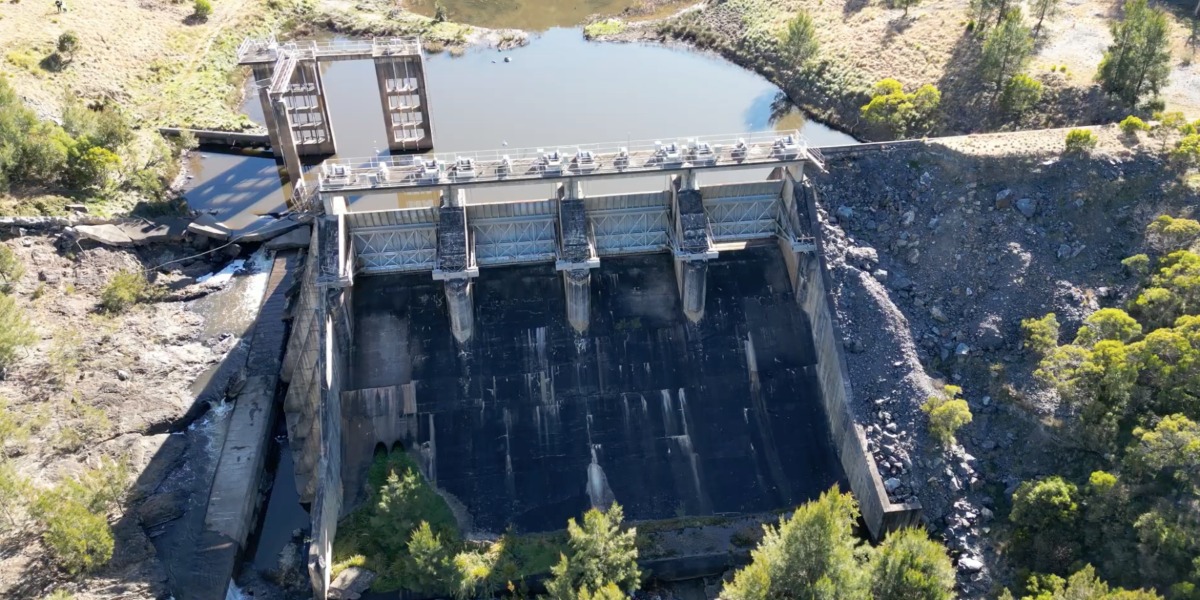
The scoping report outlines a two-stage project involving Oaky River Dam, new pipelines and a future increase in the capacity of Malpas Dam. Under Stage 1, Oaky River Dam would be reinstated and a transfer pipeline built between Oaky River and Armidale. A new pipeline would also connect Armidale and Uralla, extending the proposed regional water security network to Uralla.
“Ensuring a reliable and sustainable water supply for our communities has been one of my highest priorities, and this milestone reflects years of planning, investigation and hard work,” Mayor Coupland said.
Stage 2 would involve raising the Malpas Dam spillway by 6.5 metres to increase storage capacity. Council says that work would proceed once regional water demand showed it was needed, with current indicative timeframes suggesting that could be by 2041.
Council says reinstating Oaky River Dam first is necessary to provide an alternative water source before work begins on Malpas Dam. Once operational, Oaky River Dam is expected to supply up to 25 megalitres a day to Armidale, allowing it to supply the community while Malpas Dam is temporarily taken offline for Stage 2 works.
Raising the Malpas Dam spillway would require the storage to be partially dewatered and major structural works to be carried out. Council says undertaking those works without a backup supply would pose an unacceptable risk to the region’s water security.
“Over the past five years, Council has completed the technical studies, environmental investigations and planning required to reach this point,” Mayor Coupland said. “Lodging the scoping report is a major step forward in progressing a project that will provide lasting benefits for future generations.”
DPHI will now assess the scoping report and issue the Secretary’s Environmental Assessment Requirements, known as SEARs, which will specify the issues to be addressed in the EIS. Council will then commission specialist studies and prepare the EIS for public exhibition, with residents and other stakeholders able to make submissions before a decision is made on the project.
Council will also consult landholders along the proposed pipeline corridor and downstream of both dams about the project and assessment process. Construction of Stage 1 is expected to start in late 2028, subject to environmental approval and funding.
Uralla Shire Mayor Robert Bell said his council was continuing to assess regional water security options.
“My Council’s priority is ensuring our community has a secure and reliable water supply during future droughts,” Mayor Bell said.
The NSW Government’s Safe and Secure Water Program classifies the Armidale region’s water supply as Category 5 “Extreme” risk. Council says the classification reflects a critical shortfall in water yield and infrastructure capacity that could limit the region’s ability to accommodate future growth.
During the 2019 to 2020 drought, the region was placed under Level 5 water restrictions and came close to what Council describes as a “Day Zero” scenario. Uralla’s water supply was affected by contamination and bottled drinking water was provided to residents.
“Through the Water Working Party, we are continuing to work with Armidale Regional Council to explore regional water security solutions and assess the costs, benefits and funding arrangements associated with them,” Mayor Bell said.
Council says the Water Security Project is intended to improve water security and support population growth, housing development and the New England Renewable Energy Zone, the same project Council has used as leverage to push for state funding.
“Residents can be assured that Council’s focus is on finding the best long-term outcome for Uralla that strengthens water security while remaining fair and financially responsible,” Mayor Bell said.
“While there is still more work to be done, this achievement demonstrates Council’s commitment to delivering a long-term solution to one of the most important challenges facing our region,” Mayor Coupland said.
Like what you’re reading? Support New England Times by making a small contribution today and help us keep delivering local news paywall-free. Donate now