


Across Australia, thousands of older people are well enough to leave hospital but have nowhere to go. The crisis is being felt in Tamworth, Armidale, and Inverell too, and one regional provider is betting $18 million that the worst is still to come.
In Queensland, one patient has been stranded in a public hospital for more than 1,000 days. They are not sick enough to need a hospital bed. They are waiting for a place in aged care that has not come.
That patient is an extreme case, but not an isolated one. Around the country, more than 3,600 people are stuck in public hospitals, waiting for Commonwealth-funded aged care or NDIS support. A year ago the figure was about 2,700. Across the Hunter New England Local Health District, 174 patients were stranded at 30 June, up from 138 a year earlier.
In NSW, the equivalent of one in every eight beds accessible from emergency departments is now filled by someone who is medically ready to leave, but cannot. A year ago it was around one in ten.
“The number of people waiting for aged care and NDIS placements stranded in NSW hospitals is growing at an unprecedented and unsustainable level,” said NSW Minister for Health and Minister for Regional Health Ryan Park.
“Waiting indefinitely in a hospital is not good for patient mobility, recovery or quality of life.”
The problem is often called bed block. It is usually talked about in terms of city emergency departments and ambulance ramping. But the numbers, and the people behind them, reach well beyond the big city hospitals.
How hospitals became waiting rooms
To understand the logjam, it helps to know who pays for what.
Public hospitals are run by the states. Aged care, both at home and in residential homes, is the responsibility of the Commonwealth. So is most disability support through the NDIS.
When an older person is well enough to leave hospital but cannot safely go home, they need an aged care assessment. Then they need a package of support at home, or a residential bed. If any step in that chain stalls, the person stays in hospital. The state keeps paying, and the bed is lost to the next patient coming through emergency.
On Wednesday, 9 September, Minister Park released figures showing 1,355 patients in NSW hospitals were waiting for Commonwealth aged care or NDIS placements at 30 June. A year earlier there were 1,065, a rise of 27.2 per cent. NSW Health estimates the number could reach almost 1,700 by June 2027 if current trends continue.
Older people waiting for aged care made up much of the growth. Their numbers rose almost 40 per cent in a year, from 761 to 1,063 patients.
“If we see a winter where 1700 beds are taken out of the system each day, the pressure on busy hospitals … could be simply too much,” Minister Park said.
The picture is worse to the north. Queensland has more stranded patients than any other state, with more than 1,400 medically fit patients stuck in its hospitals. Fifteen had been waiting more than 700 days.
State and territory health ministers recently took their case to their federal counterpart, Minister for Health and Ageing Mark Butler. They left without new money.
The May federal budget set aside $1.7 billion to fund up to 5,000 aged care beds a year. The states said that was not enough, Australia needed 10,000 new beds every year.
Minister Butler pointed to what his government had already spent.
“We release our budgets and our budget updates in May and December (but) the increases we have made to aged care in our time in office have been eye-watering,” he said.
“The level of demand you are seeing for aged care at home, for residential aged care, and for healthcare is climbing at unprecedented levels as we see the oldest baby boomers start to enter their 80s.”
That demographic wave is not in dispute. The 2026 Intergenerational Report, released on Monday, 21 September, projects the number of Australians aged 85 and over will grow from 625,000 today to 1.9 million by 2065-66. Most of that growth will happen in the next 10 to 15 years.
What the doctors found
The clearest picture of how the system is coping came this week from the Australian Medical Association. Its first Aged Care Report Card, released on Wednesday, 23 September, tracks the whole pathway, from assessment to a bed.
It found hospital patient days used by people waiting for residential aged care rose from 286,050 in 2020-21 to 460,122 in 2023-24. That is an increase of more than 60 per cent in three years.
The waits are growing at every step. Nationally, the median wait for an aged care assessment after a community referral doubled, from 20 days in 2018-19 to 43 days in 2024-25. For the slowest tenth of cases, it went from 53 days to 192 days.
After approval, one in ten people entering residential aged care waited close to four years to get in. For people approved for a home care package, the median wait to be assigned one jumped from 92 days in 2023-24 to 304 days in 2024-25. The report found the bottleneck in home care was not handing people over to a provider. It was the queue for a package in the first place.
The report also points to cost as a growing barrier. Hospital days used by people waiting for aged care are heavily concentrated in lower income areas, and that gap has widened over the past decade. At the same time, roughly one in ten residential aged care beds across the country sat empty in 2025. The AMA concluded that affordability, not just the number of beds, is increasingly holding people back.
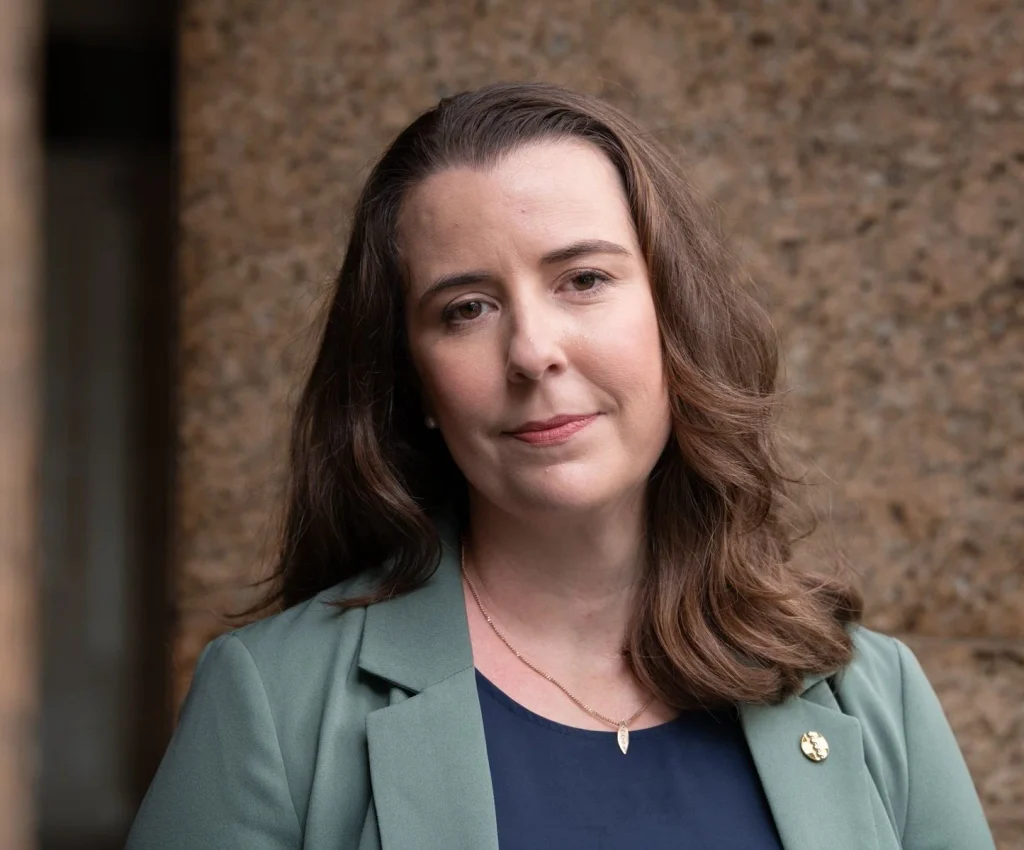
“Too many older Australians are spending days, weeks or longer in hospital after they have been medically cleared to leave, simply because the care they need is not available,” said AMA President Dr Danielle McMullen.
“This is not good care.”
“It is not dignified for patients, it is not sustainable for hospitals, and it is not an efficient use of scarce health resources.”
The NSW branch of the AMA called the rising demand a warning sign.
“We need more doctors and staffed beds today, alongside investment in prevention and early intervention to reduce avoidable demand tomorrow,” said Australian Medical Association NSW President Fred Betros.
“The system needs help now … patients cannot keep paying the price for governments’ failure to plan.”
The help that keeps people at home
The simplest way to keep an older person out of hospital is to help them stay well at home. In Australia, much of that job falls to the Commonwealth Home Support Program, known as CHSP.
CHSP is entry-level help. It pays for things like cleaning, meals, shopping, transport, home maintenance, social support, and some allied health. It supports around 830,000 older Australians, through about 1,300 providers. Those providers include councils, not-for-profits, and community groups. Nearly 40 per cent of clients live outside the major cities.
Unlike most aged care, CHSP is block funded. Providers get a set amount to run a service, rather than being paid per client. That matters in small towns, where there may not be enough clients to make a service pay any other way.
Under the government’s aged care overhaul, CHSP was due to be folded into the new Support at Home program no earlier than July 2027. Councils and advocates warned that could put services at risk, particularly in the regions. A Senate inquiry, chaired by Greens spokesperson for Older People Senator Penny Allman-Payne, recommended in a consensus report that CHSP be kept as a standalone program.
On Thursday, 20 August, the government changed course. It extended CHSP to 30 June 2029 and confirmed it would stay a standalone program. Consultation on its long-term future, including block funding and what clients pay, will start this year.
“We have listened to the feedback people have given us about CHSP, and we’re giving providers and older Australians the certainty they need to continue while the future of the program is developed,” Minister Butler said.

Minister for Aged Care and Seniors Sam Rae said the two programs did different jobs.
“Block funded, community based services do something Support at Home was never designed to do, they keep people well and independent before they need more intensive support,” Minister Rae said.
The Greens claimed the reversal as a win.
“This is a massive win for the 800,000 people who rely upon these supports to live at home safely, independently and with dignity,” said Australian Greens Leader Senator Larissa Waters.
The rest of the sector also welcomed the backdown. But almost every group that did so also pointed to the same gap: the money.
Professor Kathy Eagar, a cofounder of the CHSP Alliance and an advisor to the Royal Commission into Aged Care Quality and Safety, called the decision “excellent, albeit long overdue”.
“Our immediate concern however is that today’s announcement did not include a significant increase in funding to meet the needs of the thousands of older people on CHSP waiting lists all over the country,” Professor Eagar said.
The Older Persons Advocacy Network said the waits were real, even for people who have been approved.
“OPAN member advocates continue to hear from older people who have been approved for CHSP but cannot access services, with providers telling them their books are full or closing,” said OPAN CEO Craig Gear.
Catholic Health Australia said the block funding model was especially important outside the cities.
“CHSP’s block funding model is particularly important in regional and rural Australia, where Catholic and not-for-profit providers deliver a disproportionate amount of care to older Australians,” said Catholic Health Australia Director of Aged Care Alex Lynch.
While the ownership and structure of aged care facilities and services varies town to town, and is largely determined by a quirk of history and the benevolence of locals such as H.N. McLean in Inverell, Councils can be local service providers, and in some towns they own and operate the aged care home as well.
The Australian Local Government Association said the extension of CHSP block funding fixed only one of their problems.
“Councils provide essential home support services in some of Australia’s most challenging markets, often because no other provider is available,” ALGA President Mayor Matt Burnett said.
“But the contract extension removes only one source of pressure. Councils continue to face inadequate cost recovery, workforce shortages, rising delivery costs and increasingly complex regulatory and administrative requirements.”
That is the experience in Uralla, where the council’s Community Care Service delivers CHSP. Uralla Shire Mayor Robert Bell welcomed the certainty, but said the funding had not kept pace.
“For many of our older residents, Uralla Community Care is more than a service provider, it is a lifeline that enables them to stay connected to their community, attend medical appointments and maintain their independence,” Mayor Bell said.
“Our current CHSP funding levels do not align with the growing demand for services across Uralla Shire.”
“Without funding that keeps pace with demand, councils like Uralla are increasingly being asked to do more with the same resources. That is simply not sustainable in the long term.”
A tool that decides who gets help
Funding is only part of the problem. The way older people are assessed for care is also under fire.
Since the new Aged Care Act 2024 took effect on 1 November 2025, assessments have run through the Integrated Assessment Tool, known as the IAT. It uses an online algorithm to set how much funding a person gets under the Support at Home program.
Critics say the tool gets it wrong, especially for people with dementia, mental health conditions, or frailty. The Greens say the government removed the ability for clinicians to override the algorithm when it rolled out.
The Senate has since passed a cross-party bill to restore human override, and a Greens motion to scrap the tool altogether. On Thursday, 17 September, the government tabled an amendment to an unrelated bill. It creates an escalation pathway, so disputed decisions can be sent to the Department for review in exceptional cases.

OPAN welcomed the change as an interim fix, but warned about how it would work. To start a review, the older person has to give consent within seven days. Mr Gear said that could shut out the people who already struggle most to get help.
“OPAN is concerned that the proposed 7-day timeframe may not always allow enough time for this to occur, particularly for older people who live in rural and remote areas, or those who may want to seek advocacy support,” he said.
Others were far less forgiving. Experts gave evidence against the fix at a Senate committee hearing in Canberra on Thursday, 24 September.
Ian Yates, who established the office of the Inspector-General of Aged Care, said the IAT was a “methodologically inept and ill-conceived tool”. He urged the Senate to reject the amendment to create the escalation pathway.
“Two wrongs don’t make a right,” Mr Yates said.
“The Integrated Assessment Tool is broken,” Greens Senator Allman-Payne said.
“It systematically denies essential care to older Australians, especially those with cognitive issues, mental health conditions or frailty, and tinkering around the edges won’t fix it.”
A faulty assessment is a problem for the entire system. If someone is assessed as needing less help than they really do, the gap does not go away. It shows up later, at home, in residential care, or in a hospital bed.
Worse the further out you go
These pressures are felt everywhere. But in rural areas, they land on a health system that already gets less money to begin with.
A report commissioned by the National Rural Health Alliance, The Forgotten Health Spend, found Australians outside the major cities received $8.35 billion less in health funding than city residents in 2023-24. That is $1,090 less per person each year. The gap had grown by $110 per person, after inflation, since 2020-21.
The shortfall was sharpest in small rural towns. Nationally, they received about $5,920 less per person than metropolitan areas. In NSW alone, the gap for small rural towns came to about $3.7 billion.
Aged care follows the same pattern. Government aged care spending in small rural towns was roughly half the city rate for each eligible older person. Public hospital spending in those towns was 70 per cent lower per person, as residents travel to larger towns for care.
“Current solutions are geared to where populations are available rather than systemic improvements in the way people access care,” a NSW Primary Health Network representative told the report’s authors.
The AMA’s report card shows NSW has been hit harder than most states on assessment waits. The median wait in NSW rose from 18 days in 2018-19 to 67 days in 2024-25. For the slowest tenth of cases, it rose from 38 days to 250 days. That means one in ten older people in NSW waited more than eight months just to be assessed.
At the same time, NSW has fewer residential aged care places for the size of its older population than it did a decade ago. There were 81.1 places per 1,000 people aged 70 and over in 2016. By 2025 there were 66.4.
The regions are also ageing faster. The Intergenerational Report projects the median age outside the capital cities will reach 50.9 by 2065-66, compared with 43.5 in the capitals.
The Australian Institute of Health and Welfare says one in three older Australians lives in a rural or remote area. Yet its figures show almost two-thirds of permanent residential aged care homes are in metropolitan areas.
“People who prefer to stay in community and need the support of living in residential aged care are often forced to move hundreds of miles away because local aged care infrastructure is not there or suitable,” said National Rural Health Alliance Chief Executive Susi Tegen.
Closer to home
The 174 patients stranded across the Hunter New England Local Health District at 30 June were waiting for Commonwealth aged care or NDIS placements. That was an increase of 26 per cent in a year.
Nine of those patients were at Tamworth Base Hospital. Armidale and Gunnedah hospitals each had three or fewer. Exact figures for those hospitals were not released, because of the risk to patient privacy.
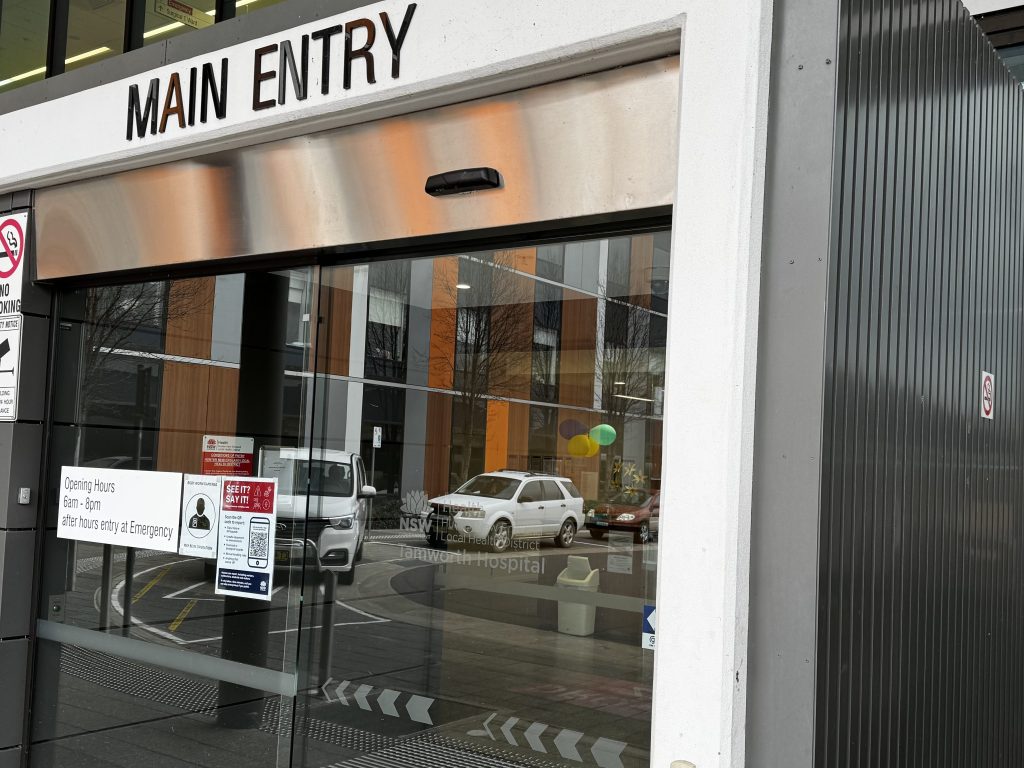
Small numbers can still carry a heavy cost for families.
New England Times knows of one woman with dementia who has been in a local hospital for more than a month, waiting for an aged care placement. Her husband was sent a bill for her stay. Under NSW Health rules, a patient who no longer needs hospital care and stays longer than 35 days is charged a daily fee. The hospital is meant to tell patients in writing seven days before charges begin. NSW Health waived the bill because it had failed to disclose the charges in advance, as it is required to do.
Another woman, recovering from a broken hip, was moved between three different hospitals while she waited for a bed in a suitable facility. Her family tried having her stay at her son’s house, but after just two days, she had a mild heart attack while no one was home, and was put back in hospital. She survived and is fine now, but they were not game to try that again. They paid the bill for her extended stay in hospital.
For older people in the region, the pressure is not only in the hospitals. It has also hit the aged care homes they would be discharged into.
In February, Inverell’s McLean Care announced it would seek new operators for its 370 residential aged care beds. Those beds sit across six homes in Inverell, Guyra, and Gunnedah, and in Oakey and Millmerran in Queensland. The not-for-profit, which traces its roots to a convalescent home Hector McLean set up in Inverell in the 1930s, had posted an operating loss of $11.67 million in 2024-25, on top of a $6 million loss the year before.
“Unfortunately, the pressures on aged care providers, especially in regional areas, mean McLean Care’s operations are no longer viable under our current operating model,” said McLean Care Board Chair Manuel Meszaros at the time.
McLean Care linked its losses to workforce shortages, rising costs, and the impact of COVID-19. The months that followed were hard. Its Killean home in Inverell had failed an Aged Care Quality and Safety Commission audit in 2025, before a remediation plan was put in place. Its home support clients moved to Australian Unity. Its in-house allied health team was replaced by an outside provider. Locals were, quite rightly and understandably, concerned.
“McLean Care has been part of the fabric of Inverell for generations. Our community deserves clarity and confidence during this transition,” said Inverell Shire Mayor Kate Dight.
Building for the wave
In August, Respect Group took over McLean Care. Respect is a not-for-profit with a 100-year history. It runs 41 aged care homes across six states and specialises in rural and regional aged care.
Rather than simply keeping the doors open, Respect plans to invest and build.
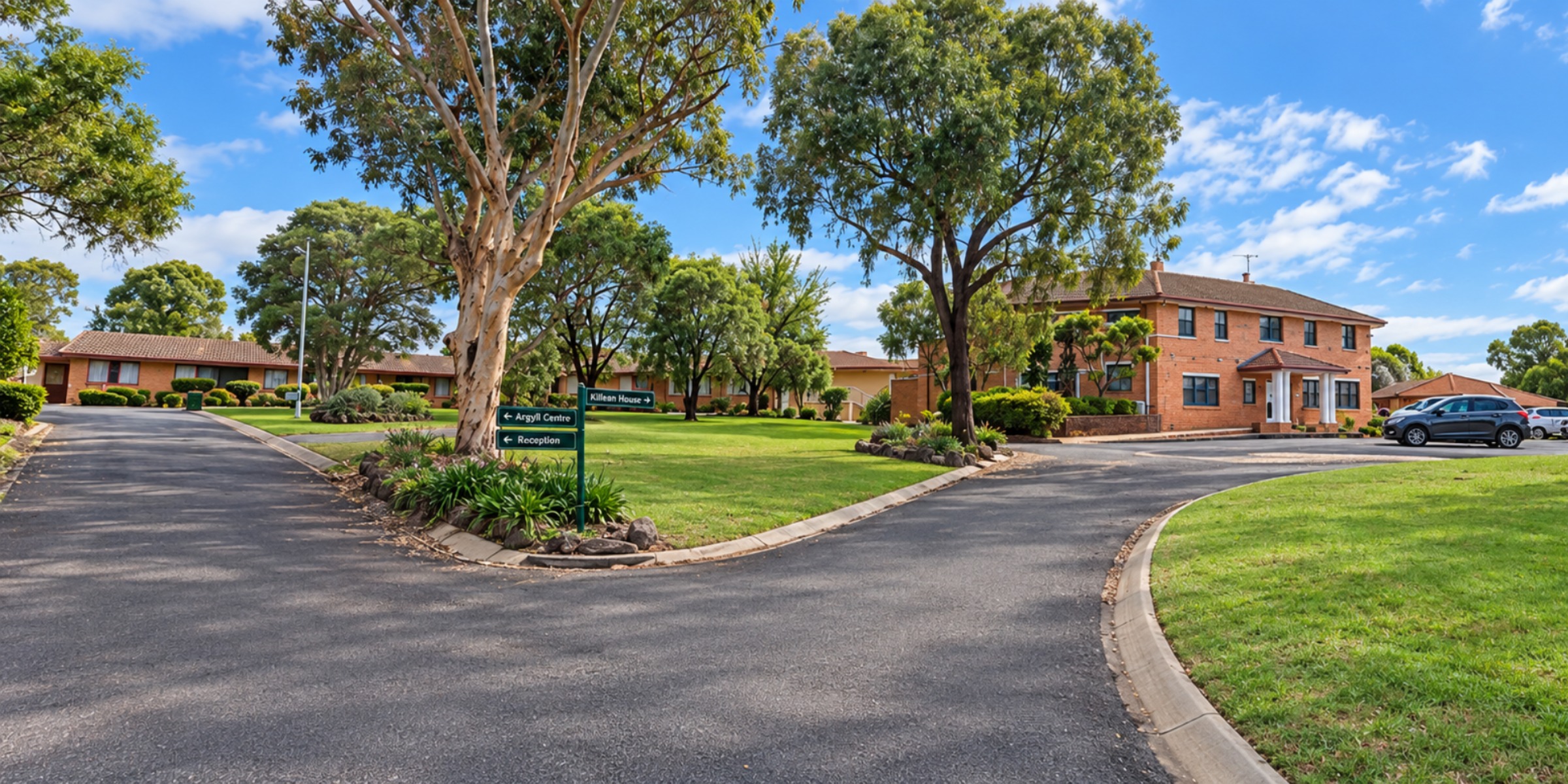
An $18.21 million planned redevelopment of its facilities in Inverell will reopen Arrawatta Lodge for dedicated dementia care. Shared rooms and shared ensuites will be converted into single rooms with private ensuites, and the whole home will be renovated.
“This is an $18 million investment in the long-term future of aged care in Inverell to modernise the whole facility and ensure there is extra capacity to serve older people in the community for decades to come,” said Respect Managing Director and CEO Jason Binder.
“Reopening Arrawatta for dedicated dementia care means more people living with dementia can get the specialised care they need without having to leave Inverell and the people who matter to them.”
Even with the move away from shared rooms, the home will grow. Reopening Arrawatta and adding general rooms will more than offset the loss from converting shared rooms.
“We’re significantly improving the standard of accommodation while also creating more aged care places,” Mr Binder said.
“We’re converting shared rooms and shared ensuites into single rooms with private ensuites, while increasing Killean Street’s overall capacity from 125 to 144 beds.”
Planning is under way, with construction expected to start in late 2027. Respect says it would like to deliver sooner, but the planning and approvals for a project of this size take considerable time. A major redevelopment is also planned for Mackellar on Apex Road in Gunnedah.
Uralla Shire Council is also building, announcing in May plans to increase McMaugh Gardens to 50 beds. They too recognise the need for dementia care, planning construction of a new eight-bed dementia care wing, along with supporting internal works and a new laundry. The estimated construction cost for Stage 1 is $1.28 million. Friends of McMaugh Gardens will contribute up to $700,000 towards Stage 1, including a significant bequest from former resident Keith Fuller.

No time to wait
Mr Binder said the timing mattered because of how long new beds take to deliver.
“We can see the shortage of aged care beds coming,” he said.
“The oldest baby boomers are reaching their 80s, the average person enters residential aged care at around 84, and new wings or homes take three to four years to build.”
“If we wait until the beds are desperately needed before we start building them, we’ve already left it too late.”
“Australia needs around 10,000 additional aged care beds every year and we’re currently building 10% of that. That gap gets bigger every year we don’t address it,” Mr Binder said.
“The decisions we make today will determine whether the beds are there when older Australians need them.”
The compounding pressure of failure to build aged care beds, and the systemic failure to invest in health services, hits hardest on the regions. While this is known and understood by all parts of the sector and every level of government, it is largely falling on providers like Respect and local councils to do something about it while federal and state politicians squabble.
“The aged care capacity crisis isn’t something that might happen one day,” Mr Binder said.
Like what you’re reading? Support New England Times by making a small contribution today and help us keep delivering local news paywall-free. Donate now