

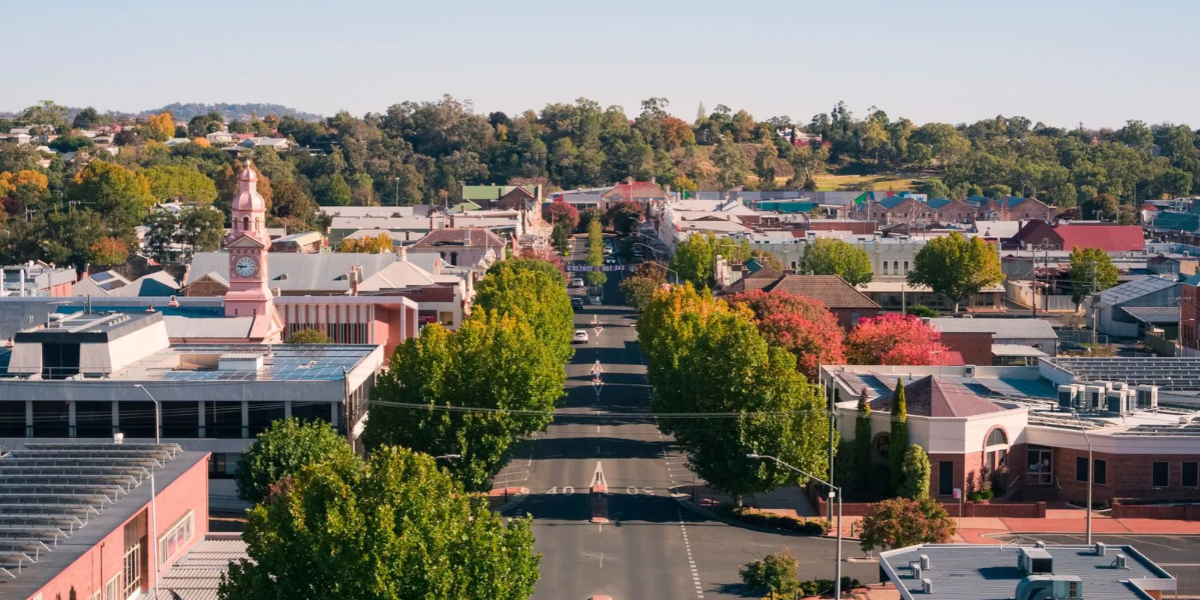
Inverell has recorded the second-biggest annual rise in house prices in regional NSW, as property values across the New England keep climbing.
Its median house price rose 23.4 per cent in the year to September to $475,000, according to the latest figures released by Domain in October. Only Dungog, in the Hunter, recorded a bigger rise. Armidale Regional’s median rose 21.7 per cent to $670,000.
Other parts of the region also recorded growth, including the Liverpool Plains (21.5 per cent), Narrabri (19.6 per cent), Moree Plains (16.1 per cent), Tenterfield (14.2 per cent), Glen Innes Severn (10.4 per cent), and Gunnedah (7.7 per cent) local government areas.
The figures raise a bigger question for the New England: what is keeping demand so strong here?
In Tamworth, where the median house price rose 12.3 per cent to $662,500, licensed real estate agent Stuart Watts of @realty Tamworth said it comes down to the difference between a regional market driven by people building a life and a city market more exposed to speculation and big mortgages.
“We’re a much more stable market. There are fewer speculators,” Mr Watts said.
“You don’t see this kind of investor [behaviour] where they take on a portfolio or play the market and try to buy something, flip it, and put it on the market again.”
He said many homeowners in Tamworth had lower debt levels than buyers in more expensive metropolitan areas. That can reduce forced sales when interest rates rise or household budgets tighten.
“People here don’t or won’t have to sell in this market,” Mr Watts said.
“They have lower LVRs [loan-to-value ratios]; they aren’t feeling the same pressure from the banks.”
That does not mean the region has avoided change. Like many regional centres, Tamworth and surrounding districts saw strong growth following the pandemic, alongside fresh interest from investors seeking better value and rental returns outside the cities.
Mr Watts said he had sold about 240 blocks of land over the past two years, with some investors planning dual-key homes to help meet rental demand. He expects around 500 new homes to be built in Tamworth next year.
But the investor rush has cooled recently. Mr Watts said buyer agents had been highly active in the $600,000 to $800,000 range before changes to negative gearing and broader market uncertainty.
Under reforms announced in the May federal budget and now law, negative gearing for residential property investments will be limited to new builds from Thursday, 1 July 2027. Properties held before the announcement on Tuesday, 12 May will be exempt. The 50 per cent capital gains tax discount will also be replaced from the same date, applying only to gains made after that.
That leaves a long-term question: whether the region’s economy will drive ongoing demand.
In Tamworth, Mr Watts listed the expanding hospital workforce, the recent $600m Baiada processing facility upgrade, the University of New England’s Tamworth Central campus build, and agriculture as sources of confidence.
Tamworth Hospital is attracting healthcare workers, including doctors and GPs from abroad, while Baiada continues to create local jobs with plans to scale production further. Agriculture, beef, cotton, and related industries are also contributing to a sense that the local economy has a solid base.

“In property, everything is about confidence,” Mr Watts said. “There’s confidence in trading in Tamworth.”
For people looking to leave the city, major centres such as Inverell, Armidale, and Tamworth can offer a home with a yard, growing employment opportunities, and established community facilities and services at prices well below Sydney.
“If you’re living in a Sydney two-bed unit, you can’t aspire to own a backyard,” Mr Watts said.
“If you have a family, you want to see the kids playing in the backyard, playing sports. That makes regional NSW a viable option.”
But rising values bring challenges. Mr Watts said first home and entry-level buyers were among the slowest parts of the current market, as building costs remain high and banks take a conservative approach to lending.
For locals trying to buy their first home, a stronger market can mean the goalposts move faster than savings can keep up.
New England’s property market may be proving more resilient than many expected. But whether that resilience continues will depend on the factors now driving it: secure, growing jobs, more housing supply, and enough affordability to ensure local people can still lay down roots.
Opteon State Director for regional NSW and QLD Alyza Doulis said regional markets had generally proved resilient compared with metropolitan areas, but the rapid gains of the past year were unlikely to continue at the same pace.
“Usually our regions are very resilient in comparison to metro markets; [we] don’t see harsh price corrections,” Ms Doulis said.
“However, we won’t see the growth we’ve seen continue at the same rate.”
Ms Doulis said markets with diverse economies and strong employment were better placed, provided housing supply kept pace with demand. But the housing shortage was now a serious regional challenge.
“We’re in a severe housing crisis. Low housing supply will bring prices up,” she said.
Ms Doulis said affordability could keep pushing buyers beyond larger regional centres.
“You’ll see bigger regional cities slow, and smaller regional towns will continue to do really well because of affordability,” she said.
Got something you want to say about this story? Have your say on our opinion and comment hub, New England Times Engage