

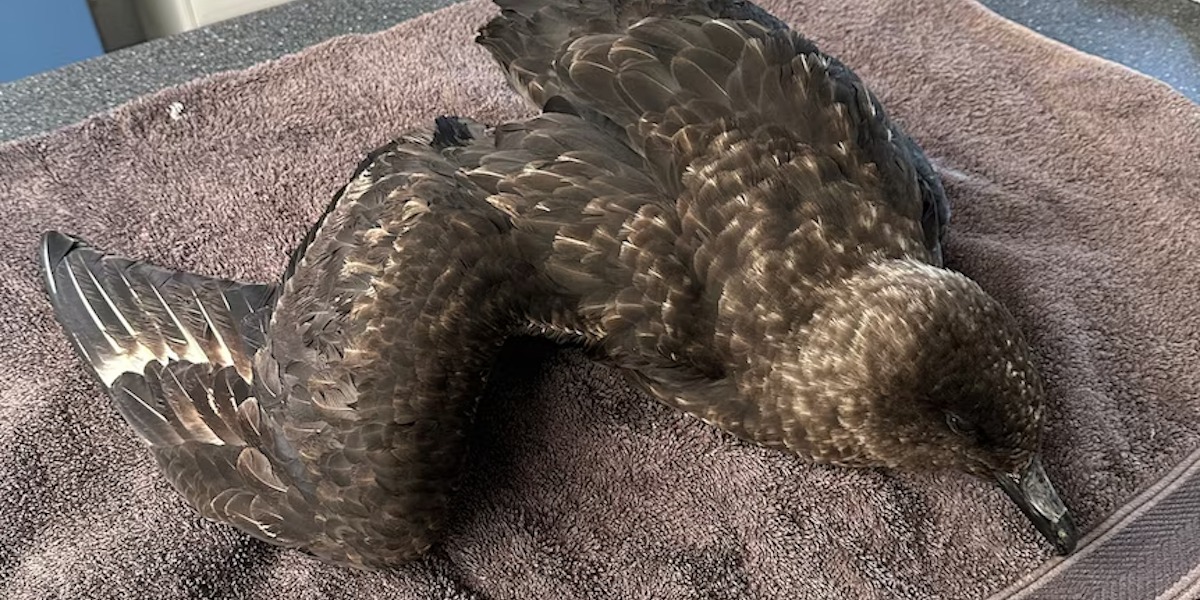
A second wild migratory seabird has tested positive for highly pathogenic H5 avian influenza in NSW, prompting authorities to continue enhanced surveillance while stressing there is no evidence the virus has spread to native birds or commercial poultry.
The latest detection was confirmed after samples from a giant petrel found at Bennetts Beach, Hawks Nest, tested positive for H5 at CSIRO’s Australian Centre for Disease Preparedness, following preliminary testing at the NSW Government’s Elizabeth Macarthur Agricultural Institute.
The bird was found after a member of the public reported it, with the case identified through the national surveillance program established to detect and respond rapidly to incursions of the virus.
Acting Agriculture Minister Yasmin Catley said the latest detection showed the state’s monitoring program was working as intended.
“This is the second wild migratory bird to test positive however it is important to note that to date, H5 has not been detected in native birds or commercial poultry flocks in NSW,” she said.
“The detection of this bird demonstrates the Government’s increased and targeted surveillance and monitoring program is working as intended.”
Catley said NSW had been preparing for the arrival of the virus and remained ready to respond.
“The NSW Government has been preparing for a situation like this, and we remain well equipped to manage further impacts. Our State Coordination Centre has been operating since June and we are continuing to work closely with the Commonwealth Government,” she said.
Authorities say there are no signs of mass bird deaths in the Hawks Nest area or elsewhere in NSW. There have also been no detections of H5 in commercial poultry, native birds or any other animals in the state, and the risk to human health remains low.
The State Coordination Centre has been operating from the Department of Primary Industries and Regional Development’s Orange Agricultural Institute since 19 June.
NSW Chief Veterinary Officer Jo Coombe said the latest detection was consistent with expectations given where the bird was found.
“This positive case is not unexpected, given the location and it shows that our enhanced surveillance is working,” she said.
Dr Coombe said authorities had still not detected the virus in domestic poultry or native bird populations.
“I would like to remind everyone that importantly, bird flu has not been detected in commercial poultry flocks, captive birds or any other birds native to NSW,” she said.
“We are continuing to work closely with Australian and State and Territory governments plus industry, agriculture and wildlife organisations. The risk to human health remains low.”
She thanked members of the public for reporting sick or dead wildlife while avoiding contact with affected animals.
“I would like to thank the public for their vigilance in avoiding contact with sick or dead wildlife and their environment, recording what they are seeing and reporting any unusual sickness or mortality to the Emergency Animal Disease Hotline,” she said.
“Our surveillance operations with Local Land Services and National Parks and Wildlife Service field officers are underway and use innovative spatial mapping tools, decision-support systems and response databases to enable rapid and targeted action.”
Catley urged anyone who encountered a suspected sick bird to avoid handling it and notify authorities.
“If you encounter a suspected sick bird, avoid contact and report it immediately to the Emergency Animal Disease Hotline,” she said.
People who find sick or dead birds or other animals are advised not to touch them, record the location and report the sighting to the 24-hour Emergency Animal Disease Hotline on 1800 675 888. More information is available at birdflu.gov.au.
Don’t miss any of the important stories from around the region. Subscribe to our email list.