

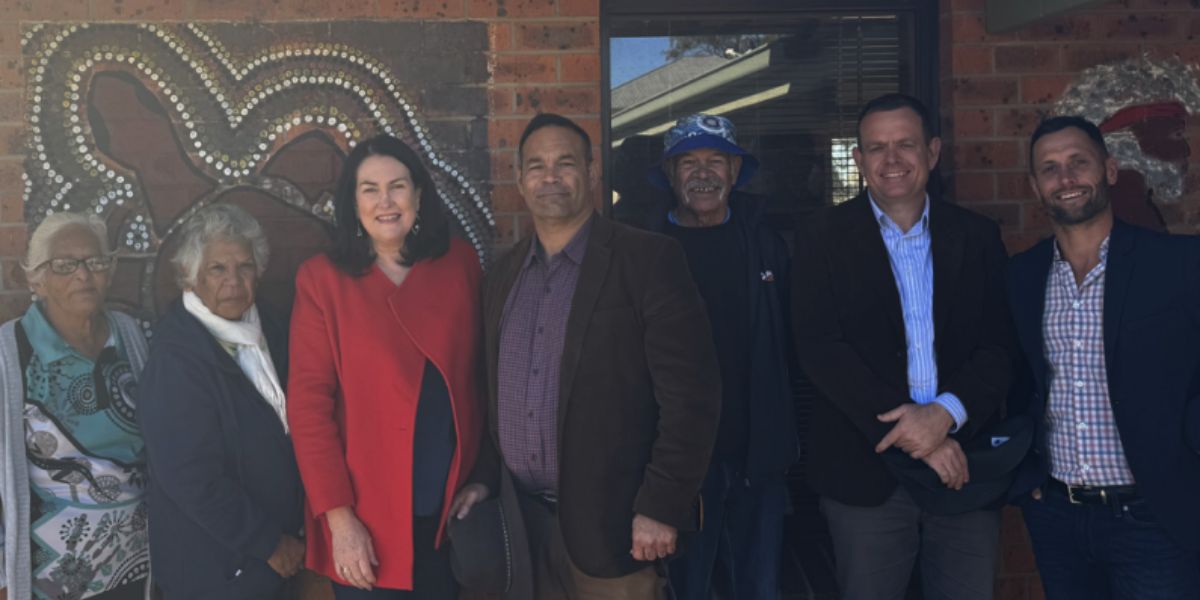
Better health services, stronger cultural connections, new employment pathways and growing tourism opportunities are among the lasting benefits being delivered to the Walhallow Aboriginal community through the Walhallow Community Infrastructure Project (WCIP).
Led by the Walhallow Local Aboriginal Land Council (WLALC), the project demonstrates how Aboriginal-led decision-making, genuine community consultation and culturally informed planning can create lasting social, cultural and economic outcomes.
Backed by $1.54 million through the Australian Government’s Growing Regions Program and delivered in partnership with Benchmark Certified, the WCIP has transformed community facilities while creating new opportunities for local people.
The project has modernised the Annie Taylor Health Post, improving access to health services for community members, and refurbished the Walhallow Community Hall as a more accessible and welcoming space for community gatherings, programs and events. The former preschool has also been redeveloped as the Dhuwi Walhallow Aboriginal Cultural Centre, creating a permanent home for cultural exhibitions, education and community activities.
Beyond the physical upgrades, the project is strengthening the community’s future. Elders will have dedicated spaces to share Gamilaroi/Gamilaraay language, culture and history with younger generations, helping preserve cultural knowledge while building community pride and identity.
The project is also creating new economic opportunities. Local people are gaining skills through Certificate III Tourism training, supporting employment in hospitality and cultural tourism while helping establish Walhallow as an Aboriginal tourism destination within the Liverpool Plains region.
For a community of around 90 Aboriginal residents, with more than 400 Aboriginal people living in surrounding areas, the benefits extend well beyond new buildings. The project is improving access to services, creating jobs, supporting local businesses and strengthening cultural connections that will benefit future generations.
The success of the WCIP reflects the importance of Aboriginal communities leading their own development. Strong leadership from WLALC, extensive community consultation and strategic partnerships with Benchmark Certified and the NSW Aboriginal Land Council have enabled the community to secure investment and deliver outcomes that respond to local priorities.
The project also demonstrates that investing in Aboriginal communities delivers broad public value. By combining infrastructure renewal with cultural preservation, business development and skills training, the WCIP is creating a more resilient community while laying the foundations for long-term economic participation and self-determination.
The Walhallow experience shows that when Aboriginal communities are empowered to shape their own future, investment can deliver lasting improvements in health, wellbeing, education, employment and cultural preservation.
Don’t miss any of the important stories from around the region. Subscribe to our email list.