

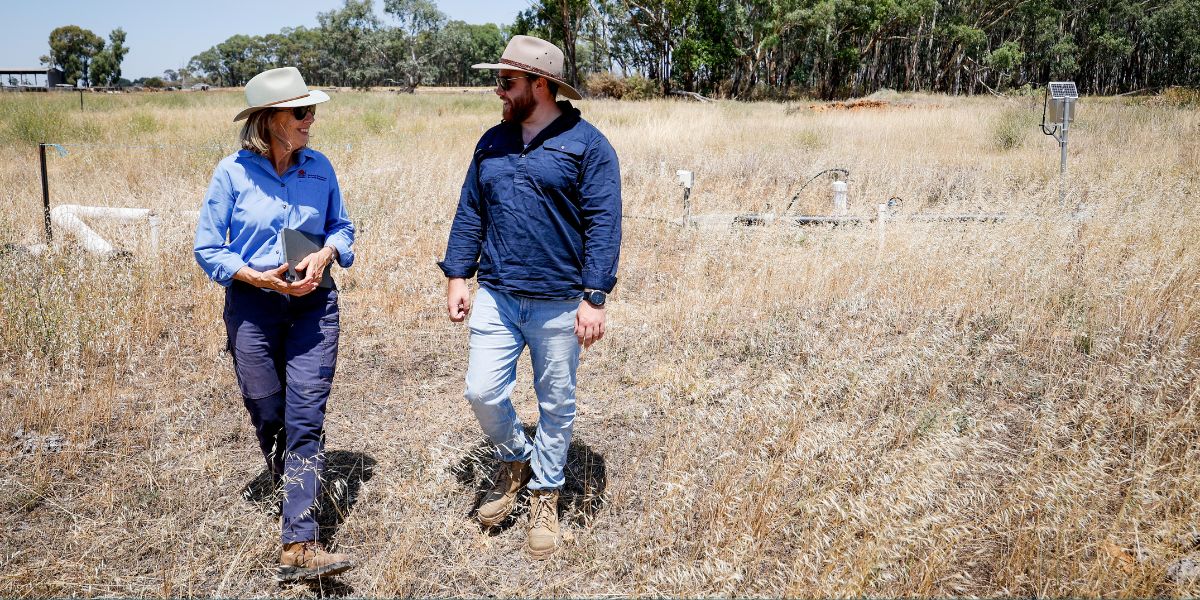
A behavioural science partnership with Monash University is helping the Natural Resources Access Regulator (NRAR) develop more effective ways to support water users across NSW, including in the New England, to comply with water laws.
The partnership has led to the Fundamentals Program, which is testing new approaches to helping licence holders understand the core requirements of water compliance and avoid unintentional breaches.
The pilot program sees NRAR field staff visit water users across regional NSW to build confidence in water compliance and provide practical guidance on meeting regulatory requirements. During July, the final month of the first stage of the pilot, staff will visit properties in the Macquarie-Castlereagh, Barwon-Darling West, Murrumbidgee, Murray, Lachlan and Gwydir water sharing regions.
Insights from the pilot will help inform NRAR’s education and engagement activities across the state, including with water users in the New England.

NRAR Director of Education and Engagement Keeley Reynolds said the visits had shown many water users wanted support to better understand the fundamentals of water compliance.
“Our field staff have visited more than 100 properties and found about three-quarters were potentially breaching the rules,” Reynolds said.
“By collaborating with the BehaviourWorks Australia team at Monash University, we’ve set up the pilot program based on behavioural science insights that focus on what actually drives voluntary compliance,” Reynolds said.
“During our visits we are helping water users understand the fundamentals of water compliance so they can make the right decisions,” she said.
The fundamentals are the core skills, knowledge and actions needed to comply with NSW water rules.
“When people don’t have the basics in place, they are more likely to end up on the wrong side of compliance without even knowing it,” Reynolds said.
“The Fundamentals program centres on a range of behaviour insights, for example, licence holders might be more inclined to act if they believe those around them are doing the same,” she said.
“Therefore, a key part of the program involves sharing NRAR’s findings with licence holders so they can see what the most common compliance issues are in their area and how to resolve them. We will be able to do that when we wrap up the second stage of the pilot,” she said.
The Fundamentals Program focuses on practical compliance, with staff checking:
- the correct licences and approvals are in place for taking and using water
- water infrastructure complies with approval conditions
- water take is being recorded and reported in accordance with regulatory requirements.
At the end of each visit, staff discuss their observations with the water user, explain any potential non-compliance and outline options to address any issues identified.
Like what you’re reading? Support New England Times by making a small contribution today and help us keep delivering local news paywall-free. Donate now