

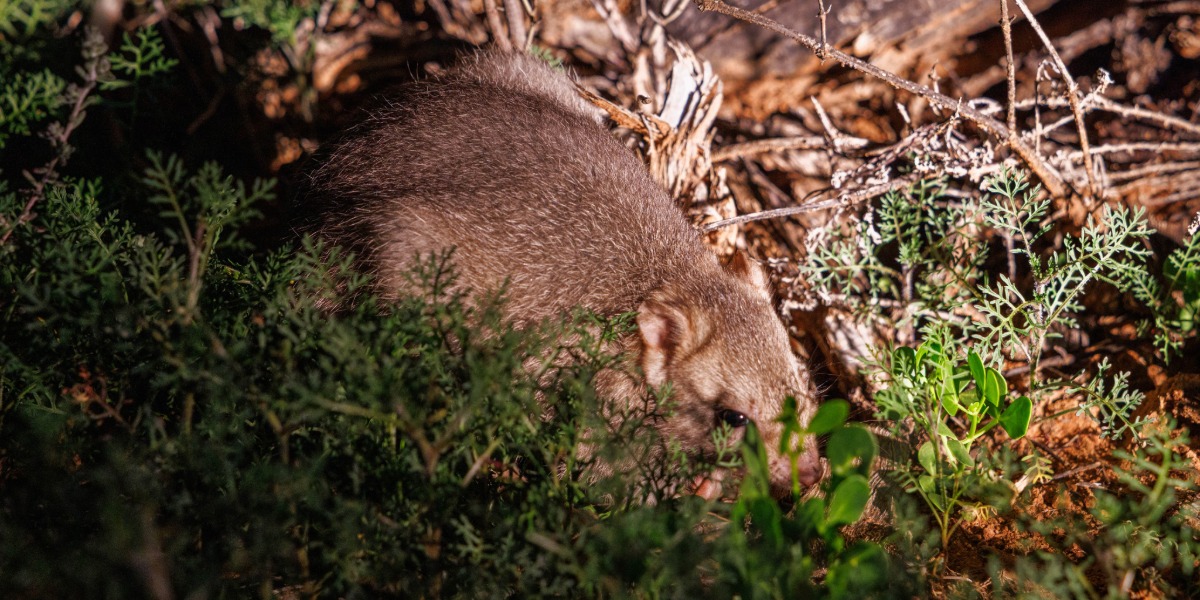
The Pilliga State Conservation Area is at the heart of a renewed push to claw back some of Australia’s most endangered animals from extinction, with the NSW Government committing to another ten years of protected breeding programs at three major sites including the iconic New England scrub.
The Minns Government has extended its long-term partnerships with the Australian Wildlife Conservancy (AWC) and the University of NSW Wild Deserts program for a further decade, continuing work at Mallee Cliffs National Park, Pilliga State Conservation Area, and Sturt National Park to protect and rebuild populations of threatened mammals.
All three sites operate as feral predator-free areas, shielded from cats and foxes. Across the three locations, 13 species locally extinct in NSW have been reintroduced, including the greater bilby, numbat, bridled nail-tailed wallaby, western quoll, and Shark Bay bandicoot. Some of those species had not been seen in the wild in NSW for more than 100 years.
The Pilliga site, in the southern New England region northwest of Narrabri, is managed in partnership with AWC and forms part of a broader NSW network of ten feral predator-free areas working to reduce the extinction risk for 33 locally extinct species and help secure a further 45 that remain threatened. Around half of NSW’s surviving mammal species face extinction, with feral cats and foxes the primary driver.
Minister for the Environment Penny Sharpe said the next decade of the program would look beyond what could be achieved inside fenced areas.
“We’re bringing native species back from the brink. Bilbies, Numbats and Shark Bay Bandicoots are back where they had disappeared from and they’re thriving.
“The next ten years of these partnerships is not just about what happens inside fenced areas, it’s about improving our knowledge of what contributes to successful reintroductions, so we can drive recovery of threatened species and tackle our extinction crisis.”
AWC Chief Executive Officer Tim Allard said the results had demonstrated what sustained collaboration could achieve.
“By working together, we’ve proven what long-term collaboration can deliver for conservation in Australia.
“Together with NPWS, we’re turning the tide of extinction by restoring threatened species to their former range, rebuilding resilient ecosystems and reconnecting local communities to nature.”
“With this partnership now extended, we’re excited to build on this success and see an even greater impact for Australia’s wildlife over the next decade.”
UNSW Scientia Professor and Wild Deserts project leader Richard Kingsford said the science underlying the program had produced learnings applicable far beyond any single site.
“This is a realisation of the tremendous progress we have made over the last decade in restoring the desert ecosystem in Sturt National Park by reintroducing marsupial species that were wiped out by cats and foxes more than a hundred years ago.
“Our focus on science linked to adaptive management is producing new learnings which improve the effectiveness of our management and are applicable not only to the Wild Deserts site in Sturt National Park but useful across NSW and nationally.”
“The great strength of our success has come from our deep partnerships, with Ecological Horizons, NSW National Parks and Wildlife Service and Taronga Conservation Society, as well as neighbouring landholders and volunteers.”
Something going on in your part of the New England people should know about? Let us know by emailing newsdesk@netimes.com.au