

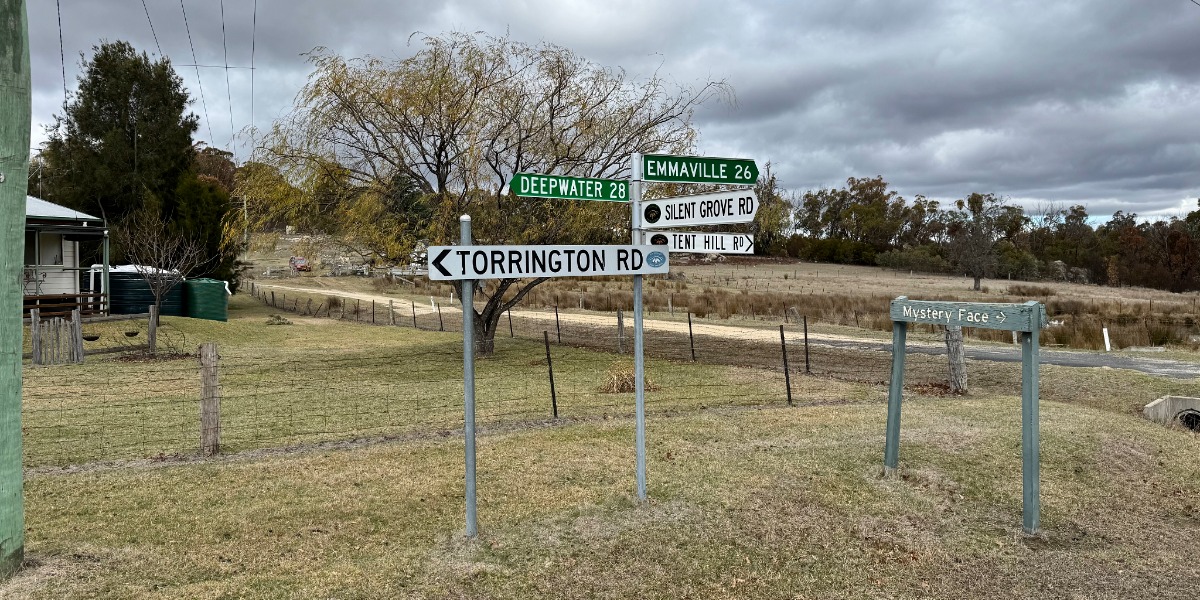
The Torrington community is taking matters into its own hands, launching a mapping exercise to document exactly where mobile coverage fails across the area, after responses from Telstra and the federal communications minister confirmed that existing and planned upgrades will not fix known black spots.
Saturday’s community meeting at the Torrington Community Hall, attended by around 25 to 30 residents along with Tenterfield Shire Mayor Bronwyn Petrie and representatives from the local emergency management group, ended with a clear next step: get the evidence on paper.
“We’re going to have some community sessions,” Mayor Petrie said.
“I’ll get maps from council where people can mark on those maps where they do and don’t have service, so that we can provide that to the council and the minister, just to show what the situation actually is on the ground.”
Mayor Petrie said the issue of poor connectivity extended well beyond the village. She noted that the upcoming national emergency alert test in July would likely reach almost no one in the Torrington.
“Most of the people in that area won’t get it because they don’t have mobile communications,” she said.
“The New England Highway is a major highway, and there are many black spots along it. It’s just indicative of how poorly serviced we are in rural areas.”
The meetings have been called in the wake of a violent home invasion on 3 June, in which 75-year-old Keith Blessing was stabbed and forced to shoot their attacker to protect himself and his wife, 72-year-old Di Blessing, at the couple’s Torrington property. Both were airlifted to the Gold Coast University Hospital and have since returned home.
Their attacker, 34-year-old Joshua Dylan Trethewey, has now been taken out of an induced coma and had a bedside bail hearing, which was refused, Mayor Petrie said. Trethewey has been charged with two counts of causing wounding or grievous bodily harm with intent to murder, and special aggravated break-and-enter – serious indictable offence – wounding. The police investigation is ongoing, with more charges possible. The case has a court date on 19 August at the Armidale Courthouse.
The case exposed the community’s vulnerability in an emergency: the Blessings’ signal booster only works within the immediate vicinity of the house, meaning that if the couple had fled rather than fought, they would not have been able to call for help.
Di Blessing subsequently wrote to local MPs and posted publicly about the situation. In her post, she described Telstra’s response to coverage concerns following the 2019 fires, when a small mast was installed at the rear of the fire shed.
“This woeful response resulted in phone coverage for residents for a few hundred metres on one side of the village only,” she wrote.
The formal response from Telstra to representations by Barnaby Joyce, the member for New England, has now arrived, signed by Michael Marom, Northern NSW Regional General Manager at Telstra.
Marom’s letter confirms the small cell installed under the former federal government’s Black Spot Program “is designed to provide targeted coverage within a defined footprint, rather than broad regional coverage,” and that moving it to a higher position would be “unlikely to materially improve coverage due to the inherent coverage limitations of this technology.”
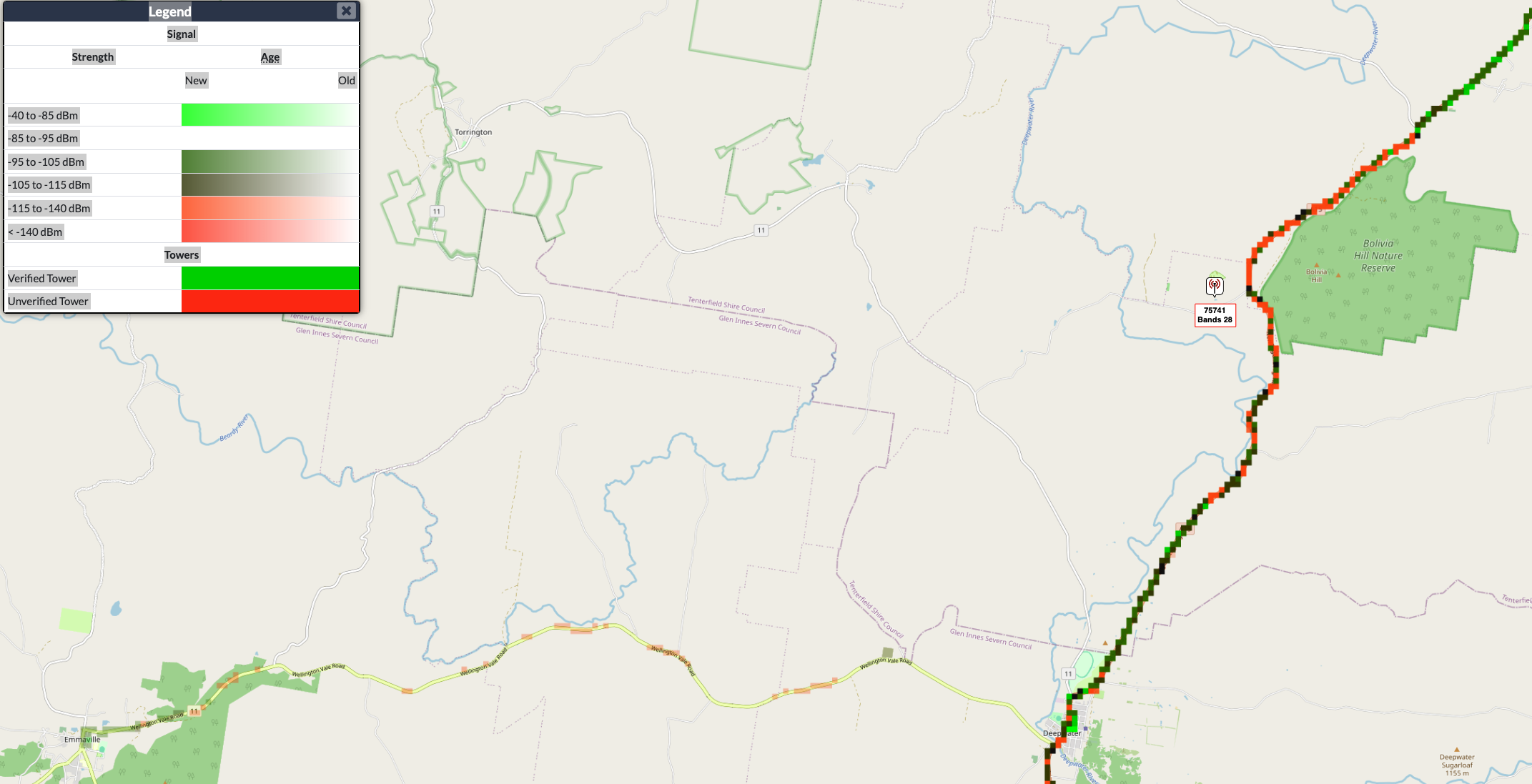
He confirmed the Bolivia macro site, which services residents outside the village, “is currently limited in capability (operating on 700MHz only)” and that users may experience congestion during peak periods.
Congestion and calls dropping out or being unable to connect as a result has been a frequent problem in much of the New England since the shut down of 3G, with the existing 4G capacity unable to cope. Mr Marom confirmed plans to upgrade Bolivia to include expanded 4G bandwidth, sectorisation, and 5G are in train, and Telstra is looking at whether that work can be brought forward.
The catch is explicit in the letter: “It should be noted that upgrades to the Bolivia site will not impact any known coverage gaps/blackspots.”
“Meaningful improvements would likely require additional or new infrastructure,” Marom wrote.
Mayor Petrie was blunt about the community’s response to that finding.
“They’ve been pushing Telstra about lack of communications for years and expressing concern at their tower locations,” she said, “because you would expect, as a taxpayer, that they go in the best position possible, not at the bottom of hills.”
Janelle Saffin, the state member for Lismore, and Barnaby Joyce, the federal member for New England, will now go back to Telstra and the Communications Minister with the community’s concerns.
Optus, which was also approached for comment, said it has no current plans to expand coverage in the Deepwater and Torrington area, though it continues to monitor community needs.
“We understand how critical reliable mobile connectivity is, particularly in emergency situations,” an Optus spokesperson said.
“Optus continually reviews its network to ensure we are providing the best possible service for our customers.”
The spokesperson said the company was working with governments and industry on long-term solutions and encouraged residents with limited mobile coverage to consider WiFi calling where broadband is available.
Following letters from Di Blessing, Mr Joyce wrote the Minister for Communications Anika Wells, who has replied confirming she had written to Telstra CEO Vicky Brady seeking a review of coverage outcomes in the Torrington area and had asked her department to contact Telstra directly.
Minister Wells also pointed to the Universal Outdoor Mobile Obligation (UOMO), legislation introduced into parliament on 27 November 2025, which will require mobile carriers to provide reasonable and equitable access to outdoor mobile SMS and voice calling across Australia. Direct-to-device technology via Low Earth Orbit satellites is expected to help cover areas without existing terrestrial infrastructure.
“The UOMO is expected to help add up to 5 million square kilometres of baseline outdoor mobile SMS and voice coverage across Australia,” Minister Wells wrote.
The mapping exercise to be coordinated by Tenterfield Shire Council with the Torrington community will feed directly to Council and to the Communications Minister. The community is also looking at immediate safety measures for the Torrington Community Hall, including the possible installation of a GPS alarm, and at personal safety options residents can access now.
A community working group will be formed to progress all of these matters, and the AGM for the Torrington Community Hall next Saturday is expected to consider the security issues as well as electing leadership to lead the community’s ongoing fight for better connectivity and security.
Got something you want to say about this story? Have your say on our opinion and comment hub, New England Times Engage