

A joint Liberal and National opposition policy to cancel the transmission line underpinning the New England Renewable Energy Zone has caught local councils that host the REZ by surprise, with none of them consulted before the announcement, and all wanting the economic lifeline to our region to proceed.
The NSW Coalition unveiled its energy platform in Sydney on Wednesday, 24 June, announcing it would, if elected at the state election next March, scrap the planned 500 kilovolt transmission line from Bayswater Power Station in the Hunter to Walcha. They would also cap the New England REZ at its current limited capacity, and redirect its renewable energy ambitions to a proposed City REZ across Sydney, Newcastle, and Wollongong, and an Outback REZ near Broken Hill.
The announcement was immediately undermined by contradictions between the two parties, a disputed claim about a major regional investor, and the uniform response of three of the five affected New England councils: no one asked us.
An announcement off on the details
The Coalition’s case for abandoning the transmission line rested heavily on unsubstantiated claims that the New England REZ had already lost industry support, investor confidence, and social licence. However, the two parties were not entirely in agreement on what their policy actually meant, and there was no evidence given to support those claims.
NSW Liberal leader Kellie Sloane told the press conference the REZ would be scaled back, not abandoned.
“We wouldn’t stop the REZ, but we would scale it back,” Ms Sloane said.
“Rather than building brand new 500 kV transmission lines, we would use the existing transmission lines, make the most of the current capacity, and draw our energy from elsewhere.”
The Nationals press release delivered a harder line, describing the New England REZ as “a sinking ship of a project” with “no takers for future wind and solar projects in the New England area”, and implied they were in favour of stopping all development of renewable energy projects in the New England.
“Supporting new energy generation should not come at the expense of some of our most productive farmland,” Nationals Leader Gurmesh Singh said.
“We have listened to local communities and are putting forward a practical plan that delivers energy security while reducing unnecessary impacts on landholders and the environment.”
Across both parties’ statements and in a joint press conference, vague claims accumulated: that industry was pulling out, that investment was pulling out, that contracts would not be signed until 2028, that investors had already departed, and that the Renewable Energy Zone was “significantly over budget and behind schedule”.
Despite the repeated assertions, New England Times was unable to identify any wind or solar project within the New England REZ that has been withdrawn or has failed in recent times, or any element of the project significantly over budget or behind schedule. Sloane’s office has been asked to clarify what exactly they were referring to.
In the only specific claim, Ms Sloane named Squadron Energy as a company that had identified the New England REZ as unviable and pulled out, however, Squadron Energy denies this.
Squadron owns the Sapphire Wind Farm near Inverell, which has been operational since 2018, and is in the early stages of developing the Booralong Wind Farm north of Armidale. The Booralong project is currently on pause while project-specific details are resolved, a routine phase in the development of any complex energy project. Squadron Energy has not announced a withdrawal from the New England REZ, or any project in the New England REZ, and does not know what the would-be premier was referring to.
Sloane, Singh, and shadow energy spokesperson James Griffiths also claimed that the project had lost social licence, with no evidence or explanation given for that claim.
The New England REZ continues to enjoy broad support across the region as a great injection of economic prosperity and drought proof income source for farmers, as indicated by polling and community engagement with the various development projects, as well as all three councils that responded to inquiries on Wednesday. The exception is a pocket of strong and organised resistance to wind projects in the Walcha area, largely sparked by the deeply problematic Winterbourne project, an extremely large wind project on the border of Oxley Wild Rivers National Park which rightly generated significant concern.
This once reasonable group has grown to a more radical opposition of anything renewables, and their activism has turned more recently to the transmission line rather than the generation projects themselves. Opposing the transmission line – a necessary part of the REZ because existing infrastructure was only designed to deliver power generated in the Hunter to the New England, not carry massive amounts of power back the other way – was seen by some political operatives as a way to kill the entire REZ endeavour. A petition against the transmission line carrying more than 22,000 signatures, led by the Walcha High Country Guardians and similar groups, is being presented to the parliament by Member for Northern Tablelands Brendan Moylan on Thursday June 25.
A delegation of these aggrieved landholders visited parliament last month as a guest of Mr Moylan, which may explain the Coalition leadership’s warped view of local support and issues with the New England REZ.
Jobs and investment in the balance
The NSW Government unlocked an initial $60 million in community benefit funding for New England and Upper Hunter councils in May, through the REZ’s Community and Employment Benefit Program, with money directed to local infrastructure, services, and employment well before construction begins. The REZ is forecast to support more than 6,000 full-time construction jobs and 2,000 ongoing operational roles in the region.
Energy Minister Penny Sharpe said the Coalition had been explicit about what its policy would cost the region.
“They plan to pull $60 million in community benefits out of the New England region and say no to the jobs and investment that will flow to the region in the coming years,” Minister Sharpe said.
“The Minns Labor Government is carefully implementing NSW’s energy plan, supporting private investment to keep the lights on, put downward pressure on prices and grow our economy.”
“In contrast, the Liberals and Nationals are a chaotic shambles when it comes to energy policy.”
The Clean Energy Council urged the Coalition to maintain its support for a framework it had itself created. The NSW Electricity Infrastructure Roadmap, which established five Renewable Energy Zones including the New England REZ, was legislated by the former Liberal and National government in 2020 with bipartisan support from Labor.
“Renewable Energy Zones are how NSW keeps the lights on as coal comes offline,” said Clean Energy Council chief executive Jackie Trad.
“This is a framework the Coalition itself built. Unwinding it now would mean walking away from one of its own nation-leading achievements.”
Ms Trad said sustained bipartisan support had given investors the certainty needed to commit to the state’s energy transition, and that reopening settled policy carried a direct cost to consumers.
“NSW has led the nation because both sides of politics backed the same plan for years,” she said.
“Reopening [the debate] is the quickest way to push up the cost of the transition.”
RE-Alliance, which advocates for community-centred renewable energy development, said parts of the Coalition’s announcement were welcome but that significant questions remained about whether the plan could keep NSW’s energy system reliable as coal power stations close.
“The New England REZ has been part of NSW’s bipartisan energy roadmap since it was created under the former Coalition government,” said RE-Alliance National Director Andrew Bray.
“Walking away from major parts of that plan now could increase uncertainty for regional communities and threaten the reliability of the NSW energy system.”
On the Coalition’s proposed alternative zones, Mr Bray said they could play a role but did not substitute for the transmission capacity the New England REZ was designed to provide.
“Urban REZs could help unlock more local energy in Sydney, Newcastle and Wollongong, and an Outback REZ may also have a role to play,” he said.
There is also already a Renewable Energy Zone in the Hunter and Illawarra regions.
“But neither removes the need for major transmission, and neither appears to be a timely substitute for the new bulk energy supply NSW needs as coal exits,” he said.
Councils were not consulted
NSW Nationals leader Gurmesh Singh argued at the press conference that communities along the transmission corridor had been treated with contempt by the Minns Labor Government, and cited the work of local Nationals Member for Northern Tablelands Brendan Moylan in bringing those community concerns to Macquarie Street.
While stipulating they would always work collaboratively with the government of the day for the benefit of their communities, three of the five council areas that host the New England REZ, all within the Northern Tablelands electorate, say the party did not consult them about the policy the party was about to announce.
“Armidale Regional Council was not consulted by the National Party about their position to effectively ‘scrap’ the New England REZ by cancelling the transmission line from Bayswater,” Mayor Sam Coupland said.
“For something as complex as the energy transition the devil is always in the detail, however if this plan by the Nationals were to be implemented there would be a significant knock on effect as the huge economic upside for our wider region would evaporate.”
Glen Innes Severn Council Mayor Margot Davis said her council’s experience was the same.
“Glen Innes Severn Council was not consulted on this announcement,” Mayor Davis said.
“As Mayor, I believe major policy decisions affecting regional communities should be informed by meaningful consultation, evidence, and a clear understanding of both the opportunities and impacts for local residents.”
Mayor Davis said her council had developed a Renewable Energy Community Benefit Framework to direct any future REZ funding toward locally identified priorities, and had consistently advocated for a fair share of economic benefits while managing real impacts on landholders and agricultural land.
“Our community has experienced both the opportunities and the challenges associated with renewable energy development,” she said.
“Council’s role is to advocate for the best possible outcomes for our residents, businesses and landholders, regardless of the policy settings of the day.”
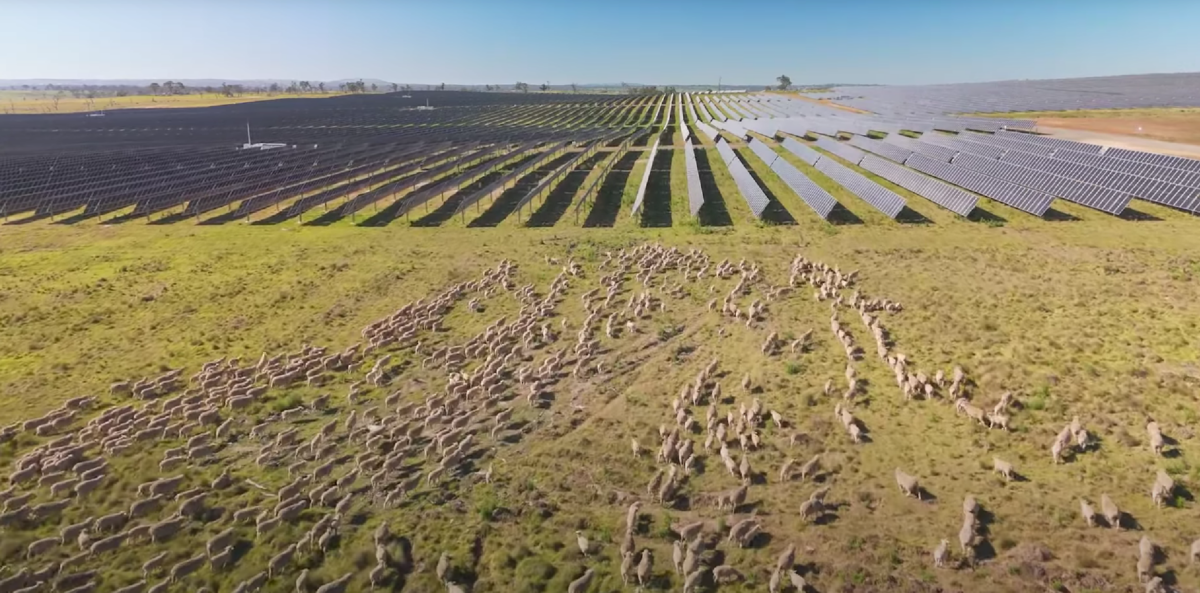
Uralla Shire Council Mayor Robert Bell said Uralla Shire, which hosts the very large New England Solar run by ACEN – a project frequently cited as a model of good social licence – remains committed to making the most of the economic opportunities that come with the New England REZ.
“Uralla Shire continues to regard the REZ as a significant opportunity for the community and is well positioned to play a central role in the state’s renewable energy future,” Mayor Bell said.
“As renewable energy development accelerates across the New England, proactive planning, community engagement and strategic investment will be essential.”
“Council recently put its draft Renewable Energy Action Plan out for public exhibition and is currently assessing all feedback before Council considers adopting the plan.”
Mayor Bell said the plan addressed the most immediate practical challenges the shire faces as the REZ moves toward construction, but said with appropriate funding the region is well placed to harness the opportunities of the renewable energy transition.
“The challenge, and opportunity, will be to ensure that the benefits are shared locally, and that communities like Uralla remain at the centre of decision-making as the New England takes its place as a cornerstone of NSW’s energy future,” he said.
Got something you want to say about this story? Have your say on our opinion and comment hub, New England Times Engage