

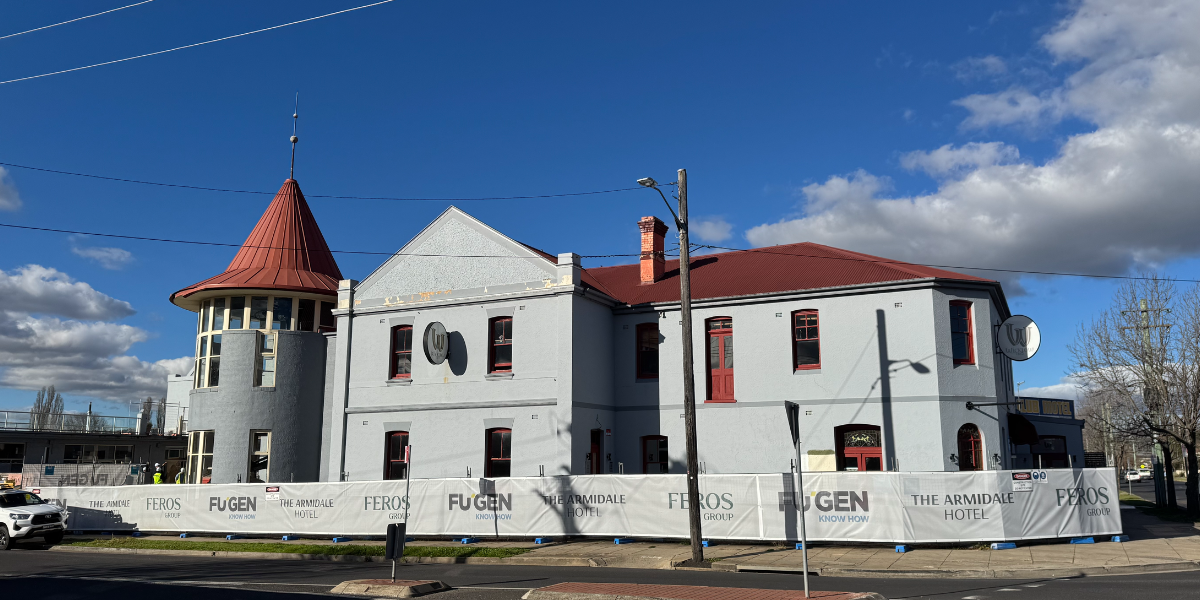
More than two years after the Wicklow Hotel hit the market, the New England region’s oldest licensed pub is undergoing a significant transformation, with new owners Feros Group set to reopen it under its original name before the end of the year.
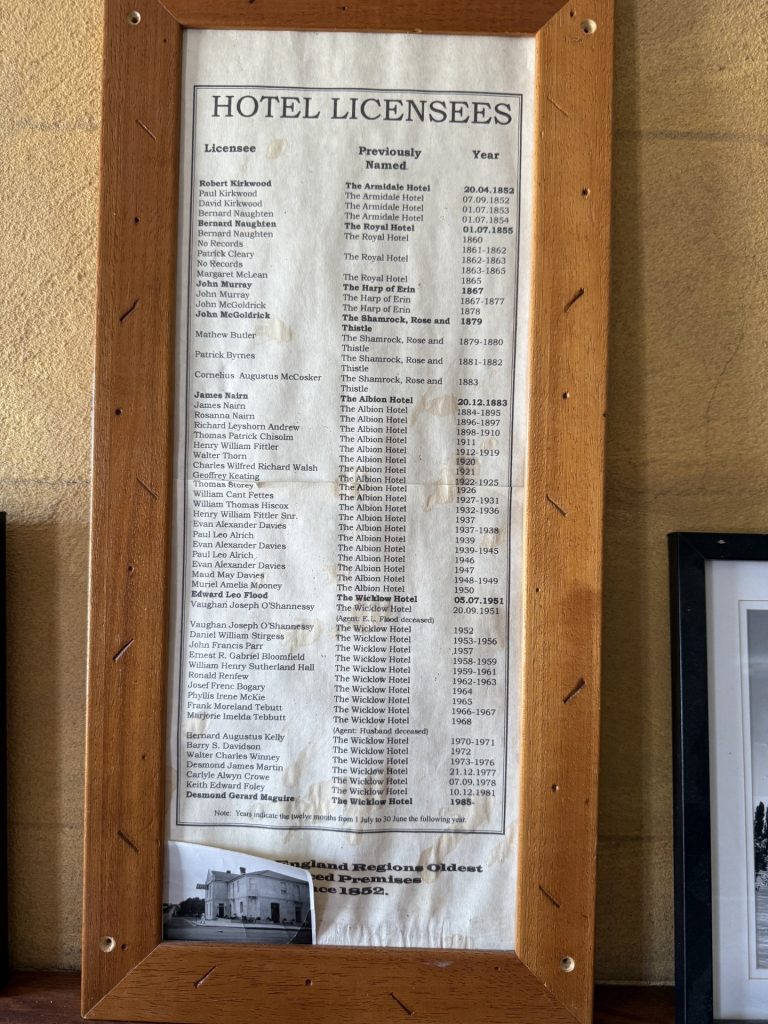
The venue, which has traded under several names since it first opened its doors, including the Albion Hotel and the Armidale Hotel, was purchased by Feros Group following its listing in March 2024, with an asking price of $9.85 million. Now roughly halfway through a major renovation, the pub is being reimagined as a multi-space community venue while holding firm to its heritage roots.
Ben Auricht, Group Marketing Director for Feros Group, said the acquisition was driven by a strong belief in the building’s potential and a personal connection to the region.
“The Wicklow Hotel immediately stood out to us because of its history, location and significance within the Armidale community,” said Mr Auricht. “It is not only an iconic local pub but also the oldest licensed hotel in the New England region. The building has incredible character and heritage, and we believed it deserved a significant investment that would restore its standing as one of the region’s premier pubs.”
That personal connection runs deeper than business.
Feros Group principal Nick Feros grew up in Uralla and attended school in Armidale, lending the project the feel of a homecoming.
The decision to return the venue to its original name was not taken lightly.
“Returning the venue to its original name was about reconnecting the hotel with its roots,” said Mr Auricht. “The name The Armidale Hotel has strong historical significance and reflects the pub’s long-standing connection to the area.”
“The rebrand represents a new chapter, but one that is firmly grounded in the hotel’s past and its place within the community.”
Preserving that history has shaped every decision made during the redevelopment. The exterior of the building will remain largely unchanged, receiving only a cosmetic refresh including new paint, signage, tiling and a roof over the beer garden. Inside, however, the venue has been opened up considerably to improve customer flow while retaining the character that made it a community landmark.
“Our goal has never been to erase the past but rather to celebrate it,” said Mr Auricht. “Wherever possible, we are retaining key features while carefully integrating modern amenities and facilities that today’s customers expect. We want people to walk through the doors and still feel connected to the building’s remarkable history.”
When guests do walk through those doors, they will find a venue that moves through several distinct spaces. The sports bar will retain much of the original form and fabric of the building, including an open fire, a pool room and large screens. From there, the venue opens into a new lounge bar and seating area that flows into a half-covered beer garden.
“There’s something really unique to older venues with lots of little nooks to enjoy,” said Mr Auricht.
One of the standout additions is a library room that doubles as a private dining space, an element the group believes will resonate strongly with the community.
“The library room is another feature we think people will love, providing a unique space for private dining and special occasions,” said Mr Auricht.
Families have also been front of mind in the redesign. An indoor kids’ play area will look out over the adjacent parklands, with future plans for an outdoor area and a cafe offering on the edge of the park. The kitchen has been relocated behind the beer garden to support a menu built around elevated pub classics, with a focus on local meat and produce suppliers.
Mr Auricht said the overarching ambition was to create a venue capable of serving the whole community across a range of occasions.
“Whether it is a casual drink and a bite to eat, a celebration, family gathering or a live music event, we will have you covered,” said Mr Auricht.
The redevelopment has already generated work for local tradespeople and suppliers. Once open, the hotel will create ongoing employment opportunities and bolster Armidale’s broader tourism offering.
“Strong hospitality venues like The Armidale Hotel contribute to vibrant regional economies, and we are proud to be making a long-term investment in Armidale,” said Mr Auricht.
With completion expected by the end of 2026, Feros Group said the project remained on track. The group drew on lessons from previous venue redevelopments in shaping its approach to Armidale.
“Successful redevelopments start with understanding the local community and what their needs are,” said Mr Auricht. “Every venue has its own personality, history and customer base. Rather than applying a one-size-fits-all approach, we focus on enhancing what makes each venue special.”
As for what locals can expect when the doors reopen, Mr Auricht was clear about the reaction the group is hoping for.
“We hope they immediately recognise the soul of the old venue while being genuinely surprised by what’s been created around it,” said Mr Auricht.
“We want people to see that the history and character have been respected, but that the hotel has also been transformed into something that will serve Armidale for the next generation. Most importantly, we hope they feel proud to have such a significant community asset restored and excited about making new memories there with family and friends.”
Read all the way through to the end of the story? So did lots of other people. Advertise with New England Times to reach New England locals who are interested and engaged. Find out more here.