

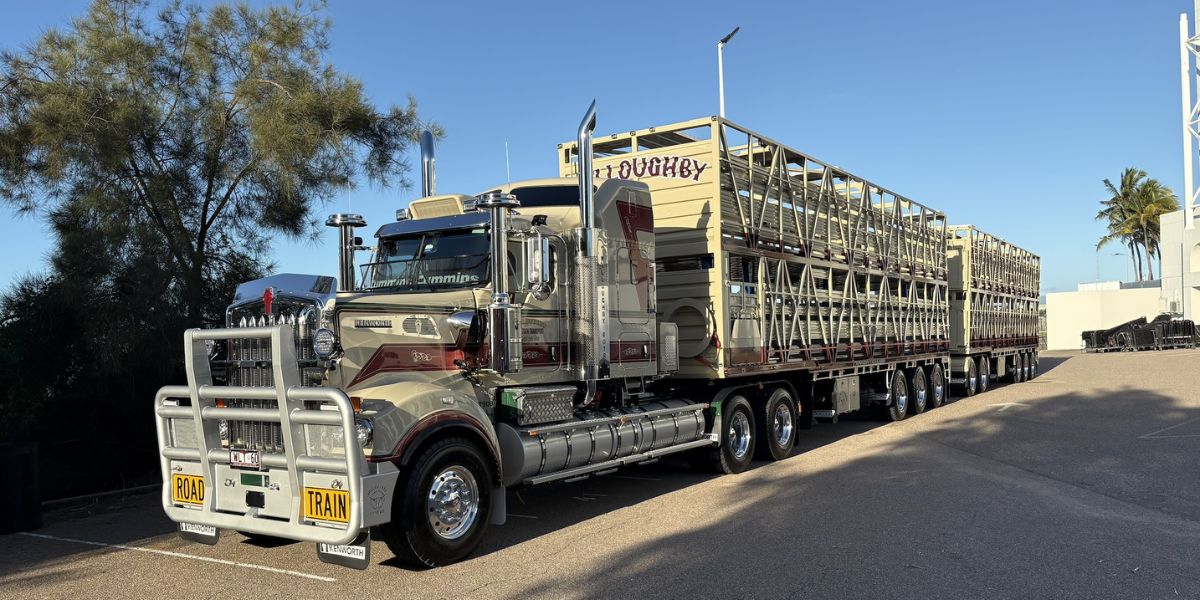
The Australian Livestock and Rural Transporters Association (ALRTA) has appeared before the Parliamentary Select Committee on Productivity in Canberra this week, proposing a suite of reforms aimed at lifting economic productivity and improving resilience across the rural freight sector.
ALRTA is the national peak body representing Australia’s multi-billion-dollar livestock and rural road freight industry, linking farms, processors, saleyards and ports.
Recent geopolitical developments have exposed vulnerabilities in freight supply chains, contributing to higher costs and constrained output across the economy.
The association is urging the Committee to adopt three key reforms:
- A national washdown and managed effluent disposal network for livestock and bulk agricultural freight, developed in partnership with states and industry. Operators currently face delays and detours due to limited access to appropriate cleaning facilities. ALRTA recommends funding and constructing new facilities along priority freight corridors, supported by a national standard to improve efficiency and biosecurity compliance.
- Reduced regulatory burden, with freight rules often duplicated across jurisdictions, creating administrative inefficiencies and limiting productivity. ALRTA is calling for a harmonised national framework that allows operators and regulators to reuse data across states, enabling faster decisions and reducing delays.
- A National Freight Workforce Resilience Package, focused on skills, training and rapid redeployment. Driver shortages continue to constrain capacity, while slow and inconsistent training and accreditation processes hinder workforce growth. A national approach would streamline training, reduce duplication and provide clearer pathways into the industry.
ALRTA Executive Director Anthony Boyle said the proposed reforms would significantly strengthen the sector.
“The freight and logistics sector accounts for about 8.6 per cent of Australia’s GDP, which has an immeasurable impact on productivity and impacts all communities,” Boyle said.
“The sector is currently burdened with unnecessary delays, time wastage and red tape, which impedes productivity and reduces certainty and confidence.
“These sensible and evidence-based reforms would strengthen industry resilience, boost productivity and provide everyday Australians with confidence that food and other essentials will be transported as quickly, safely and cost effectively as possible, with minimal disruption.
“These changes would unlock unrealised economic potential, improve investor confidence and bolster supply chain networks, which ultimately benefits all Australians.”
Read all the way through to the end of the story? So did lots of other people. Advertise with New England Times to reach New England locals who are interested and engaged. Find out more here.