

The Royal Australian Army Nursing Corps is marking 75 years of service this year, with commemorations across the country recognising generations of nurses who have cared for Australian soldiers and civilians in war, peacekeeping and humanitarian operations.
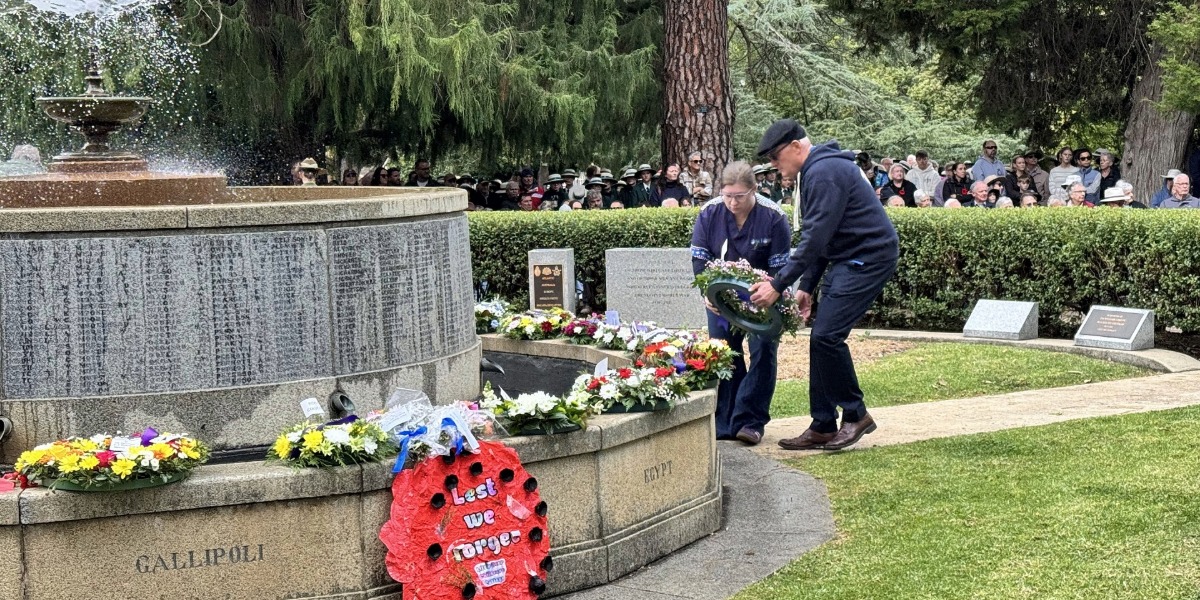
In Armidale, the milestone was acknowledged as part of Anzac Day commemorations, with representatives from the local branch of the New South Wales Nurses and Midwives’ Association and hospital executives laying wreaths in honour of those who served.
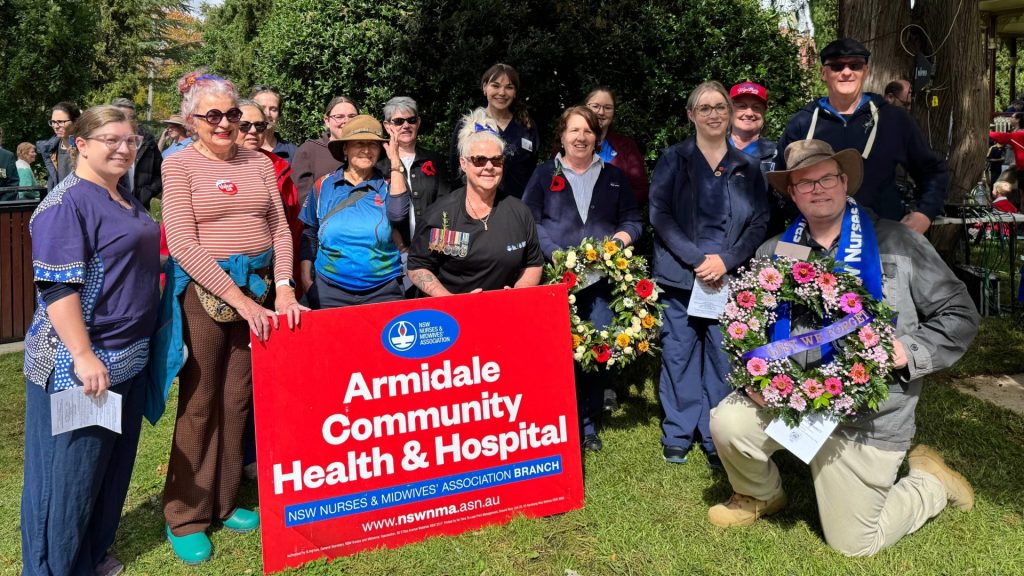
Assistant secretary of the NSWNMA Armidale branch Alyssa McRae-Cameron said the anniversary was an opportunity to recognise the often unseen role of military nurses.
“It’s a good opportunity for us to reflect on all the people who serve behind the scenes — the ones who aren’t necessarily carrying weapons,” she said.
“It’s particularly the women who did the caring roles and who saw just as horrific conditions while serving their countries.”
The anniversary marks the formal establishment of the Nursing Corps in 1951, but the history of the service of nurses in war under the Australian flag is much older.
Australia’s military nursing history began during the Second Boer War, when women first served officially alongside troops. That contribution was formally recognised in 1902 with the creation of the Australian Army Nursing Service.
Nurses went on to play a critical role in both the World War I and World War II, working in hospitals, on transport ships and close to the front lines. In World War II alone, nearly 3,500 AANS nurses served in Australia and overseas, often in dangerous and unpredictable environments.
As demand for medical care grew during the war, the Australian Army Medical Women’s Service was formed in 1942, incorporating civilian volunteers known as Voluntary Aid Detachments.
The modern Corps was established on 26 January 1951, when the Minister for the Army, Josiah Francis, announced the creation of a peacetime women’s service within the Australian Regular Army. The Royal Australian Army Nursing Corps merged the AANS and AAMWS into a single, independent corps.
That change removed nursing administration from the Royal Australian Medical Corps and established the Corps’ identity under the motto “Pro Humanitate” — for humankind.
Since then, RAANC personnel have served in conflicts and operations across the globe, including Korea, Malaya, Vietnam, Cambodia, Papua New Guinea, Timor-Leste, Rwanda, Afghanistan and Iraq, as well as in humanitarian and disaster response efforts.
A good contingent of local nurses and hospital staff walked into today’s march to represent and acknowledge the contribution of nurses in Australia’s defence.

For Ms McRae-Cameron, the anniversary also highlights broader questions about how nursing is valued today.
“I think the main thing in remembering Anzac Day is that in service, we gain bigger things,” she said.
“We give to our community and we get back, which is essentially what nursing is all about.”
The acknowledgement of the value of women’s work in nursing is also particularly focused after the recent decision of the NSW Industrial Relations Commission, which was very direct in its decision that nursing has been historically undervalued.
“I think the IRC decision reflected that women’s work has been undervalued and, in a lot of ways, it has taken longer for the contribution of the invisible people of our world wars to be reflected,” she said.
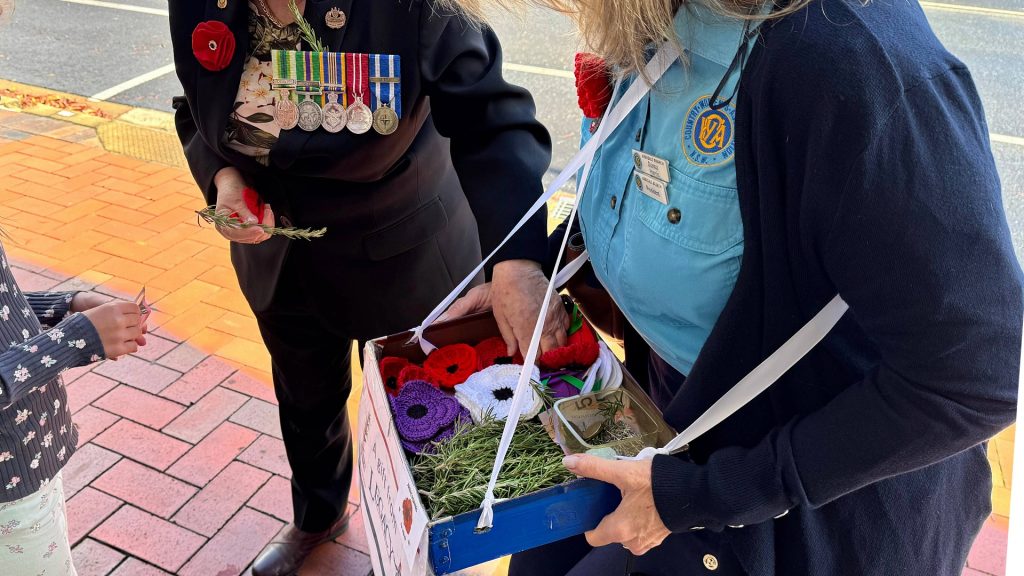
Acknowledgement of women and nurses service has been more prominent over time, with a prayer for the women who served now common in the service program, and Legacy poppies in white, for the nurses, regularly available with the more well known red.
The contribution of nurses in our war service will be acknowledged in a special event to mark the 75th Anniversary of the RAANC in Sydney in June.
Got something you want to say about this story? Have your say on our opinion and comment hub, New England Times Engage