

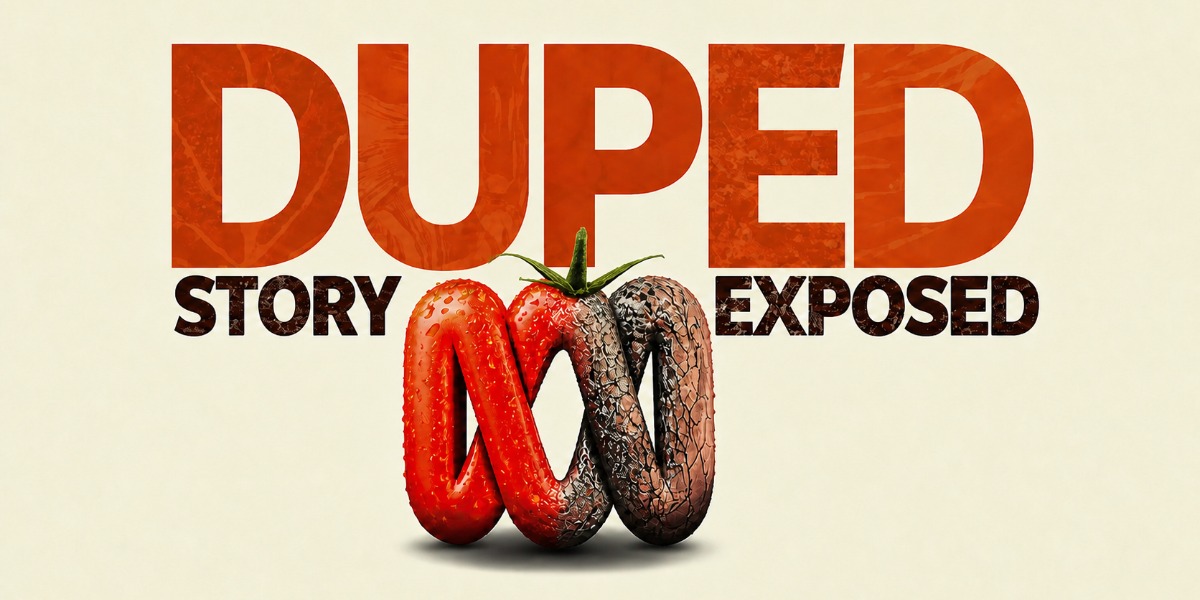
The consumer watchdog has found no evidence that tomato and egg labels singled out in an ABC Four Corners program were false or misleading, confirming the findings of a New England Times investigation that found the program’s alarming food fraud claims did not stand up.
The ACCC on Thursday said it had completed its inquiries into claims made in Duped: Food Exposed, a two-part program reported by Adele Ferguson that aired in July and August.
The program alleged about one in four tomato products and a Woolworths-branded “cage free” egg line failed to verify their claims. The allegations relied on food provenance testing the ABC commissioned from Perth-based lab Source Certain.
The ACCC reviewed the businesses’ supply chains, the controls they have in place to support their country of origin and cage-free claims, and material tracing the products’ origin. It did not find evidence that the claims on the tomato and egg labels were false or misleading.
“It was important to examine these allegations, because such claims matter to consumers,” said ACCC Commissioner Luke Woodward.
“When shopping for groceries, consumers must be able to rely on the accuracy of claims made on labels, packaging and in advertising about the products they may wish to buy.”
All traders cooperated with the inquiries and promptly provided material to back up their claims.
The New England Times investigation, published in August, found Source Certain did not hold NATA accreditation for provenance testing and was not recognised by Food Standards Australia New Zealand.
Coles said it had no evidence that Chinese tomatoes were used in the Coles Italian Tomato Paste products identified, and that fertiliser such as urea could affect isotope profiles. Leggo’s said it had not been given the underlying testing data, analytical framework, or detailed results, and strongly refuted the programs claims.
An independent egg industry professional said free-range status could be tested, but there was no known method to tell barn, or “cage free”, eggs from caged eggs.
The NSW Food Authority had rejected the program’s horse meat claim as false and called on the ABC to correct the record.
“Food labelling, packaging and advertisements must be truthful, accurate and not misleading,” Mr Woodward said.
“This is particularly important in relation to country of origin food statements and free range or cage free egg claims, as these products are often sold at a higher cost which consumers may be prepared to pay in reliance on the accuracy of these claims.”
In its inquiries, the ACCC worked with food manufacturers and experts including the National Measurement Institute, the Australian Nuclear Science and Technology Organisation, Food Standards Australia New Zealand, and state and territory food regulators.
The watchdog said the reliability of food provenance testing can depend on many factors, including the product tested, sampling methods, statistical models, and how comprehensive the reference database is across different growing regions.
There are several testing methods available, and they can provide strong scientific evidence to support origin claims. But at present, no single test can definitively determine the country of origin of every food.
Experts told the ACCC that test results should not be relied on as a definitive or standalone way of determining origin, and should be considered alongside traceability records, supply chain information, audits, and other evidence.
The ACCC could not investigate the program’s claims about false country of origin labels on seafood, as it was unable to obtain the names of the suppliers alleged to have made them.
It did not consider issues outside its role, including the health star rating system, food safety, and modern slavery.
“While food origin testing can show whether a sample is consistent with a certain origin, such testing cannot prove origin with certainty,” Mr Woodward said.
“In our inquiries, we have considered testing, together with supply chain documentation and other evidence produced by suppliers to substantiate their food origin claims.”
Something going on in your part of the New England people should know about? Let us know by emailing newsdesk@netimes.com.au