

NSW farmers can follow every state land management rule and still be unsure whether they are breaking federal environmental law, and NSW Farmers wants that fixed.
The association is calling for a stronger agreement between the state and federal governments to cut duplication and confusion over environmental laws.
It has also launched FarmCheck, a new tool to help farmers navigate their regulatory obligations.
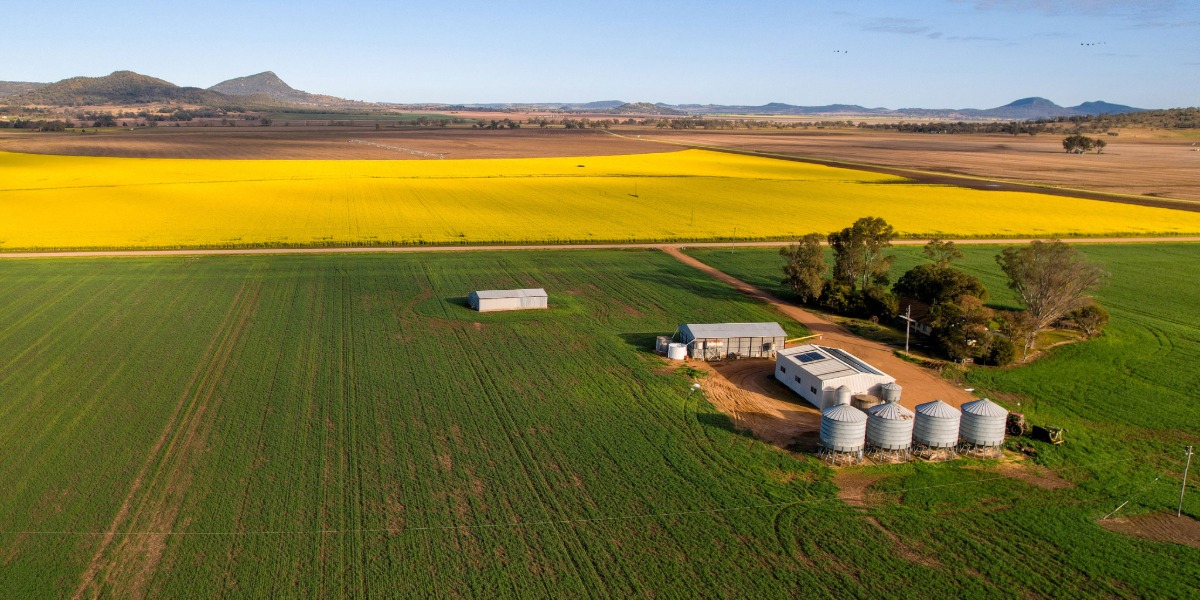
The call came during an on-farm visit at Illabo in southern NSW on Wednesday, 4 November.
Representatives from NSW Farmers, the National Environmental Protection Agency (EPA), and NSW Local Land Services (LLS) gathered to examine the practical challenges of complying with Commonwealth and NSW environmental laws.
The visit was hosted by NSW Farmers Environment Protection and Biodiversity Conservation (EPBC) Taskforce member Murray Norman and family.
“Our farm business has spent considerable time trying to understand how the Commonwealth and NSW requirements apply to our farm, so it was valuable to have representatives from the EPA, LLS and NSW Farmers come together and work through these issues on the ground,” said host farmer Murray Norman.
NSW Farmers has recently passed policy to encourage a bilateral agreement between the NSW and Australian governments.
It wants an agreement that reduces regulatory duplication, recognises existing state assessments, and gives farmers a simpler, more coordinated pathway to compliance.
“A farmer can follow NSW land management requirements and still be left wondering whether they’re complying with Commonwealth environmental laws,” said NSW Farmers President Rebecca Reardon.
“Farmers need clear answers before they book contractors, invest money, clear vegetation, maintain infrastructure or undertake other essential land management activities.”
The association also wants Local Land Services properly funded and resourced to provide practical, on-the-ground support for farmers.
“Farmers want to do the right thing, but governments need to make it possible for them to understand and meet their obligations without excessive costs, duplication or the risk of inadvertently breaking the law.”
“The challenge isn’t that farmers don’t want to comply.”
“It’s that the two systems don’t always provide a clear pathway for them to do so.”
Available only to NSW Farmers members, FarmCheck is designed to help primary producers understand their obligations under the Commonwealth EPBC Act.
It guides users through identifying proposed activities, gathering property records, checking NSW requirements, reviewing Commonwealth mapping and protected species information, assessing potential impacts, and documenting their decisions.
“FarmCheck provides a practical starting point and helps farmers work through the questions they need to ask before undertaking work on their properties,” said NSW Farmers EPBC Taskforce Chair Richard Bootle.
“But it cannot grant approvals or resolve every uncertainty, particularly where habitat assessments, significant-impact thresholds or existing state approvals are concerned.”
“That’s why we also need governments, regulators and industry working together to provide clearer guidance, better tools and greater certainty.”
“However, we are very conscious of not reducing the existing exemptions that NSW farmers have fought hard to maintain in the past.”
“We would also like to see agricultural research and development corporations work with regulators to develop further practical resources for primary producers.”
“We hope the discussions will help develop clearer guidance and better self-assessment tools so farmers across NSW can have greater confidence in meeting their obligations,” Mr Norman said.
More information about FarmCheck is available at nswfarmers.org.au
Something going on in your part of the New England people should know about? Let us know by emailing newsdesk@netimes.com.au