

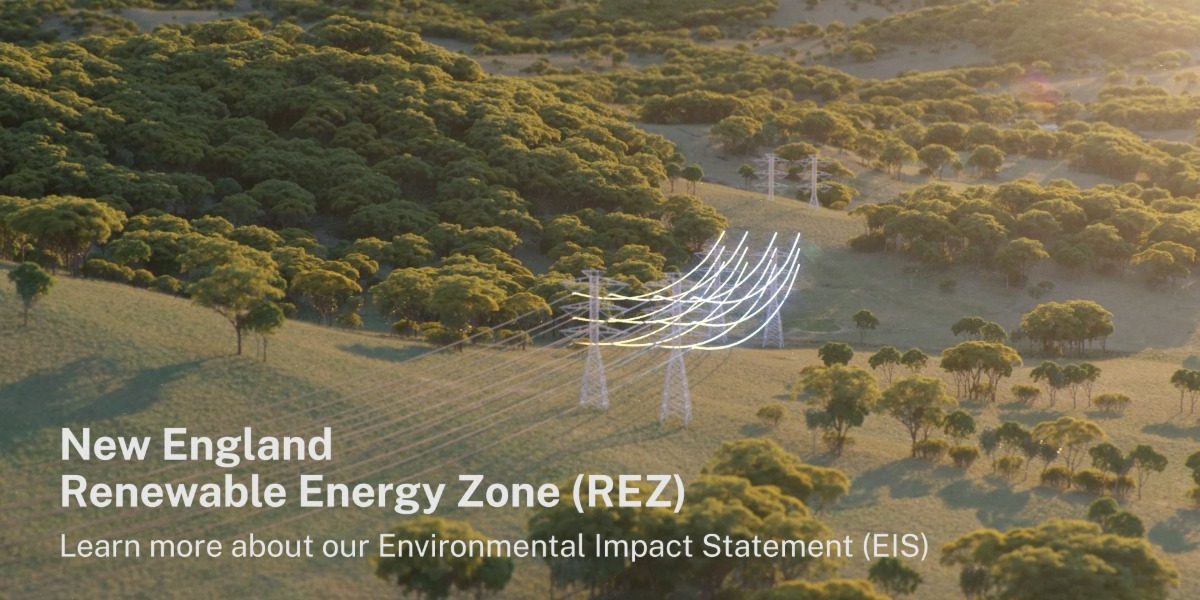
The environmental impact statement for the New England transmission line was released in the early hours of this morning, starting what is likely to be an intense period of debate around the pivotal project.
An Environmental Impact Statement or EIS is a very detailed document that is required of all planning proposals, documenting the project and its expected impacts. The full document runs to 889 pages, making it one of the larger and more complicated documents of its kind. There are some surprises in it, like a significantly reduced need for water from earlier estimates, and a great deal more detail than has previously been available. It stays on display and open for your comments and submissions until Thursday, 12 November.
The size of the document matches the size of the project. It covers new dual 500 kV transmission lines and energy hubs that will connect renewable energy generated in the zone to Bayswater Power Station near Muswellbrook. Communities from Walcha, Uralla, and Armidale to Scone and Muswellbrook are affected.
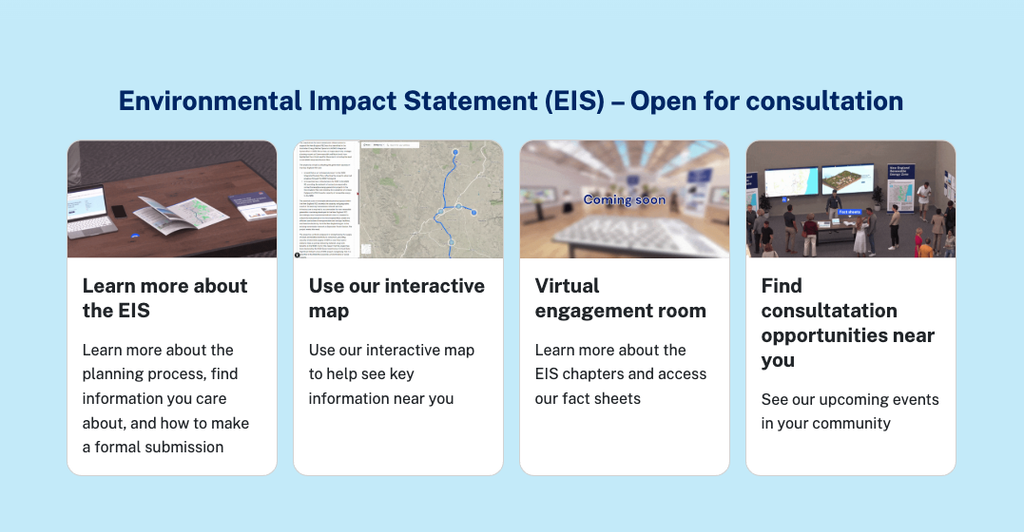
EnergyCo has made a range of resources available so people can find what matters to them without wading through the whole thing.
“I’d encourage people to have a look at our website for summary parts that can help narrow it down to either their area of technical or geographic interest for them or their community,” said Deputy Project Director Julian Watson.
The project’s engagement portal carries an interactive map, fact sheets, and digital resources. Mr Watson said the maps would be especially useful.
“The maps on that people will find really useful because it shows not just the corridor and the access tracks, but also where Aboriginal heritage sites might be, or where the different biodiversity ecological communities are,” Mr Watson said.
EnergyCo will run 10 drop-in information sessions across nine locations, where people can view the statement, speak to the project team, and ask questions.
The sessions are:
- Walcha: Tuesday, 27 October, 12pm to 3pm, Walcha Vet Supplies
- Kentucky: Wednesday, 28 October, 3pm to 6pm, Kentucky Memorial Hall
- Gundy: Monday, 2 November, 3pm to 6pm, Gundy Soldiers’ Memorial Hall
- Rouchel: Wednesday, 4 November, 3pm to 6pm, Rouchel School of Arts Hall
- Scone: Thursday, 5 November, 3pm to 6pm, Scone Motor Inn Conference Centre
- Muswellbrook: Friday, 6 November, 11am to 2pm, Muswellbrook Library Seminar Room
- Walcha: Monday, 9 November, 4pm to 6pm, Walcha Central School Hall
- Uralla: Tuesday, 10 November, 3pm to 6pm, Uralla Courthouse
- Armidale: Wednesday, 11 November, 3pm to 6pm, Armidale Town Hall
- Tamworth: Thursday, 12 November, 12pm to 2pm, Tamworth Community Event Centre
“We’ve tried to spread that a bit through the New England. So while we’ve got two in Walcha, we’re also not too far away in Uralla and Armidale and Kentucky for some of those other local ones as well.”
“People are always free to go to one of the other locations as well,” Mr Watson said.
Mr Watson acknowledge that some people don’t feel comfortable voicing their views in public forums, which is why they have a number of ways in which people can engage and have their say.
“We’ve very much taken a consultation approach that looks to avoid opportunities for the loudest couple of voices to monopolise an event,” Mr Watson said.
“So we’ve got smaller, more targeted events that have our specialists there. People can come and talk about biodiversity or whatever is of interest to them.”
EnergyCo will also run webinars, and people can ask questions anonymously. The first, on understanding the EIS, runs from 4pm to 5pm on Tuesday, 20 October. It will explain the purpose and structure of the document, how to find the information relevant to you, and how to make a submission. Later webinars will cover how the zone will be built and biodiversity.
However, Mr Watson emphasised that EnergyCo cannot accept formal submissions, they have to go through the planning portal.
“In the same way that with a DA you put your submission into council rather than to the proponent, the actual responses need to go back through the major projects portal on the Department of Planning, Housing and Infrastructure website for the project,” Mr Watson said.
“I wouldn’t want people to send their info to us and hope it gets through to planning. It’s just important that they make that direct to planning.”
Planning then sends the submissions to EnergyCo to respond to and, if needed, make changes to the project.
Importantly, people should not consider the plans in the EIS as final. Mr Watson said change was expected as a result of feedback, and as is normal in the planning process.
“I don’t see a wholesale change from one valley to another of the corridor itself,” Mr Watson said.
“But the idea of the environmental impact assessment process is that we find out things that we couldn’t have known without doing that consultation.”
“I suspect that there’ll be people who might not have felt comfortable engaging with us to date, but might feel that the EIS consultation period is an appropriate time to do that,” Mr Watson said.
People can register for webinars at www.energyco.nsw.gov.au/nerezevents, call EnergyCo on 1800 061 114 (toll free), or email nerez@energyco.nsw.gov.au.
To read the EIS and make a submission before Thursday, 12 November, visit the NSW Planning Portal: https://www.planningportal.nsw.gov.au/major-projects/projects/new-england-rez-transmission-project
New England Times will provide in-depth coverage of the REZ Transmission Line project and the EIS over the next fortnight, beginning with environmental impacts on Saturday.
Got something you want to say about this story? Have your say on our opinion and comment hub, New England Times Engage