

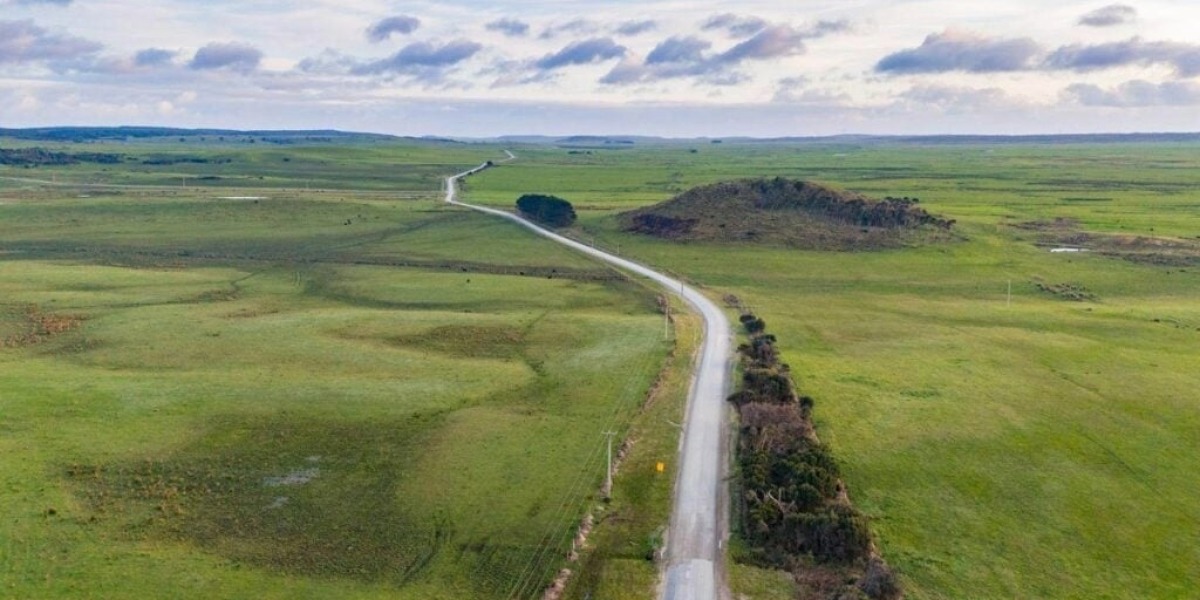
Renewable-energy developments are often accused of consuming productive farmland. But farm groups and climate-policy analysts say another pressure on agricultural land has received far less attention and is a much bigger threat: forestry projects that generate carbon credits for industrial emitters.
Farmers, investors managing trillions in retirement savings, an economics think tank, and the federal government’s own figures – and yes, Member for New England Barnaby Joyce – all point to the same issue: farming is being hurt by what is called the “Safeguard Mechanism”. A year-long review of the policy currently underway will decide what, if anything, gets done about it.
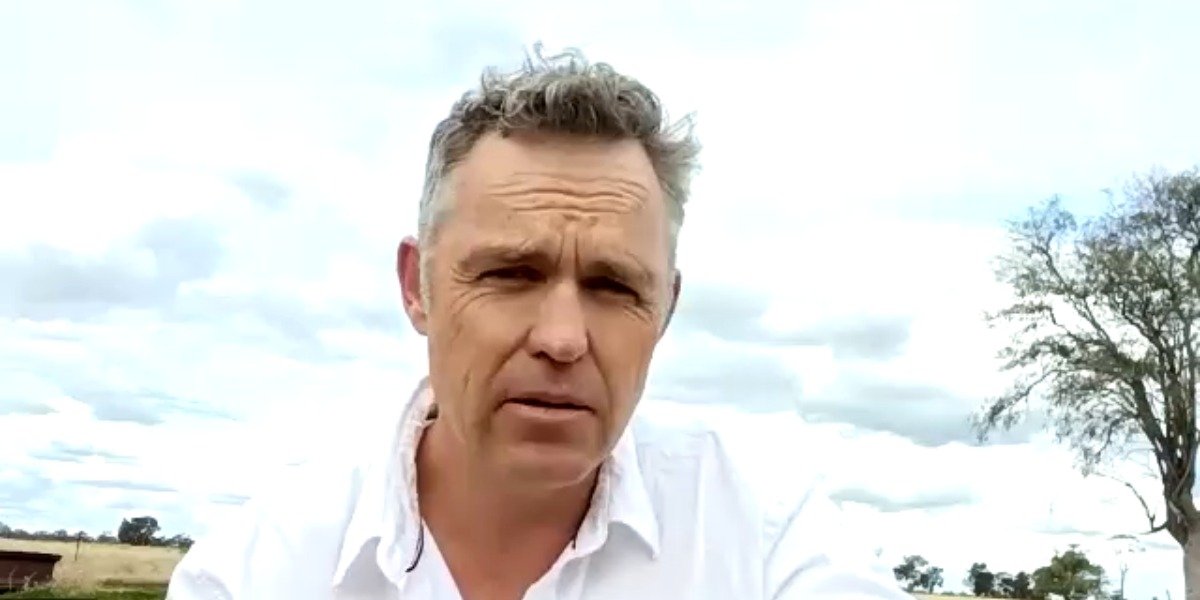
Moree farmer and policy analyst Oscar Pearse is widely regarded as a leading expert at the intersection of agriculture and climate policy. He wrote Farmers for Climate Action’s submission to the policy review, and lays out the scale of the problem in hectares.
“A few hundred thousand hectares might be lost in the entire renewables transition across Australia at worst case scenario,” Mr Pearse said.
“We’ve probably already lost a couple of million hectares [to large-scale carbon forestry projects generating carbon credits].”
The situation is complicated by a four year lag in reporting, but the federal government’s own modelling suggests more than five million hectares – an area approaching the size of Tasmania – may be used for carbon-credit projects. Newer modelling points to as much as 18 million hectares, about four-fifths the size of Victoria. An enormous amount of productive agricultural land, gone for up to 100 years – not to renewable power, or national parks, but to generating climate credits so big polluters can keep polluting.
The “safeguard mechanism” that doesn’t work
The reason so much agricultural land is in play is a small part of the complex climate policy framework almost nobody outside of climate policy wonks and specialist consultants have heard of: the Safeguard Mechanism.
It is meant to force Australia’s biggest industrial polluters to cut their own emissions. It doesn’t.
The Safeguard Mechanism is the central mechanism in Australia’s climate policy framework for controlling carbon emissions from big industrial sites: coal mines, gas plants, smelters, cement works and so on. According to the government’s own consultation paper, released last month by the Department of Climate Change, Energy, the Environment and Water, it covers more than 200 facilities, responsible for around 30 per cent of the nation’s total emissions.
“We’re talking coal mines, we’re talking gas extractors. We’re talking really heavy industry here,” Mr Pearse said. “We’re not talking any farmers, I should say. No farmers are required under safeguard to report and offset.”
Each covered facility is given a baseline: a limit on how much it can emit each year. The consultation paper confirms that limit is set to fall by 4.9 per cent annually. That cuts the combined emissions of all covered facilities from 139 million tonnes in 2023 to a target of 100 million tonnes by 2030. If a facility stays under its baseline, it earns a tradeable Safeguard Mechanism Credit, or SMC, that it can sell to a facility running over its own limit.
If it goes over, it has other options too. It can cut its own pollution. It can buy an SMC from a cleaner competitor. Or it can buy an Australian Carbon Credit Unit, known as an ACCU, generated by a project somewhere else. Very often, that is a forestry project on prime agricultural land.
That last option is where the trouble starts, according to Mr Pearse and the farm groups now pushing for reform. The Safeguard Mechanism, like other parts of the climate change policy framework, was built around an economic principle known as “least cost abatement”: reduce emissions at the lowest possible total cost, wherever that cost happens to fall.
Under that principle, Mr Pearse said, a large polluter weighing up whether to buy a credit instead of cutting its own pollution would run simple numbers. Which costs less: fixing our emissions, or buying carbon credits from elsewhere?
Mr Pearse traces the approach to the Howard government’s “no regrets” climate policy, under which emissions reductions were designed to impose minimal costs on polluters. The Abbott government later established the Safeguard Mechanism on a “least-cost abatement” principle, allowing large emitters to meet their obligations by buying unlimited ACCUs rather than reducing pollution at their own facilities.
“Least cost meant that we were now in a position where, if a large polluter could go and buy a carbon credit for 20 bucks, as opposed to fixing the pollutions on their own sites – so putting on a cap, or a gas process, or a more efficient way of doing something… well they go and buy the carbon credits.”
And because agricultural land is the cheapest source of carbon credits, farming is paying the price for big emitters, and carrying most of the burden of Australia’s climate action.
“We’ve also been the only sector that’s provided a significant number of these carbon credits through land-based projects,” Mr Pearse said.
The government’s own numbers show that most emitters are offsetting more than reducing their emissions. Net Safeguard emissions, the figure companies get after subtracting every credit and offset they have bought, fell 7.4 per cent in 2023-24 and a further 5.5 per cent in 2024-25. Gross emissions tell a different story. That is the actual physical pollution released at these sites, before any credit is counted. It fell by only 1.9 per cent, then 2.4 per cent, over the same two years. The department’s own explanation is that large industrial projects take years to plan and build. Even so, it says, “this remains a watch point moving forward” as the review considers whether the settings need to change.
Mr Pearse says that gap will only close if the rules change to force emissions reduction at the source, and not allow that burden to be pushed onto agricultural land.
“We’re going to have to see some safeguard restrictions on the use of ag land,” he said.
Australia Institute co-chief executive Richard Denniss puts the same gap more bluntly.
“The Safeguard Mechanism’s main function was supposed to be to make our biggest polluters pollute less,” he said. “That is simply not happening.”
Locked up for a hundred years
What makes an ACCU project different from a farmer selling a farm for any other purpose is what happens after the sale. A forest planted for carbon credits has to stay standing for decades, to guarantee the carbon it locks up does not simply go back into the atmosphere.
“There’s a permanence requirement in the safeguard processes and in international standards,” Mr Pearse said. “You can’t just grow the trees and then burn them later.”
That obligation runs for up to 100 years once a project is registered. Mr Pearse said the economics of that push buyers toward a particular kind of land.
“It’s just good business sense, but the analytics always come out as the best way to do it is to buy land, like what’s behind me” he said, referring to his property in our region’s highly productive golden triangle, “cleared for grazing or cleared for cropping.”
“The best thing you could do is if you were an aggregator wanting to get as many credits as you could is take rich land like this, over 650 millimetre rainfall, plant the whole thing to trees,” he said. “You’ll generate a vast number of carbon credits.”
“And then at the end of say a 25 or 30 year project, where those carbon credits are ticking over and you’re being allocated and sold them, you’ll have a very large amount of money. Problem is, what happens next?”
Mr Pearse warned that once the most profitable period of generating carbon credits ends, properties could be sold to companies without enough money to manage them for the remainder of the permanence period. That could leave land burdened by decades of pest, weed and fire management obligations without a reliable source of funding—a risk ultimately borne by farmers, regional communities and governments.
“It’s a genuine risk to policymakers, to farmers, to ag sectors, to ag communities,” he said.
Barnaby Joyce has been asking similar questions.
“All this farmland you are taking out of production, just covering it with trees. So 10s of 1000s of head of cattle are no longer in production, therefore reducing supply, putting up the price,” Joyce said in a recent social media video.
“Are you going to keep doing that?”
The clearest current example is in Tasmania. Rushy Lagoon is the state’s largest farm, at 21,745 hectares in the state’s north east. It was sold this year to Gresham House, a British investment firm. The currently cleared and worked irrigation and dairy property will make way to plant around 12 million radiata pine seedlings across 9,000 hectares, backed in part by federal Clean Energy Finance Corporation funding, according to the ABC.
The sale has prompted a Tasmanian parliamentary inquiry. The state’s Primary Industries Minister, Gavin Pearce, said questions remained about whether federal policy is “inadvertently favouring carbon credit outcomes over ongoing fibre and food production”. TasFarmers President Nathan Cox described the federal approval of the sale as “a betrayal of Tasmanian agriculture”.
Warwick Ragg, General Manager of Natural Resource Management at the National Farmers’ Federation (NFF), says Rushy Lagoon is only the most public example. He is watching a similar pattern in several parts of the country. That includes the Monaro district in southern New South Wales, and pockets of western Victoria, south west Western Australia, and south west Queensland.
“Where other sectors are choosing to deal with their own emissions obligations of the safeguard mechanism to continue to do so by purchasing landscape offsets creates undue and we think unnecessary pressure on ag land.”
NFF is not opposed to offsets in principle, Mr Ragg said. What matters is how they are managed.
“We want to see them well managed, well structured, and done in an integrative way,” he said.
“There are ways to design it that has a lesser impact on agriculture,”
His concern is less about any single project. It is more about what happens to a district when a landscape offset takes hundreds or thousands of hectares out of production at once. Fewer farms operating locally can mean fewer jobs in nearby towns, and less money moving through local suppliers and services.
“There’s also a body of evidence that the introduction of offset projects into communities have negative impacts on socio-economics,” he said, pointing to weaker local economic engagement compared with land that stays in the hands of farmers actively working it.
Not every carbon project raises the same concerns. Mr Pearse and Mr Ragg both draw a sharp line between two very different things. On one side is a farmer building soil carbon, planting shelterbelts, or fencing off a creek line on an operating farm. On the other is a whole property converted to permanent forestry, with no agriculture left at all.
Both generate carbon credits. Only one keeps the farm farming and producing the food and fibre the world needs.
Credits that don’t add up
The Safeguard Mechanism was reformed in 2023 with what became known as a “hard cap”. It was meant to work as a backstop, stopping new coal and gas projects if the scheme’s overall gross emissions climbed too high. It was central to the Greens’ support for those reforms. It has not worked as advertised.
Since the Albanese Government took office, 36 fossil fuel projects have been approved. A further 90 are in the planning pipeline, according to the Australia Institute, whose report on the scheme was published in June. None of those approvals has triggered the hard cap mechanism, the report found. That is because the minister only has to be subjectively satisfied that the scheme’s broader objectives will still be met.
One case study in the report illustrates why. Woodside’s North West Shelf gas processing facility near Karratha emitted more than 5.7 million tonnes of CO2-equivalent in 2024-25, over 900,000 tonnes above its allocated baseline. To cover the gap, Woodside surrendered 239,200 SMCs and 681,895 ACCUs, more of the latter than any other facility in the scheme. More than 80 per cent of those ACCUs came from methods the report says are dogged by integrity problems: Human-Induced Regeneration and avoided deforestation projects, alongside landfill gas. The facility’s extension was separately approved to run until 2070.
A second example shows how a facility can increase its actual pollution and still profit from the scheme. Chevron’s Gorgon LNG project increased its emissions from 8.1 million tonnes to 8.8 million tonnes of CO2-equivalent last financial year, the report found. It still received almost 400,000 SMCs, because its baseline rose along with its production. “This means Australia’s primary emissions mitigation policy effectively provides a benefit to some polluters despite them increasing their production of fossil fuels,” the report states.
Across the whole scheme, land-sector ACCUs made up around 6 million of the credits surrendered in 2024-25. That is more than half the national total, the report found, citing Clean Energy Regulator data. These are the credits generated by tree-planting and native forest regeneration projects. Independent research the report cites estimates that as much as 90 per cent of ACCUs issued under the avoided deforestation and Human-Induced Regeneration methods may be high-risk or low-integrity credits.
The dispute over what these numbers mean played out in public last year. Climate Change Minister Chris Bowen said in April that “emissions have fallen across heavy industry. Net emissions across facilities covered by the Government’s Safeguard Mechanism fell 5.5% year on year … This is a clear sign that the Albanese Government’s Safeguard Mechanism is working and on track to meet targets.”
Tim Baxter, of Naru Research, took issue with using that figure to declare success. “The delivery of these offset units does not reliably indicate that real world emissions reductions are occurring,” he said.
Dan Repacholi, the Labor member for Hunter, made a similar point to the House of Representatives last November. “Net zero does not mean zero emissions,” he said. “Net zero is about one thing: offsets.”
Australia is unusual in allowing offsets to cover the entire gap between a facility’s emissions and its baseline, with no limit on volume. The Australia Institute’s analysis places Australia alongside Kazakhstan as the only carbon pricing schemes in the developed world with no cap on offset use at all.
The government’s own consultation paper suggests it is alive to at least part of this problem. It notes that around 59 million tonnes of ACCUs are currently held in reserve. Another 20 million are expected to be issued each year to 2030. The paper states plainly that “access to a significant supply of lower-cost ACCUs could delay the on-site abatement needed to deliver Australia’s future climate goals.”
Mr Ragg is also not convinced that stockpile is as solid as the department suggests.
“We think the [ACCU] bank is substantially low, and so we may go into the 2030s without much in the bank,” he said.
The consultation paper is now asking whether to cap the volume of ACCUs a facility can use. Other options on the table include requiring companies to surrender more than one credit for every tonne they want to offset, or restricting which years’ credits can be used at all. Under current rules, a facility only has to explain itself if it has used ACCUs for more than 30 per cent of its baseline.
Ag land is already doing the work, for free
Ag land is not just a target for future carbon projects. It is already propping up Australia’s national emissions accounts, largely unpaid.
Australia’s official accounts split emissions into categories. One counts direct farm emissions, mostly livestock and fertiliser. A separate category, land use, land use change and forestry, or LULUCF, counts the carbon absorbed or released by vegetation and soils across the country. Agricultural land makes up about 60 per cent of that entire LULUCF category, Mr Pearse said, some 31.2 million tonnes of absorption last year alone. Most of that work earns nothing, because it sits outside any registered, tradeable project, but the government counts it toward the national total.
Mr Pearse calls LULUCF’s “freebies” that the system just takes – no payment is given to the farmer who cares for that land.
At the same time, farmers are already carrying real costs from a changing climate. The Australian Bureau of Agricultural and Resource Economics and Sciences, ABARES, has looked at changing seasonal conditions between 2001 and 2020. It found they cut average annual farm profits by 23 per cent, or around $30,000 a farm each year, compared with the second half of last century. More severe and more frequent floods and fires in our own region have had a very heavy toll, both on agriculture and the many towns that rely on it.
That is before counting the cost of biosecurity threats moving into new areas as the climate warms, a cost farm groups expect to keep climbing.
Mr Ragg says that ag land is already propping up the national sequestration total for free, while absorbing a growing share of the cost of climate change. That exposes the industry to a different threat again.
“Ag emissions as a proportion of total annual emissions are going to increase, not because we performing worse, but because other sectors are on a more rapid trajectory,” Mr Ragg said.
“So as the pie becomes smaller, ag will be a bigger part of the pie.”
That looming perception shift that will make it look like agriculture is becoming a bigger polluter means the industry will likely be subjected to ill-informed attacks from those who misuse or misrepresent the numbers.
“So the general community debate about that will start to focus on what’s going on with agriculture,” Mr Ragg said.
“We’re very alarmed at how that might play out. You know, particularly with poor understanding of what’s really going on.”
A review with everyone at the table
Farmers are not the only ones asking the government to push harder on real, on-site pollution cuts. The Investor Group on Climate Change is one of them. Its members manage $4.6 trillion on behalf of 15.8 million Australians through their superannuation. It commissioned modelling from EY that found fossil fuel facilities have access to two and a half times more low-cost, on-site abatement than manufacturers, roughly 29 per cent of their emissions against 12 per cent. They are simply not being pushed to use it. Without changes to the scheme, the modelling found, Australia risks “almost zero additional on-site abatement” between 2030 and 2035.
The investor group wants a steeper 7 per cent average annual decline rate after 2030, with the pace varied by sector. It also wants the fixed-price cost containment measure replaced with a price corridor, so ACCUs stop acting as an effective ceiling on the cost of avoiding real reductions.
At the other end of the spectrum, conservative think-tank The Institute of Public Affairs argues the changes on the table, which includes lowering the floor and requiring more big emitters to be subject to the safeguard mechanism, would be ruinously expensive. Meeting the government’s 2035 target of cutting emissions by 62 to 70 per cent below 2005 levels would cost covered facilities between $18.9 billion and $33.1 billion between 2030-31 and 2034-35, the organisation estimates.
“The Safeguard Mechanism is a direct threat to our sovereign capability, as almost nine-in-ten of all the facilities targeted are in critical industries we need to survive as a self-reliant nation, including mining and manufacturing,” IPA research fellow Saxon Davidson said.
The Nationals have taken up the same modelling to make their case in Canberra. Nationals leader Matt Canavan said the coming changes amount to “an extra cost, on top of the costs incurred before 2030, which will impact 228 of Australia’s biggest businesses”.
“Government policy is actually forcing a new tax onto Australian business, and putting industry at risk, all for their ideology,” Senator Canavan said.
But whether opposed to the Safeguard Mechanism ideologically, or just the way it is currently structured, all sides of the debate appear to be in agreement that agriculture alone cannot keep carrying the burden for Australia’s climate action.
Farm groups have some cause for optimism that things are going their way. On 20 August, Parliament passed a bill replacing the “least cost” carbon credit purchasing model with “value for money,” allowing the government to reward projects that deliver broader benefits to farmers and communities.
“All eyes are now on the review of the Safeguard Mechanism,” Farmers for Climate Action chief executive Verity Morgan-Schmidt said.
“That’s where we’ll find out if ‘value for money’ will deliver dual outcomes, real cuts to pollution at the source, and a high integrity carbon market farmers can participate in and receive real benefits from.”
The NFF and many other interested stakeholders are still finalising their submissions to the review. Mr Ragg said its position was likely to keep pushing similar lines. It wants tighter rules around large-scale vegetation offsets. And it wants support for farmers cutting their own emissions, such as methane-suppressing feed additives, recognised without pulling land out of food production to do it.
“Transparency, clarity, and efficiency,” Mr Ragg said, of what the NFF wants from the review overall.
“We want to make sure that ag is not left holding the can, and it feels a bit like that at the moment, to be honest.”
Oscar Pearse is hoping that lots of farmers and farming groups will have their say.
“It’s so important that we have a lot of farmers and a lot of farmer groups speaking up during this safeguard review, saying we’ve got to get away from least cost, we’ve got to go to lower cost abatement.”
More details about the consultation and how to make a submission are available on the Department’s consultation website. Consultation closes September 18, 2026.
Like what you’re reading? Support New England Times by making a small contribution today and help us keep delivering local news paywall-free. Donate now