

A recent study led by a University of New England professor has found depression dulls all five senses, a discovery researchers hope will reshape how the condition is diagnosed and treated.
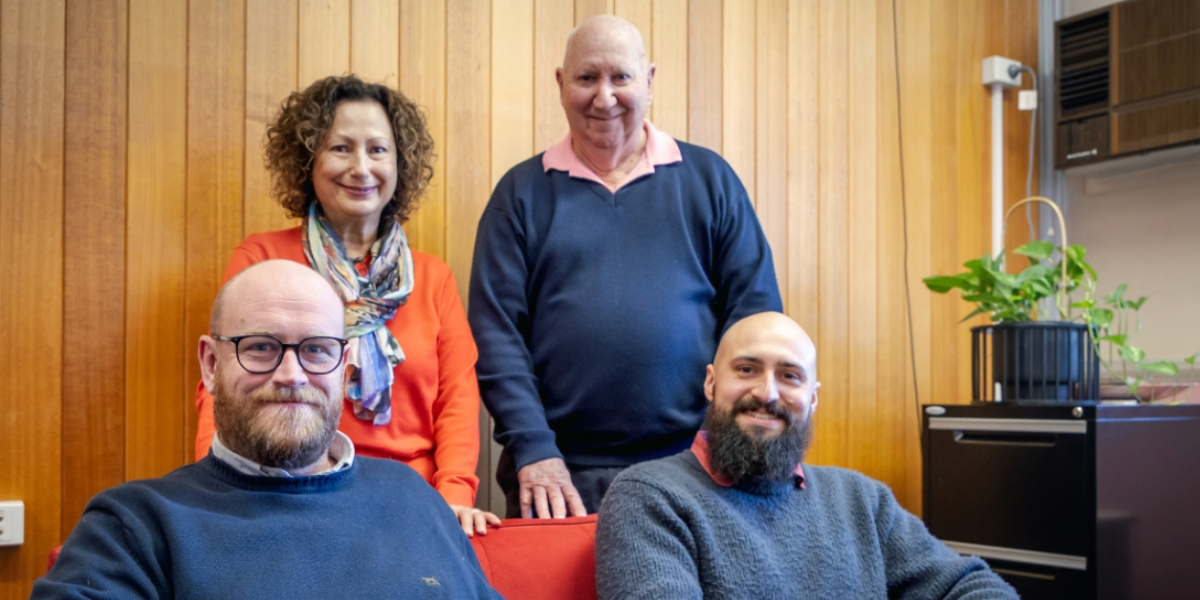
The research, led by UNE Professor of Neuroscience Christopher Sharpley alongside colleagues Dr Lorenzo Odierna, Professor Vicki Bitsika, and Christopher Watson, is the first of its kind to document the effect across sight, touch, taste, hearing, and smell.
“We found that sensory hyposensitivity occurred across all five major senses in depressed persons to a significantly greater extent than to non-depressed persons,” Professor Sharpley said.
“This had not been documented in such detail previously and shows how depression can trigger a whole-body response.”
The team reached its findings by reviewing 51 previous studies spanning each of the five senses, revealing what Professor Sharpley described as a “global” behavioural response.
He compared the effect to the body’s response to a cold.
“Much like a runny nose attempts to flush invasive pathogens from the respiratory system, sensory withdrawal is the body’s way of coping with the pain, loss, stress, and conflict that can drive depression,” Professor Sharpley said.
“When someone’s world becomes so painful or inescapable they can no longer cope, the only response our body has is to withdraw.
“One effective way to enact that withdrawal is to dull our senses so that information about the unpleasant world we find ourselves in is less intense, so a reduction in sensory sensitivity, or ‘sensory hyposensitivity’, occurs to achieve that withdrawal.”
Professor Sharpley said the finding could push sensory withdrawal into the major diagnostic criteria for depression, opening the door to more targeted treatment.
“When we visit our GP for a pain in our abdomen, we don’t accept that we should be given a diagnosis of ‘sore tummy’,” Professor Sharpley said.
“We expect that a trained medical practitioner will have a greater depth of knowledge about pain, illness, and the abdominal region.
“In the same way, mental health practitioners need to have a greater understanding of how the human body works than just to say to their patients that ‘you’re depressed’. The work that UNE is doing in this space will help achieve this.”
The study forms part of a wider body of research Professor Sharpley is leading through UNE’s Brain-Behaviour Research Group, which is examining how the brain responds during depression using an on-campus electroencephalogram, or EEG, lab.
“Using the BBRG’s EEG lab, we’ve collected data from over 200 local Armidale residents and so far, we have been able to identify five depression ‘subtypes’ by their distinct brain wave patterns,” Professor Sharpley said.
“Each of these depression subtypes needs specific treatment rather than a ‘one-size fits all’ pill or psychological therapy. Through this work, we will be able to form a model of depression in rural communities.”
The research was published in Nature’s Translational Psychiatry journal, and can be read in full at nature.com/articles/s41398-026-04165-5.
Read all the way through to the end of the story? So did lots of other people. Advertise with New England Times to reach New England locals who are interested and engaged. Find out more here.