

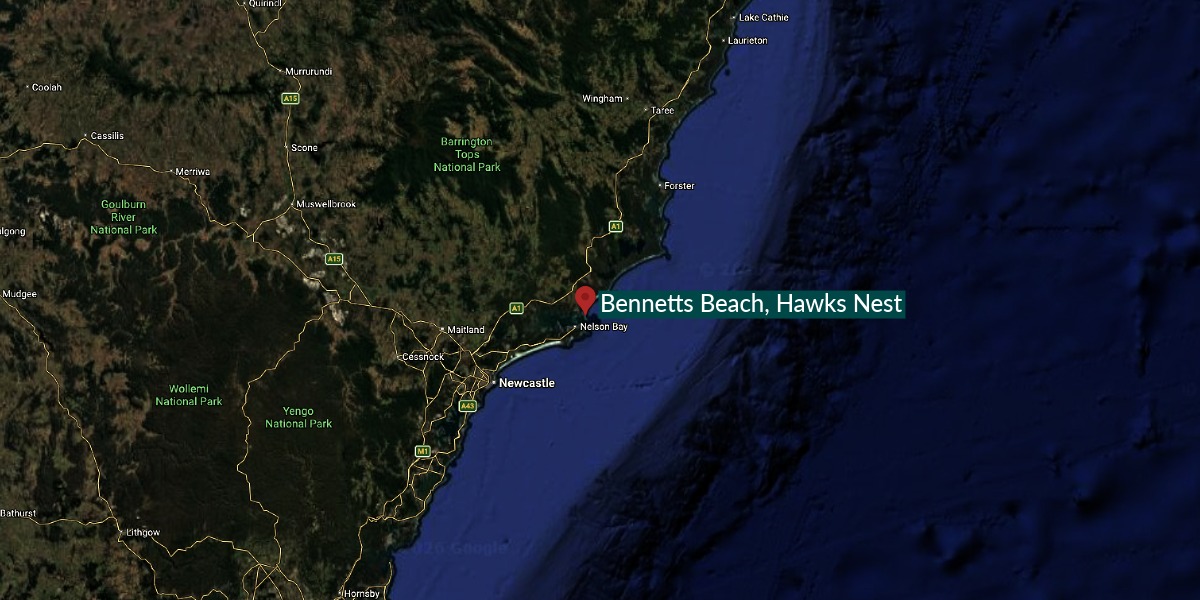
A member of the public who reported a sick seabird near Hawks Nest has been credited with helping authorities catch New South Wales’ first suspect case of H5 bird flu, as the virus that has infected birds across the world continues its encroachment on Australia.
Samples from a giant petrel found at Bennetts Beach tested positive for H5 influenza in preliminary testing at the Elizabeth Macarthur Agricultural Institute, NSW authorities confirmed on Friday. The bird was flagged after a local spotted it looking unwell and phoned it in, triggering the testing that returned the state’s first suspect positive result for the virus.
Samples have now been sent to the CSIRO’s Australian Centre for Disease Preparedness for confirmation, with a result expected over the weekend.
It is the sixth suspected or confirmed detection of H5 bird flu in Australia. Five cases have already been confirmed in seabirds in Western Australia and South Australia, and a further suspect case was found on Friday in a giant petrel at Mullaloo Beach in Perth.
NSW Minister for Agriculture Tara Moriarty said the detection was serious but should not spark panic.
“This latest development is incredibly concerning for both agriculture and for wildlife,” she said.
“The impact of H5 worldwide on wild birds and poultry has been devastating.”
“But NSW and the rest of the country have been preparing for this moment for many years.”
Ms Moriarty said the state had delivered more than 50 briefings and workshops to agricultural and wildlife stakeholders to prepare them for an outbreak, and stressed there was no cause for locals to change their shopping habits.
“There’s no need for panic buying eggs, keep buying eggs, keep buying chicken,” she said.
NSW Chief Veterinary Officer Jo Coombe said the giant petrels behind the NSW and WA detections were vagrant species that migrate from the Southern Ocean and do not normally come ashore unless sick or injured. She said the risk to human health remained low, with symptoms in people similar to a common cold and no recorded human-to-human transmission.
“We have now ramped up surveillance operations having trained more than 500 additional staff, including Local Land Services and National Parks and Wildlife Service field officers to undertake surveillance for H5 bird flu,” Dr Coombe said.
“The State Coordination Centre has been stood up in Orange, we have established the H5 bird flu call centre and we are briefing all key stakeholders on the current situation.”
Federal Minister for Agriculture, Fisheries and Forestry Julie Collins said the Hawks Nest case and the Mullaloo suspect detection had both been reported by members of the public who spotted unwell birds, and thanked Australians for staying alert.
“I do want to thank Australians for reporting sick or dead birds over recent weeks,” she said.
“If you do see a sick or dead bird, please do not touch them. Please avoid contact, but record what you see and where it is and make a report to birdflu.gov.au.”
Ms Collins said the string of detections, rather than signalling a failure, showed the national biosecurity system was doing its job.
“Biosecurity is a shared responsibility and Australians have truly been doing their bit, and they have been reporting the dead and sick birds, and they are being triaged appropriately by states and territories, and states and territories are obviously testing where appropriate,” she said.
She confirmed there was still no detection of H5 bird flu in Australian poultry, agricultural systems or any other wildlife population, and said the Federal Government had invested more than $113 million in bird flu preparedness as part of a $2 billion biosecurity funding package.
Mater Health Services director of infectious diseases Paul Griffin said the spread to a third state showed how difficult the virus would be to contain.
“Now that we’re seeing that in three states, it shows that we’re going to really struggle to contain this,” he said.
“It highlights how we have to remain vigilant and make sure that we protect the poultry industry and other bird populations, so that it doesn’t spread further.”
Until last month, Australia was the only continent yet to record the virus, which has killed millions of birds and numerous mammal species worldwide. It was first detected on the mainland on 14 June in a brown skua found at Esperance, on the WA south coast.
Locals along the North Coast are being urged to keep up the same vigilance shown at Hawks Nest.
Anyone who spots a sick or dead bird should avoid contact, record what they see with photos or video, and report it immediately to the Emergency Animal Disease Hotline on 1800 675 888, or via birdflu.gov.au.