

Regional councils say they have been left to “operate on the smell of an oily rag” after the Federal Budget failed to restore key untied local government funding.
The 2026-27 Budget includes $2 billion over four years for roads, water and sewerage infrastructure to support housing, but only $500 million has been earmarked for regional Australia, despite being home to over a third of Australians and providing the most opportunity for affordable housing growth. Country Mayors Association of NSW chairman Mayor Rick Firman said that was “not nearly enough” when shared across regional communities nationally over four years.
In NSW alone, the CMA’s 89 member councils represent almost three million people across more than 700,000 square kilometres, with all reporting problems funding and delivering enabling infrastructure including roads, water, stormwater and sewerage.
Glen Innes Severn Council Mayor Margot Davis, who was one of those campaigning strongly for an increase to Commonwealth funding of local governments, said the budget continued to fall short of genuine equity for regional, rural and remote communities.
“Local governments are ready to support housing growth, but regional communities continue to operate within funding systems that fundamentally favour metropolitan scale and existing population concentration,” Mayor Davis said.
“Roads, water and sewerage are the foundations of growth, and it is positive to see infrastructure recognised in the Budget. However, the broader funding settings still do not reflect the realities facing regional, rural and remote councils.”
Mayor Davis said the $500 million regional allocation may sound significant, but would be spread across a vast number of communities and risk being directed toward larger regional centres already viewed as growth areas.
“If governments are serious about additional housing supply, recognise the continued migration of people from metropolitan areas into regional communities, and are genuinely committed to regional development, funding models cannot simply reward places that are already growing,” she said.
“The purpose of regional investment should be to create growth opportunities, unlock capacity and support communities with long-term potential — not reinforce existing inequity.”
She said smaller regional councils faced higher per-lot infrastructure costs, ageing assets, smaller rate bases and declining economies of scale, but were often forced to compete under funding models that favoured larger population centres.
High growth communities, like Glen Innes which has seen property values increase over 20% in the last year with continued waves of post-Covid lifestyle migration, are frequently squeezed from both ends with rapidly increasing demand for services, and less funding to do it with.
Mayor Davis said the problem was not just the size of the regional allocation, but the way the Commonwealth continued to treat councils.
“They just want us to operate on the smell of an oily rag,” Mayor Davis said.
“It’s not equitable. It’s not an equitable view of what real regional, remote communities bring to the economy, what they bring to lifestyle in Australia.
“People want to live in the regions, and they’re making it harder for councils to service the needs of their communities.”
The deepest frustration is over Financial Assistance Grants, the untied Commonwealth funding councils rely on to maintain local infrastructure and services.
The CMA said the budget failed to increase the allocation, with Financial Assistance Grants falling from 0.51 per cent of total Commonwealth taxation revenue to 0.49 per cent.
“It is just not good enough,” Mayor Firman said.
“The failure of successive Federal Governments to recognise that by investing in councils they are investing in the communities that every Australian resident lives and works in, is beyond disappointing to say the least.”
The CMA is continuing to call for Financial Assistance Grants to be restored to one per cent of Commonwealth taxation revenue, saying councils rely on the funding to provide and maintain public pools, sporting fields, parks, gardens, libraries, cultural infrastructure and local services.
Mayor Davis said the fall from 0.51 per cent to 0.49 per cent may sound minor in percentage terms, but represented another erosion of long-term funding sustainability.
“For many regional, rural and remote councils, this is exactly why Special Rate Variations are becoming unavoidable,” she said.
“Communities are increasingly being forced to fund essential infrastructure and services locally because the funding burden is progressively shifting away from the Commonwealth.”
“You cannot continue expecting rural councils to do more with less and somehow maintain the same level of infrastructure, liveability and service delivery indefinitely.”
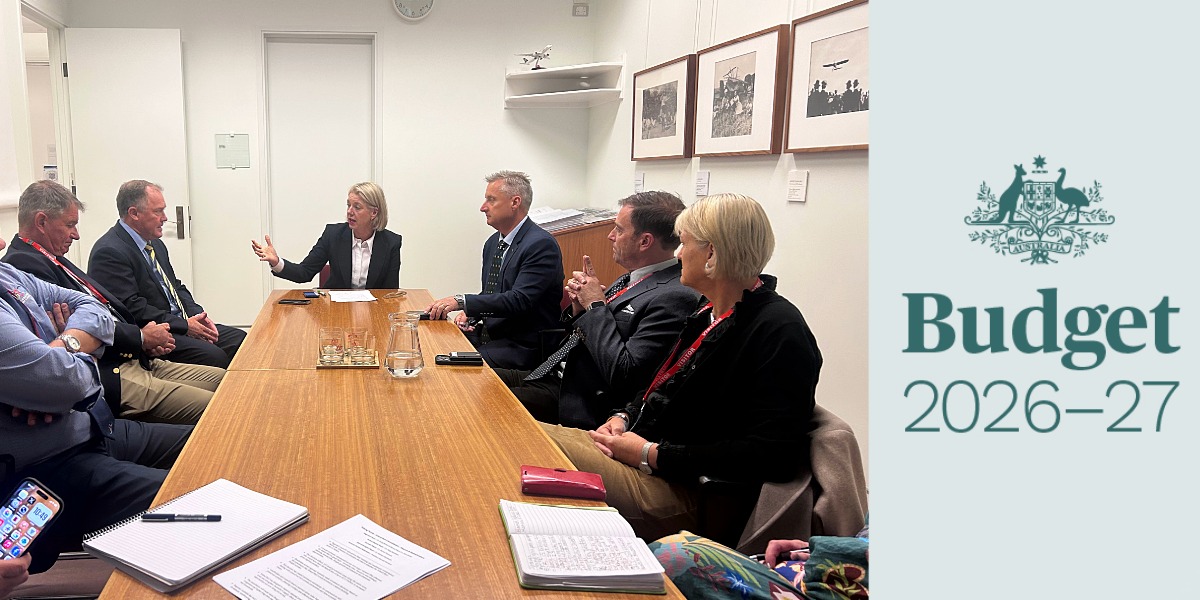
Meeting with local government leaders from the Parkes electorate in Canberra yesterday, Shadow Minister for Regional Development, Local Government and Territories Bridget McKenzie said Labor had failed to deliver a long-term plan for local government financial sustainability.
“The local government sector set the Government series of tests ahead of the budget to help manage mounting costs, and Labor failed every single one of them,” Senator McKenzie said.
Federal Member for Parkes Jamie Chaffey said councils were being left with rising costs and growing responsibilities.
“The Government is all too willing to cost-shift additional burdens onto the sector, but missing when it comes to action,” Mr Chaffey said.
“It is hard to believe that after the plea by the desperately forgotten councils to lift the inadequate Financial Assistance Grants amount of 0.51% of Commonwealth taxation revenue, they have actually dropped it to 0.49%.”
For regional councils, the message from the budget is that some infrastructure funding has been acknowledged, but the larger problem remains unresolved.
“Financial sustainability is the number one issue for our CMA Member councils,” Mayor Firman said.
“Every day in so many ways our councils are creating the communities that we all live in and every day our councils are struggling to find ways to continue to deliver those services and facilities.”
Got something you want to say about this story? Have your say on our opinion and comment hub, New England Times Engage