

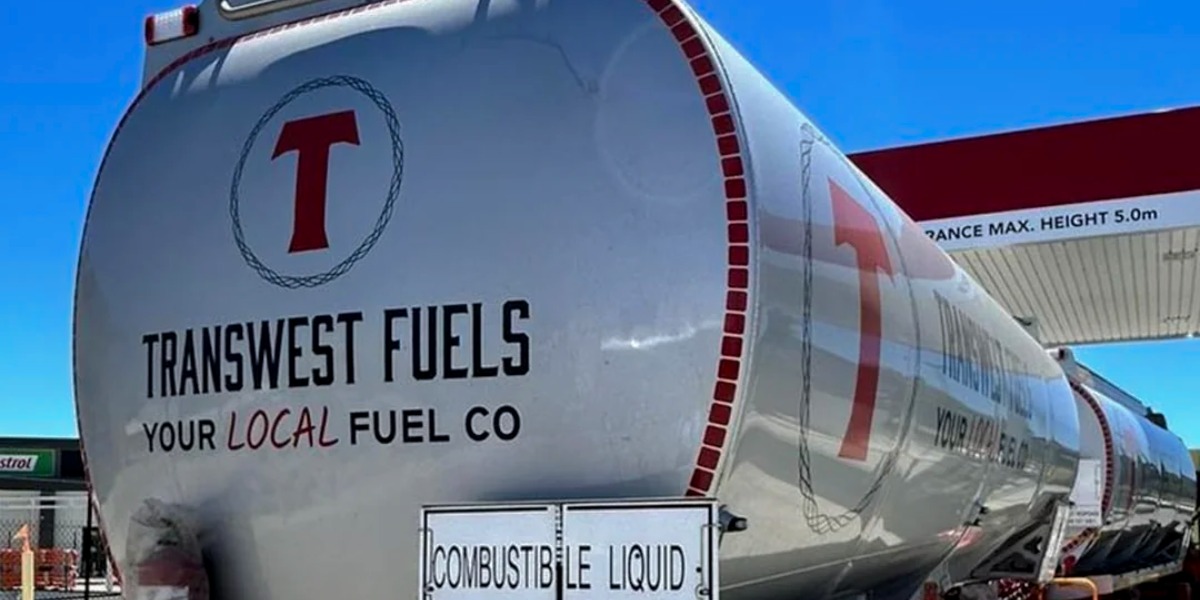
Local independent fuel distributor Transwest Fuels says it is once again unable to secure diesel or petrol supply, warning the situation is now forcing closures and leaving entire communities exposed as governments struggle to translate policy into practical outcomes.
The company has confirmed it has been forced to close its Mungindi and Manilla service stations for the weekend due to a lack of fuel, as supply shortages ripple across northern New South Wales and southern Queensland. The Beardy Street Servo in Armidale is also closing on Sundays until further notice due to the lack of fuel certainty.
Speaking after a week of meetings in Sydney and Canberra, Transwest’s Ben Clifton posted to Facebook last night saying the message from regional operators is still not getting through.
“We cannot get supply. We’ve got trucks sitting in Brisbane today. We cannot get any diesel. No petrol,” Clifton said.
“Mungindi, for example, has run out of diesel this morning. I’ve got no petrol at Walcha. I’ve got a little bit of diesel to get us through the weekend.”
The update comes despite a flurry of activity from governments and regulators responding to the escalating fuel crisis linked to the Middle East conflict, with authorities continuing to insist that supply is reaching Australia.
Clifton said the reality on the ground tells a very different story.
“They’re saying the ships are still arriving. There’s still heaps of fuel in the system. Then why aren’t we getting it?” he said.
The crisis is now exposing the fragility of regional fuel supply chains, where independent distributors like Transwest play a critical role in servicing communities long abandoned by major oil companies.
Over the past two decades, large fuel companies have steadily withdrawn from smaller towns, removing depots and consolidating operations in larger regional centres and cities. That shift has left independent distributors responsible for supplying vast areas of rural Australia.
Clifton said that part of the market is anything but small.
“The uncontracted space is only a little bit, they say. I wouldn’t call 875 million litres a month a small industry,” he said.
“That industry is basically what runs our small towns. Farmers, graziers, bus companies, construction firms, councils.”
Governments fail and flail
While governments acknowledge there are issues in the system, the official line remains that fuel deliveries are continuing as planned.
NSW Energy Minister Penny Sharpe said the state is experiencing “localised shortages and distribution issues in the face of increased demand,” even as national supply remains stable.
In response, the NSW Government has written to major fuel companies seeking detailed information on stock levels, storage capacity, and future orders, in an effort to better understand where breakdowns are occurring in the distribution chain.
“This will help us deal with emerging distribution issues and plan for future interventions, should they become necessary,” Sharpe said.
A state fuel coordinator has also been appointed to work alongside the Commonwealth’s taskforce, reflecting growing concern that the situation could deteriorate further.
At the same time, NSW Fair Trading has launched a statewide compliance blitz focused on fuel pricing transparency, conducting inspections across metropolitan and regional areas and issuing penalties where retailers fail to meet reporting requirements.
The move is aimed at protecting motorists from misleading pricing, but for those unable to access fuel at all, it offers little immediate relief.
At the national level, the ACCC has taken the unusual step of granting interim authorisation for major fuel companies to coordinate supply, allowing them to share information and manage distribution without breaching competition laws.
The decision is intended to improve efficiency in the system and ensure fuel reaches areas of greatest need. Importantly, the authorisation includes conditions requiring major suppliers to prioritise independent distributors as part of the solution.
The regulator emphasised that authorisation has not been sought, or granted, for fuel suppliers to share information about or reach agreement on price.
“We have urgently assessed and granted this interim authorisation, received late Wednesday, because we recognise the impact of the current situation on consumers, businesses, and farmers,” ACCC Chair Gina Cass-Gottlieb said.
“We recognise how critical it is that industry is able to quickly and efficiently coordinate and respond to the supply chain disruptions we are experiencing.”
“However, allowing the major fuel companies to coordinate raises real risk of harm to competition. We are granting the urgent interim authorisation with conditions to mitigate this risk,” Ms Cass-Gottlieb said.
Announcement doesn’t equal action
Frustration is growing at what stakeholders see as a disconnect between announcements and action, and a reticence amongst political figures and regulators to use all their power and effort to resolve the issues.
Transwest’s Ben Clifton pointed to federal emergency powers as an example, calling on the government to intervene more decisively and use the powers under the Liquid Emergency Fuels Act, which gives the Minister the power to ration and prioritise who gets fuel.
“Chris Bowen made the comment that we’re pulling on a lever this week … well then pull that lever,” he said.
For communities already dealing with rising costs, tightening economic conditions, and ongoing uncertainty, the delay is compounding pressure.
“It’s like putting a plastic bag around regional Australia. That’s what’s happening,” Clifton said.
At the same time, prices continue to climb, driven by global volatility and tightening supply of refined fuels. The ACCC’s latest monitoring shows sharp increases in international diesel benchmarks, with flow-on effects at the bowser across both metropolitan and regional areas.
In many locations, businesses report not only higher prices, but inconsistent availability, with supply fluctuating day to day.
Clifton said the solution remains straightforward but requires cooperation from major suppliers and stronger direction from government.
“We just need our regular suppliers to talk to these oil companies, release the fuel to us, so we can just get on with it,” he said.
“Get back to making sure we’re putting food on the plate.”
What do you need to know to get through the fuel crunch?
Tell us what information you need to make it through the fuel shortage crisis. Suggest a story!
Read other fuel crunch stories here.
Put your business in a story like this – find out more here.