

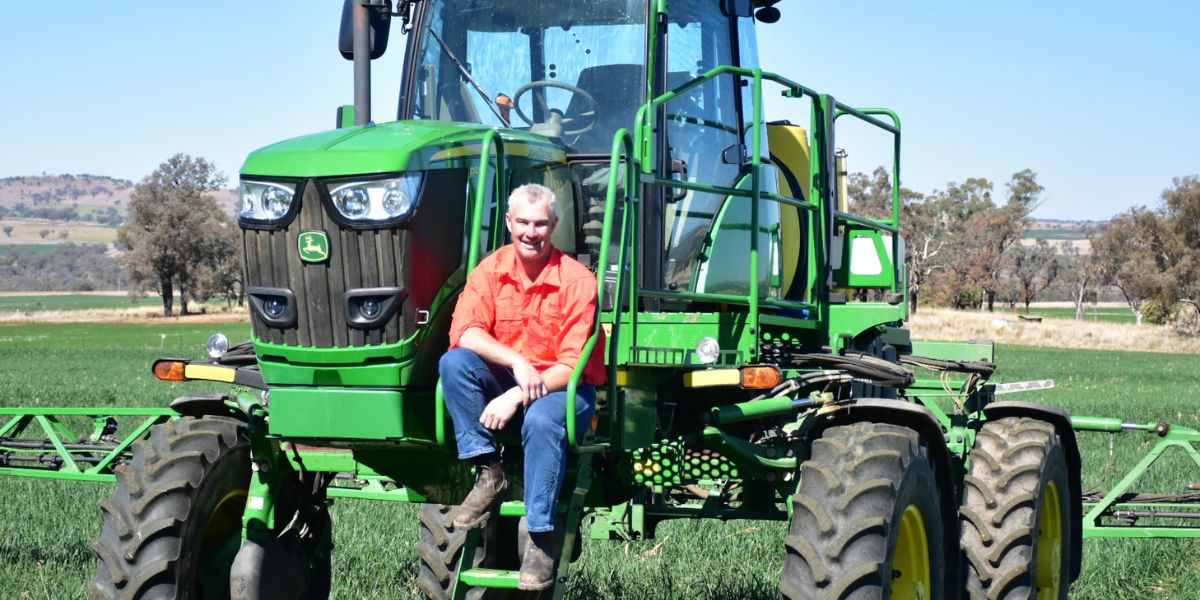
For former Inverell spray contractor Martin Murray, a broken $50 part could mean being sidelined for a week and losing $10,000 in the process.
What frustrated him most was the way manufacturers designed parts to be replaced only through dealerships, often at a huge markup.
What should have been a quick, low-cost fix instead dragged out into days of downtime and thousands of dollars in lost productivity.
“One of the biggest frustrations I had was, say, John Deere in particular, I’m bagging on them, but that’s just the colour of the paint I was running – they all do it – they have got their operations primed to make money from the repairs and maintenance of these machines,” Mr Murray said.
“They have machines with what would otherwise be standard parts made just that little bit different, so the only supplier you can use is a John Deere supplier because nobody else makes them.”
Mr Murray said one of his biggest frustrations was being forced to buy a ram assembly when all he needed was a $50 clevis, a simple part that screwed on and off.
“You’ve taken a $50 part, turned it into a $1600 part, and on top of that, other than the financial considerations, it’s just wasteful,” he said. “If I had had the clevis, that would literally be a five-minute fix.”
“You have a perfectly good ram there ready to go, but you can’t use it.”
Mr Murray said he faced a similar problem with the sway arms on his spray rig. The arms were fitted with rubber bushes that looked like standard truck parts, but the bolt holes were drilled just 2mm differently, meaning generic replacements would not fit.
He said that getting access to the part also relied on the dealership having the part in stock, but if not, it could take days for the part to arrive.
“Best case scenario, you can get overnight freight, which takes three days minimum. Otherwise, if you get regular freight, you’re down for at least a week,” he said. “It drove me absolutely insane.”
When asked about these concerns, John Deere said the company offered an extended portfolio of parts, including genuine, remanufactured, and more economical alternatives, to help farmers keep machinery running. John Deere said it remained committed to improving machine ownership by giving customers and independent repair technicians access to diagnostic tools, repair resources, and alternative part options.
The company also pointed to its Australian and New Zealand Distribution Centre (ANZDC), which operates 24/7 to provide support for dealers and customers.
Mr Murray said stepping back from machinery and contracting made sense for his scale, especially in the Delungra area, where high costs and inefficiencies make it hard to justify owning equipment. The frustrations he had with parts were also a minor factor.
“We just bought a new cattle farm [in Bendemeer] and we’re just going to be cattle farmers, effectively, and not have to deal with the machinery and those other time-dependent things.”
Stories like Mr Murray’s are why the NSW Farmers Association is pushing for right to repair laws to cover agricultural machinery.
During NSW Farmers’ annual conference in July, delegates passed three motions advocating for a legislated right to repair agricultural machinery.
The association also presented these concerns at the Federal Government’s Economic Reform Roundtable held from 19 to 21 August.
Motion B07 pushed for a legislated right to repair and called for agricultural machinery to be included in the motor vehicle service and repair information sharing scheme.
Motion B08 advocated that manufacturers must use ISO data standards so machinery/software can work across brands. It also called for farmers to have legislated ownership and control of all farm-related data; that their explicit consent be required before manufacturers use or share data; and that farmers be able to access and transfer their data in open, easy-to-use formats.
Motion B09 called for manufacturers to use generic parts that are compatible across brands. It also proposed that third-party suppliers show original part numbers for transparency, 3D printing specifications be made available at fair cost, and other measures be adopted to boost competition in the parts market.
NSW Farmers Vice President Rebecca Reardon, who grows wheat, barley, sorghum, cotton, and sheep meat in Moree, said the right to repair should be legislated.
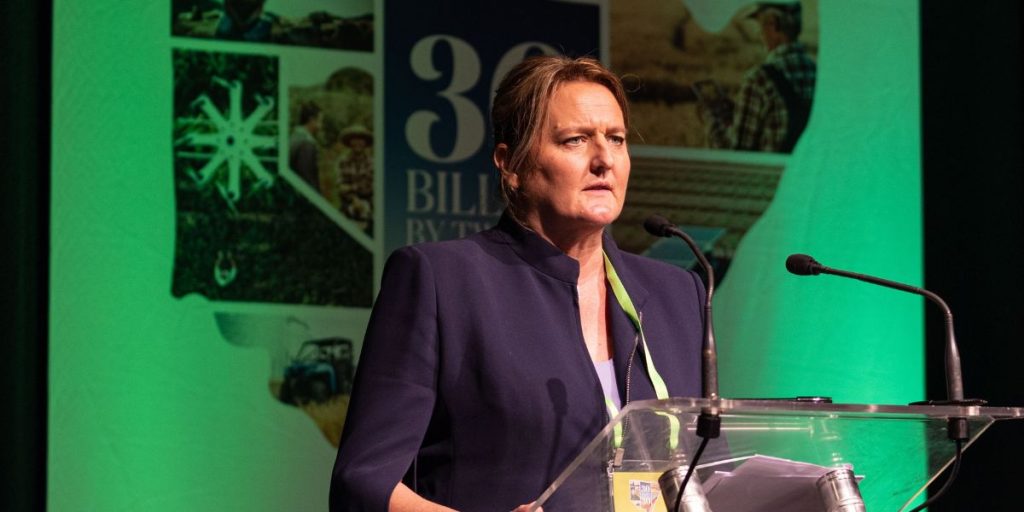
“Right now, farm machinery can only be fixed by an ‘authorised repairer’, for which there is often a huge wait to get someone out, and not being able to use generic parts costs a fortune,” she said.
“Farmers should be able to access the diagnostic software and choose to use and support a qualified local or do repairs and maintenance work themselves if they’re qualified, so they can get their machinery fixed without being penalised.”
“Now more than ever, families here and around the world are relying on us to produce their food and fibre. But the way this is going, we’ll be back to sowing seeds by hand because we simply can’t get our planters and tractors fixed.”
“The benefits this right would bring have been well documented by the Productivity Commission and other government bodies, so why hasn’t it been implemented already?”
“We need our right to repair legislated and be given the same rights as all Australians have when fixing their cars.”
John Deere said the company supported independent repair providers having access to its repair tools and resources and pointed to its ongoing investment in expanding access for customers globally.
“Details regarding the availability of new solutions in Australia will be announced at a future date,” the company said.
Like what you’re reading? Support New England Times by making a small contribution today and help us keep delivering local news paywall-free. Donate now