

NSW GPs say the state’s ADHD reforms show what they can do, and they want the next government to give them a bigger role in cutting specialist wait times, easing pressure on hospitals, and delivering the new Health@Home service.
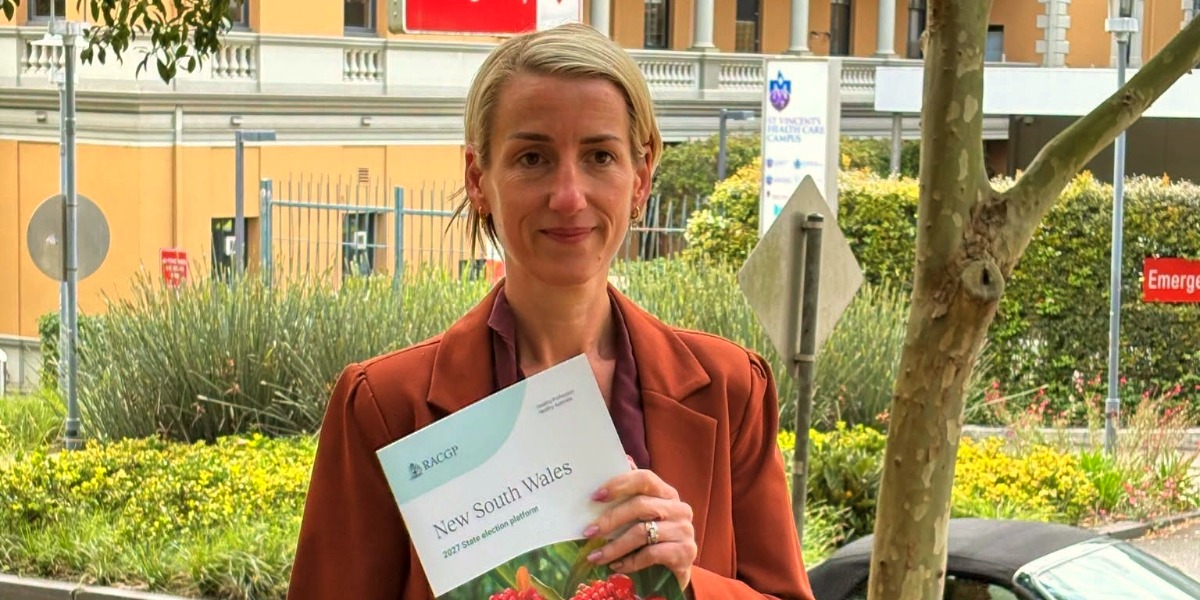
The Royal Australian College of GPs (RACGP) has launched its 2027 NSW State Election Platform, calling on all parties to back a coordinated package to improve access to affordable healthcare.
“Our patients are waiting too long for many non-GP specialist services,” said RACGP NSW&ACT Chair Dr Rebekah Hoffman.
“GPs have shown we can turn that around – just look at what we’ve been able to do for patients with ADHD in a year.”
“Almost 28,000 people have received a script from a GP since the reforms began.”
The platform calls for the next NSW Government to:
- fund GPs in Schools, so children can get earlier care for ADHD, developmental and behavioural concerns, and other physical and mental health needs
- set up pathways for patients to see GPs with Special Interests in fields like dermatology, paediatrics, women’s health, obesity management, geriatrics, and ENT
- place General Practice Liaison Officers in each Local Health District to reduce unnecessary referrals to hospital specialists and get patients out of hospital sooner
- expand community-based treatment, multidisciplinary care, vaccination, and after-hours general practice.
An initial GPs in Schools pilot in 20 public high schools in disadvantaged communities could identify students having difficulties and, with the family’s consent, connect them with a GP.
Dr Corin Miller, a Rural Generalist and GP with Special Interests in ADHD and paediatrics based in Merimbula, said her community was already seeing the benefits.
“Before the ADHD reforms, students could wait two years or more for the paediatric clinic,” Dr Miller said.
“Since appropriately trained GPs have been enabled to manage ADHD care, we haven’t needed to refer any students solely for ADHD.”
“Only half of the students accessing the school GP had a usual GP.”
The RACGP has also welcomed the NSW Government’s planned Health@Home service, while urging that general practice be fully integrated and properly resourced as it rolls out.
The NSW Government has committed $259 million to deliver hospital-level care at home across the state. Once fully running, the service is expected to support around 76,000 patients a year and create capacity equal to 700 hospital beds.
“Hospital-level care at home can give suitable patients more choice and reduce the disruption associated with an inpatient hospital stay,” Dr Hoffman said.
“However, for this model to succeed, general practice must be at its centre.”
“GPs know their patients’ medical histories, medications, personal circumstances and ongoing healthcare needs.”
Dr Hoffman also called for the model to be designed with equitable access in mind.
“Patients in rural, regional and disadvantaged communities must not be left behind,” she said.
“Access to workforce, diagnostics, medicines, digital connectivity and face-to-face clinical support will be essential if this program is to deliver equitable care for all patients.”
“At the 2027 state election, every party has an opportunity to take that success further and build a health system that is easier for patients to access, more efficient for clinicians and more sustainable for NSW,” Dr Hoffman said.
Are you a candidate or campaigning for the NSW Election? Send your information to newsdesk@netimes.com.au. We will launch our election hub soon.