

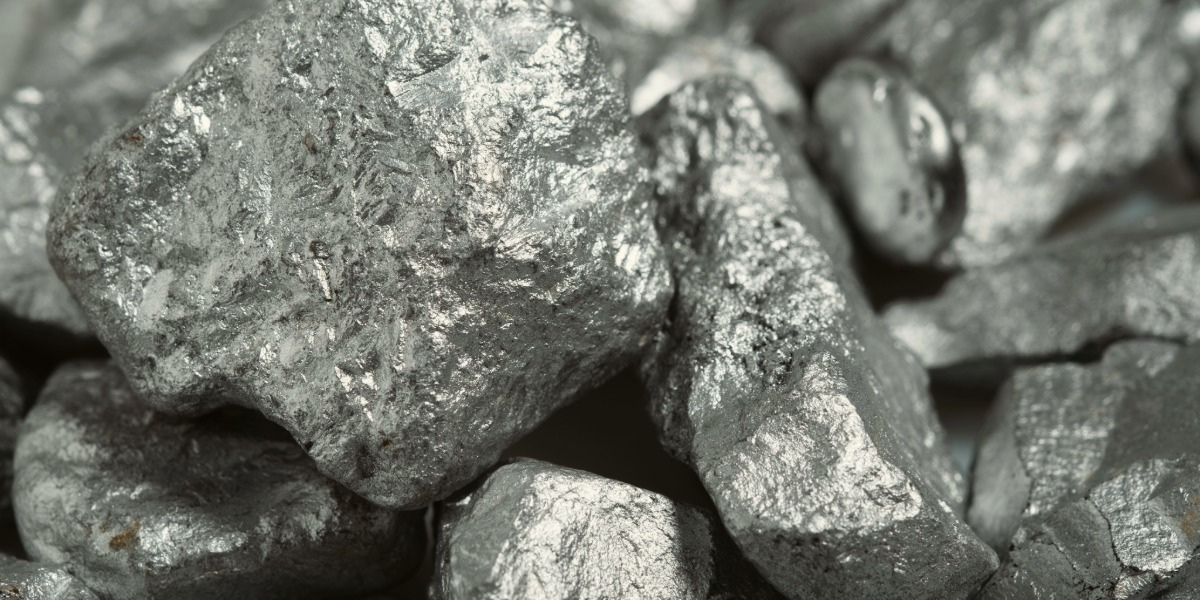
Solar power may be one of the world’s cheapest sources of electricity, but a costly precious metal inside every panel is putting the squeeze on the industry.
The New England used to be one of the Nation’s biggest silver producers, with efforts underway to reactivate a number of old mines in the region for a variety of critical and strategic minerals, in addition to the Hillgrove gold and antimony mine that resumed operations earlier this year, and Taronga mine at Emmaville that is awaiting final approval to begin activities next year mining tin, copper and silver.
Silver helps solar cells generate electricity efficiently, but its rising price and growing demand have researchers at UNSW Sydney looking for cheaper materials that can do the same job.
Dr Ning Song and her team, working closely with Scientia Professor Martin Green, are exploring ways to cut the amount of silver used in solar cells, or remove it altogether.
The catch is that any replacement must also work efficiently and reliably for decades.
Solar cells contain extremely thin metal lines, called contacts, that collect the electricity made inside the cell. Silver suits the job because it conducts electricity very well and can be printed into fine lines.
“Silver is used for the metal contacts that get the current out of the solar cells,” said Dr Song, a Senior Lecturer in UNSW’s School of Photovoltaic and Renewable Energy Engineering.
“It has very good conductivity and is easy to screen print.”
“So silver has been one of the best for performance, but not necessarily moving forward for cost and sustainability.”
Industry analysts say silver paste made up as much as 30 per cent of the cost of making a solar cell when silver prices peaked in early 2026, though the share varies with cell technology, silver prices, and paste use.
Silver is also a finite resource, and mining and processing it uses energy, disturbs land, and creates waste.
“In academia, we investigate the fundamental mechanisms behind how solar cells work, but we also develop new materials and manufacturing technologies to improve their performance and reduce costs,” Dr Song said.
“I think it’s a joint effort.”
Researchers are looking at aluminium, nickel, and copper. Each has advantages, but none is a simple swap.
Aluminium is much cheaper than silver but conducts electricity less well, so the UNSW team is working to cut those electrical losses.
“We are trying to reduce these losses by tuning the aluminium paste recipe and optimising the firing conditions,” Dr Song said.
UNSW teams have shown aluminium rear contacts in industrially relevant TOPCon solar cells can reach 22.9 per cent efficiency, compared with 23.7 per cent for cells with silver contacts.
Copper is much cheaper than silver and offers similarly strong conductivity, but it can move into the silicon and interfere with the cell.
“Copper can also oxidise, potentially affecting its electrical performance and long-term reliability,” Dr Song said.
Nickel is relatively stable and already used in semiconductor manufacturing. In a recent study, Dr Song’s team, including PhD researcher Lizhi Sun and Professor Green, found that replacing 10 per cent of the silver powder by weight with nickel cut rear-finger raw-metal costs by 6.8 per cent, with an absolute efficiency drop of just 0.024 percentage points.
“Replacing silver with nickel is not simply about using a cheaper metal,” Dr Song said.
But adding more nickel could increase the amount of paste used, largely offsetting the savings.
Dr Song said there was no single answer for every solar cell.
“It’s really dependent on the cell structure,” she said.
“It’s hard to say which material will ultimately prove the most suitable.”
She believes research with industry could lead to big cuts in silver use, and possibly silver-free contacts in some cell types, over the coming years. Reliability remains the biggest hurdle, with panels expected to last 25 to 30 years outdoors.
“Although other options may have passed testing in the lab, industry still needs confidence from outdoor testing and that data may not yet be available,” Dr Song said.
“We have to make sure the modules are reliable over the long term so they can work efficiently for many years.”
Like what you’re reading? Support New England Times by making a small contribution today and help us keep delivering local news paywall-free. Donate now