

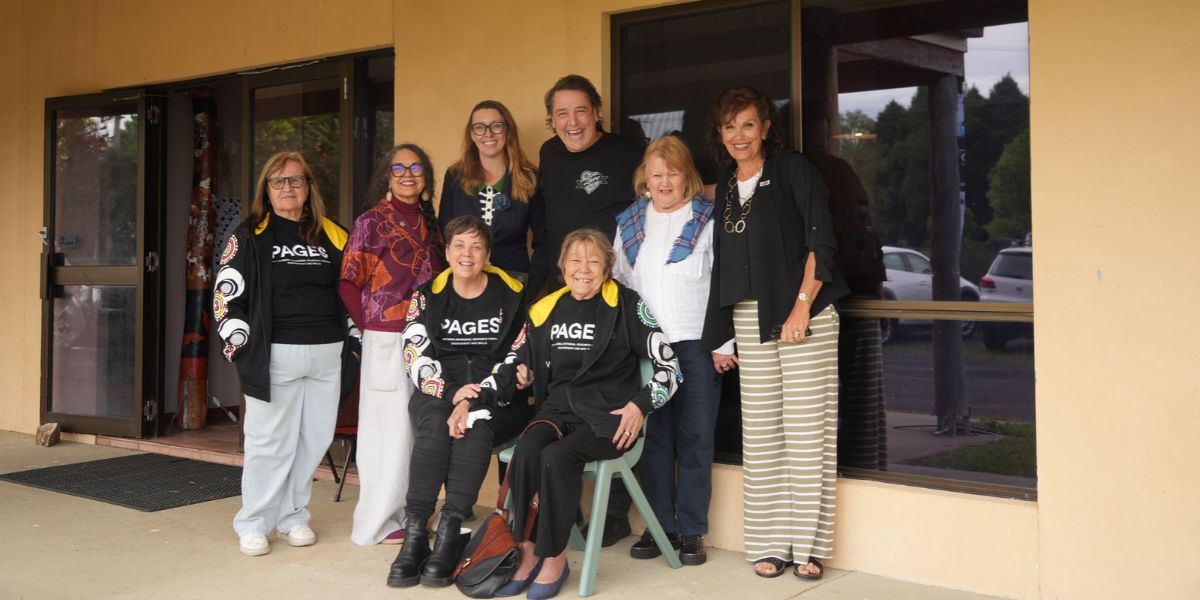
Aboriginal adults in Glen Innes have until Friday to add their DNA to a UNSW study aiming to make cancer diagnosis and treatment more precise for Aboriginal people.
The PAGES Study, short for Prioritising Aboriginal Genomics through Engagement and Skills, is collecting saliva samples this week at the Coomarah Aboriginal Cultural Centre in Glen Innes.
Modern cancer care can use genomic information, the information held in a person’s DNA, to make diagnosis and treatment more precise.
But Aboriginal genetic information is not well represented in the clinical databases behind that work. That means genomics-based cancer treatment is currently less precise for Aboriginal people.
The study aims to fix that by collecting saliva samples from 300 Aboriginal adults in the region. The data is intended to help make cancer care more precise for Aboriginal people across NSW.
“We are delighted to be in Glen Innes this week and to see the tremendous engagement of Aboriginal people and local organisations in this important study,” said UNSW Associate Professor Kylie Gwynne.
The research is led by Co-design Health Research & Innovation (CHRI) at UNSW, and was co-designed with the community, for the community.
Local Aboriginal leadership has driven the Glen Innes part of the study, with Aunty Kerry Faiers instrumental in bringing the program to town and creating the chance for Aboriginal people in Glen Innes and surrounds to take part.
“This is an extraordinary opportunity for our community to contribute to research addressing a very real gap in modern medicine,” said Glen Innes Severn Mayor Margot Davis.
“The dataset is at the heart of why this work matters.”
“Genomics can help make cancer diagnosis and treatment more precise for the individual, but Aboriginal genetic information needs to be represented in the data that supports that work.”
“By contributing to this study, Aboriginal people in Glen Innes are helping build the genomic information needed to make diagnosis and treatment more precise for Aboriginal people with cancer.”
PAGES goes beyond collecting data. It also has a major workforce focus, training Aboriginal people as pathology technicians and genetic counsellors, with the aim of lifting Aboriginal participation in the genomics workforce.
“What is also particularly important is that PAGES goes beyond collecting samples,” the mayor said.
“It is building Aboriginal participation in genomics through the training of pathology technicians and genetic counsellors.”
Together, these parts reflect the study’s wider goals: building knowledge about precision medicine, growing Aboriginal skills and participation in genomics, and building the genetic information needed for more precise diagnosis and treatment.
Aboriginal adults who take part provide a saliva sample and receive $50 in vouchers.
Samples are being collected at the Coomarah Aboriginal Cultural Centre, 8 Mackenzie Street, Glen Innes, until Friday, 30 October.
Anyone interested in taking part or finding out more can contact Kelly Girard Faiers on 0449 180 273.
“We are incredibly proud that Glen Innes has the opportunity to contribute to this important UNSW research, and I particularly acknowledge Aunty Kerry, whose leadership has been instrumental in bringing the program to our community,” the mayor said.
More information is available at https://chri.au/pages/about-chri.
Like what you’re reading? Support New England Times by making a small contribution today and help us keep delivering local news paywall-free. Donate now