

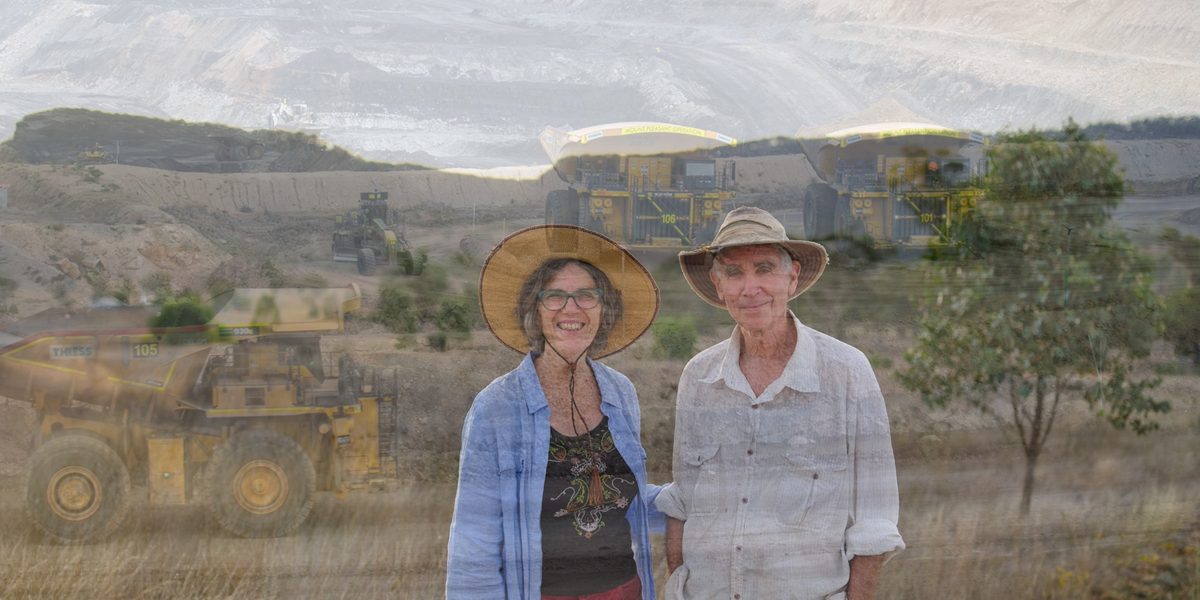
Green activists from Muswellbrook have won the first climate case to reach the High Court, and they are celebrating it as a turning point. The judgement is narrower than the celebration, and the backlash and election context could shut Scope 3 emissions out of planning altogether, resulting in anything but a win for the green movement.
On Wednesday, 7 October, the High Court of Australia dismissed an appeal by the owner of the Mount Pleasant coal mine in the Upper Hunter. It was the first climate case to reach the country’s highest court. The community group that brought the legal action against the mine’s extension approval won by three judges to two.
The group’s president, Wendy Wales, and its treasurer, Tony Lonergan, the faces of the case, pitch themselves as “retired science teachers” and “grandparents”. But both are better known to New Englanders as Greens candidates. Ms Wales stood for New England at the 2025 federal election and won 7.9 per cent of first-preference votes. Mr Lonergan has stood for the Greens at least three times: for Upper Hunter at the 2019 state election (4.8 per cent), for New England at the 2019 federal election (4.4 per cent), and for Upper Hunter again at the 2023 state election (6.0 per cent).
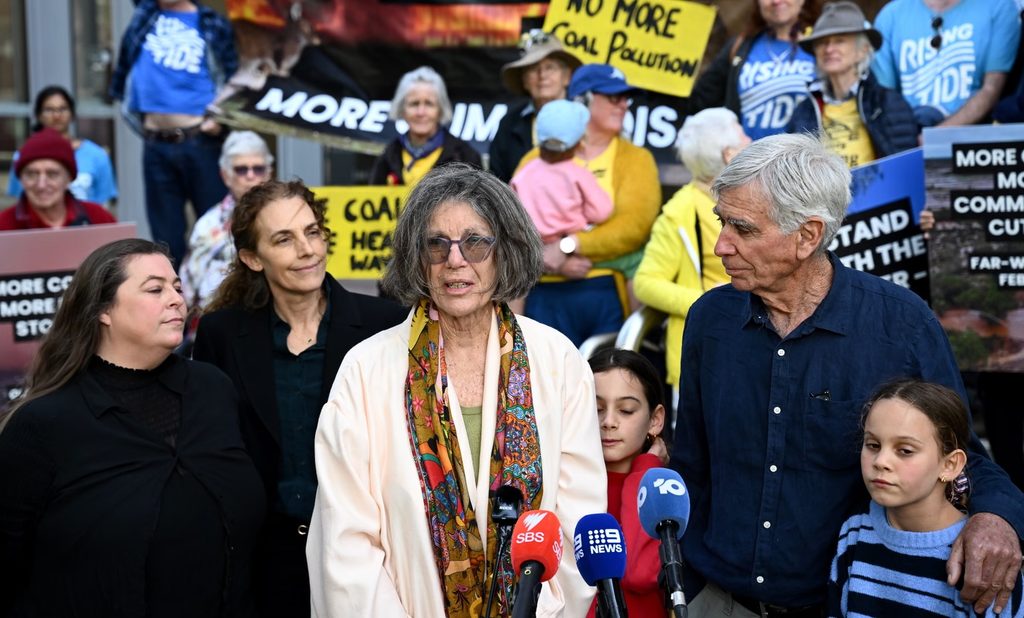
They say they live next door to the mine, about three kilometres from Muswellbrook, and their rhetoric is all about doing it for the grandchildren.
“We did this for them, and for all the kids across the Hunter who are going to grow up in a world shaped by the decisions being made right now,” Tony Lonergan said.
“Today, the highest court in the country agreed that those decisions have to account for the damage they cause. That matters more than I can say.”
Ms Wales said the ruling backed up what her group had argued all along.
“Today the High Court has said what we have always known: we cannot dig up coal, ship it overseas, watch it drive climate change, and then pretend the consequences have nothing to do with us and won’t be felt by us,” she said.
The judgement says something narrower. The reaction to it may close off the very argument the activists think they won.
The slippery slope of Scope 3
The emissions from a mine are counted in three layers, known as scopes. Scope 1 emissions come from the mine site itself, such as the fuel burnt by its vehicles and equipment. Scope 2 emissions come from the electricity the mine buys. Scope 3 covers everything else in the chain, and for a coal mine the largest part is the coal being burnt by its customers, usually in power stations overseas.
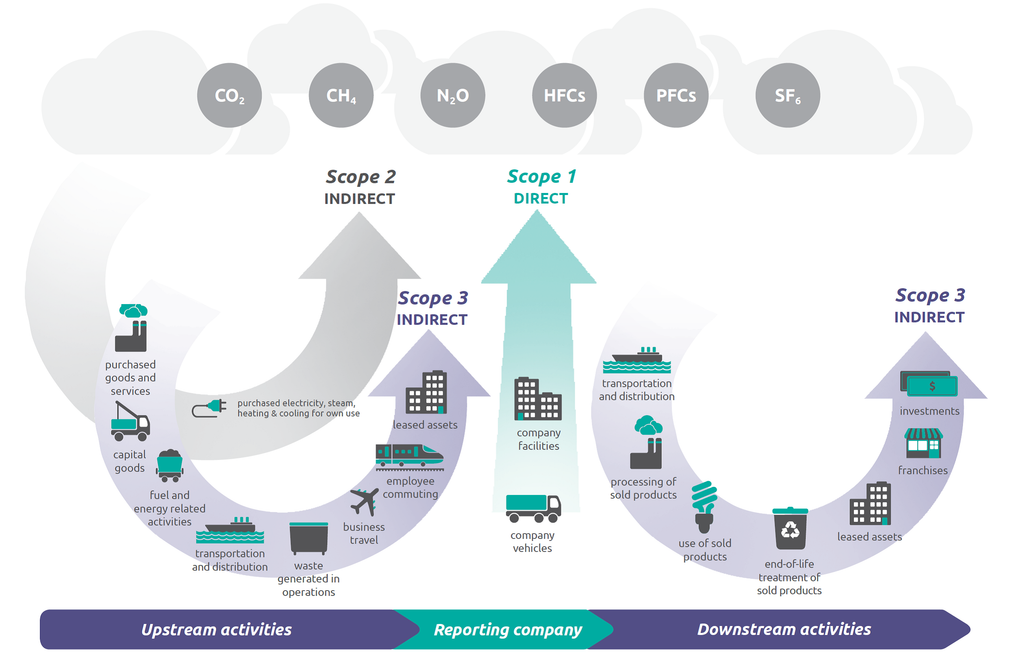
To date, climate emissions have only been counted where they are made, by the company that made them. Scope 3 emissions are indirect emissions, made by other companies down the supply chain.
Mount Pleasant is an open-cut coal mine owned by MACH Energy Australia, a subsidiary of Indonesia’s Salim Group. It was first approved to run until December 2026, digging up to 10.5 million tonnes of coal a year.
Like many coal mines in the Hunter, there’s plenty more coal there, and in 2021 MACH sought to extend the mine’s life by 22 years, to 2048, and to double its yearly output to 21 million tonnes. The plan would dig out about 444 million tonnes of coal in total.
Scope 3 emissions made up about 98 per cent of the project’s total. That is why the case matters, and why it is contested. Without Scope 3, a good mine, with good operators, who do the right thing in managing their environmental impact, is an almost certain approval. The weight of Scope 3 emissions being considered in any major project may be crushing for even the best operators.
The Independent Planning Commission, which decides major projects in NSW, approved the plan in 2022. The Denman Aberdeen Muswellbrook Scone Healthy Environment Group (DAMSHEG), an action group run by Ms Wales and Mr Lonergan, took the approval to court. Its first attempt failed in the NSW Land and Environment Court. They appealed.
On Thursday, 24 July 2025, the NSW Court of Appeal unanimously ruled the approval unlawful. MACH Energy was granted special leave to appeal that judgement, and the High Court heard the case on Wednesday, 13 May.
What the court decided
The judges were asked whether the Commission had met two duties in NSW planning law. The first was to consider a project’s likely environmental impacts in the locality. The second was to consider imposing conditions to keep greenhouse gas emissions as low as practicable.
Three judges said the Commission had fallen short. Two disagreed. The three in the majority held that the Commission had failed to consider imposing conditions to cut the project’s emissions as far as practicable, including the Scope 3 emissions.
Two Monash University academics set out the limits in a longer analysis. They agreed the ruling was significant, but highlighted the limits in the judgement being missed by many commentators.
“A majority of the High Court has delivered a significant win for the climate by confirming that NSW decision-makers cannot ignore the downstream emissions produced from a coal mine when coal is ultimately burned,” said Monash University lawyer and researcher Dr Ella Vines.
“The decision means these emissions must be considered when authorities impose conditions to minimise greenhouse gas emissions.”
But they were blunt about the rest.
“However, this case is not a ‘home run’ for climate action,” Dr Vines and Dr Rebekkah Markey-Towler wrote.
“In fact, the case did not raise any issue concerning climate change other than how to interpret the relevant environmental legislation in the case.”
“It did not consider whether or not the fossil fuel project in question ought to be approved or not in light of climate change concerns.”
In other words, Wales and Lonergan had failed in their stated aim. They had said the Commission should have looked at how pollution from the exported coal would affect the region through bushfire risk, drought, flooding, and extreme heat. The Court of Appeal approached the case through that question, finding that the Commission had failed to consider the likely environmental impacts of climate change in the Hunter Valley.
Four High Court judges rejected that part of the reasoning. They found it was not for the court to decide whether the project’s contribution to climate change would be disproportionately felt by the Hunter Valley.
Two judges went further. They wrote that the case “does not raise for consideration any issue concerning climate change outside of the meaning and application of the EPA Act,” and that it does not concern “any aspect of the merits of the development, which are extraneous to the questions in the appeal”.
The orders were short: the appeal was dismissed, with costs. The full judgement and a summary are on the court’s website.
The 2022 approval for the expansion stays invalid. The 22-year proposal will return to the NSW Land and Environment Court. That court will consider whether the matter must go back to the Independent Planning Commission.
A bigger win in the telling
The campaigners’ side has described the ruling in sweeping terms. The community group’s lawyer said it would be felt well beyond the Hunter.
“The implications extend well beyond Mount Pleasant,” said Johnson Legal Principal Lawyer Anita O’Hart.
“This ruling will be applied by courts and planning authorities across Australia, and it will be studied internationally as one of the most significant domestic climate law decisions in the world.”
Greens MP Sue Higginson went furthest, pointing to the Hunter Valley Operations coal mine near Singleton, which was approved days before the ruling.
“Exactly the same as Mount Pleasant, 98% of the emissions from the recently approved Hunter Valley Operations (HVO) coal development are scope 3 emissions,” said Greens MP Sue Higginson.
“Lawyers should be running to the Courts right now with this judgement in hand, ready to stop coal approvals in their tracks,” Ms Higginson said.
Both the state and federal governments read the judgement differently.
“The Court’s decision relates to the way the mine’s expansion was assessed and approved in 2022, under the former government,” said the NSW Minister for Resources Courtney Houssos.
“It does not mean the expansion cannot be reconsidered or that coal mine extensions cannot be approved.”
She also rejected the Greens assertions the decision would undermine the HVO expansion approval.
“The recent approval of the Hunter Valley Operations project included detailed consideration of Scope 3 emissions and conditions to minimise them,” she said.
“We believe the current planning framework is capable of addressing these issues, and we’ll carefully examine the judgement to ensure future decisions meet the requirements of the law.”
The federal Resources Minister, Madeleine King, also said the decision did not spell the end of fossil fuel industries in Australia.
“Far from it,” Ms King said.
“The High Court ruling is a pretty technical ruling about what a planning commission has to consider when it goes through a planning approvals process.”
The academics agree.
“The judgement stops short of deciding whether a project’s contribution to climate change can justify refusing approval,” Dr Vines said.
“The harder legal question, whether emissions from an individual fossil fuel project can be legally connected to climate impacts in a particular locality, remains on the horizon.”
The workers waiting on the outcome
Mount Pleasant keeps running. NSW granted the mine a separate approval in August, and it slightly lifted yearly production. For the people who work there, the question is what comes after.
The NSW Government’s first message was to the workforce.
“We want to be very clear with workers and their families, Mount Pleasant has a separate approval to continue operating until 2032,” stated Natural Resources Minister Courtney Houssos.
“This decision does not change that.”
The Mining and Energy Union says more than 700 jobs at Mount Pleasant are again put into limbo.
“The High Court decision is disappointing, but we remain hopeful that the long-term future of Mount Pleasant can still be secured,” said Mining and Energy Union Northern Mining and NSW Energy President Robin Williams.
Mr Williams said the decision clarified how NSW planning laws apply to extension applications, but did not touch the mine’s current approvals.
“While it is frustrating that major projects can face years of uncertainty through lengthy legal processes, the Court’s decision does not affect the mine’s ability to continue operating under its current approvals,” he said.
The Federal Member for Hunter and former miner himself, Dan Repacholi, also called for clarity and did not mince his words on the matter.
“Today’s High Court decision on the Mount Pleasant mine has created uncertainty for workers, their families and our mining industry,” stated Federal Member for Hunter Dan Repacholi.
“I back mining. I back our mining workers and the good, well-paid jobs that support families and businesses right across the Hunter.”
MACH Energy, which brought the appeal, said it accepted the ruling.
“While we are disappointed with the outcome, we accept the Court’s decision and will carefully review the judgement to understand its implications for future project assessments and environmental approvals,” MACH Energy stated.
The company said the mine’s workforce had waited long enough.
“Thousands of local residents in the Hunter Valley rely on Mount Pleasant for employment and income,” MACH Energy stated.
“These residents have lived with fear and uncertainty for too long.”
Be careful what you wish for
The mining industry and politicians across the political spectrum, except the Greens, wants governments to act and shut the door on the uncertainty created by the decision.
The Minerals Council was one of the first to call on the NSW Government to further protect planning approvals.
“Investors in Australia’s resource sector will carefully review the outcome from today’s High Court judgement and the potential ramifications for other projects,” Tania Constable said.
The calls for legislation to provide planning confidence are going well beyond NSW.
Member for New England Barnaby Joyce, whose electorate now includes a number of the Muswellbrook coal mines, said the ruling would cost jobs and public revenue.
“If we legislate to become poorer then we have to accept the consequences of becoming poorer,” Mr Joyce stated.
The legislation at the centre of the case is NSW planning law, but Mr Joyce said federal Labor should go into Parliament straight away and repeal the federal climate legislation that brought the ruling about.
The federal Coalition agreed that the law should be changed, and they said the courts were not the problem.
“A system in which an Australian resources project can be blocked or delayed because of an assessment of the climate effects of emissions generated overseas is a system not aligned with Australia’s national interest,” said Shadow Minister for Resources Senator Susan McDonald and Shadow Assistant Minister for Resources Jamie Chaffey.
“Governments and parliaments write these laws, and governments and parliaments can fix them,” they stated.
“The answer is not to attack the judiciary for interpreting the law, but to remove the regulatory settings that have allowed Australian projects to become increasingly vulnerable to climate litigation, delay and uncertainty.”
In Queensland, the Government had already moved before this latest High Court ruling. The state’s Premier said in Cairns on Thursday, 8 October, that the ruling applied to NSW laws, but he would look at strengthening Queensland’s legislation if needed.
“If stronger changes are needed to the laws to make them even more bulletproof, you bet we will do that,” said Queensland Premier David Crisafulli.
“We are a pro-mining government,” he said.
Asked whether emissions generated overseas should be considered, Mr Crisafulli said: “I don’t.”
Election turns up the heat
The NSW election is less than six months away, federal potentially less than a year after that, and voters are clamouring for certainty in an uncertain world. Leaders from all sides are likely to offer permanent solutions, and the current political climate leans towards protecting jobs over protecting the environment.
The issue will likely be crucial in both the Upper Hunter/New England and Barwon/Parkes electorates, with some 17 coal projects in NSW seeking extensions. Whitehaven Coal’s Maules Creek Continuation Project, near Boggabri, is one of those, seeking to extend the mine life from 10 years to 2044 and with 1000 jobs on the line. It is currently at the assessment phase according to the NSW Planning Portal.
The union called on all parties to prioritise jobs and the regional communities that rely on them.
“Mount Pleasant provides more than 700 direct jobs for Upper Hunter workers and is a critically important employer in the region at a time of significant economic and industrial change,” Mr Williams said.
“We call on all parties involved to prioritise secure employment and regional economic certainty as the next steps are worked through.”
Labor holds all the cards to resolve this prior to the elections at both the state and federal level. Despite assertions from state level that nothing needs to be done, they are likely to crack and do ‘something’ to back up their rhetoric that they are on the side of workers.
The Prime Minister had made clear prior to this appeal that he wanted the mining company to win.
“I certainly hope that this legal challenge is not successful because this project has been through appropriate approvals,” Anthony Albanese told 2HD in May.
“I value each and every one of our hard-working coal miners.”
Dan Repacholi was unequivocal.
“And to anyone else claiming Labor wants to end mining: pull your head in. I backed the HVO Continuation Project and I’ll keep backing mining jobs in the Hunter.”
It will take some time for lawyers and stakeholders to fully consider the decision. The elections don’t give governments that time, so the quick legislative fix that ends consideration of indirect emissions in planning decisions is the most likely outcome.
Barnaby Joyce is pretty clear that’s what he wants.
“We can’t just keep borrowing the money to cover for bad legislation and Green lobbyists,” he said.
“I call on the Government to immediately introduce the legislation to stand up for working Australians.”
Like what you’re reading? Support New England Times by making a small contribution today and help us keep delivering local news paywall-free. Donate now