

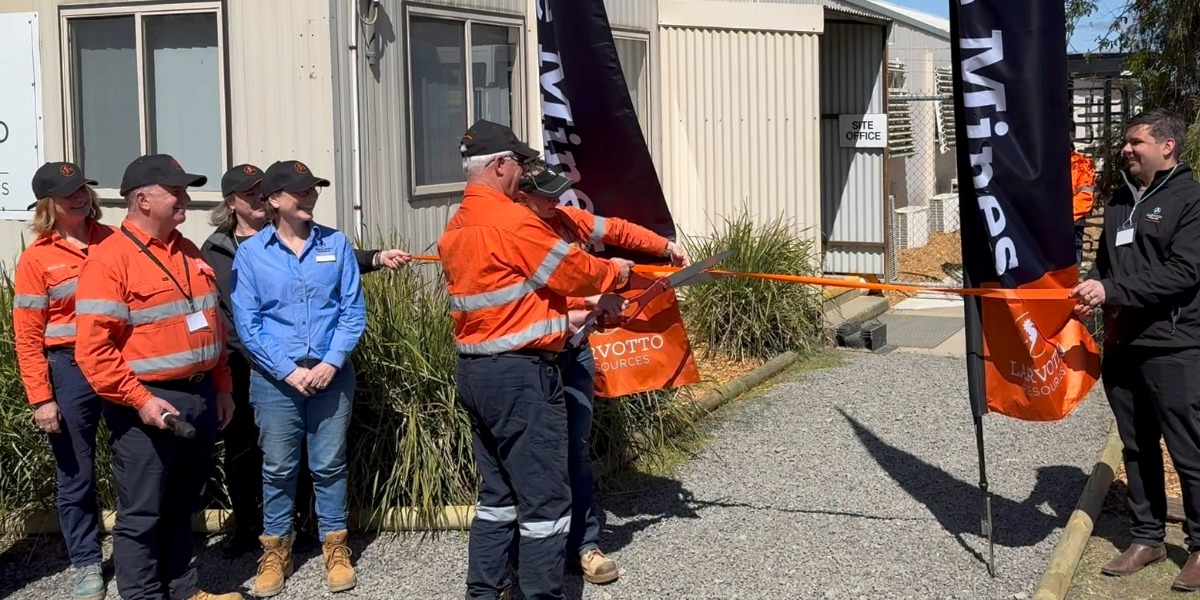
Larvotto Resources has officially reopened the Hillgrove Mine, with “the prettiest mine site in the country” about 25km from Armidale expected to generate hundreds of millions of dollars a year.
Gold and antimony has been mined in the Hillgrove area for some 140 years, predominantly from the stunning Hillgrove Gorge. The current Hillgrove Mine site produced from 1969 to 2002, with intermittent mining until 2015. Larvotto Resources bought the mine in December 2023 and brought it back into production on Monday, 31 August, after redeveloping the underground mine and upgrading the processing plant.
At full production, Hillgrove is forecast to produce 40,500 ounces of gold and 4,900 tonnes of antimony a year. It’s first delivery of antimony and gold concentrate will happen in the next week.
“It really is a landmark day for us,” said Ron Heeks, Managing Director of Larvotto Resources, at the official opening.
“It’s a reopening of the mine, but it’s a reopening of the mine at a considerably higher level. It will have a bigger throughput. It has a lot more technology.”
He said Hillgrove would produce about 7 per cent of the world’s antimony outside China.
“That’s about 50 per cent of world production, so globally significant on any scale,” Mr Heeks said. “Even the massive iron mines don’t come close to doing that sort of thing.”
Antimony is a critical mineral used in electronics and defence equipment, and has become highly sought after as China, the dominant global supplier, tightens export restrictions on the metal, with solar power being the biggest driver of demand.
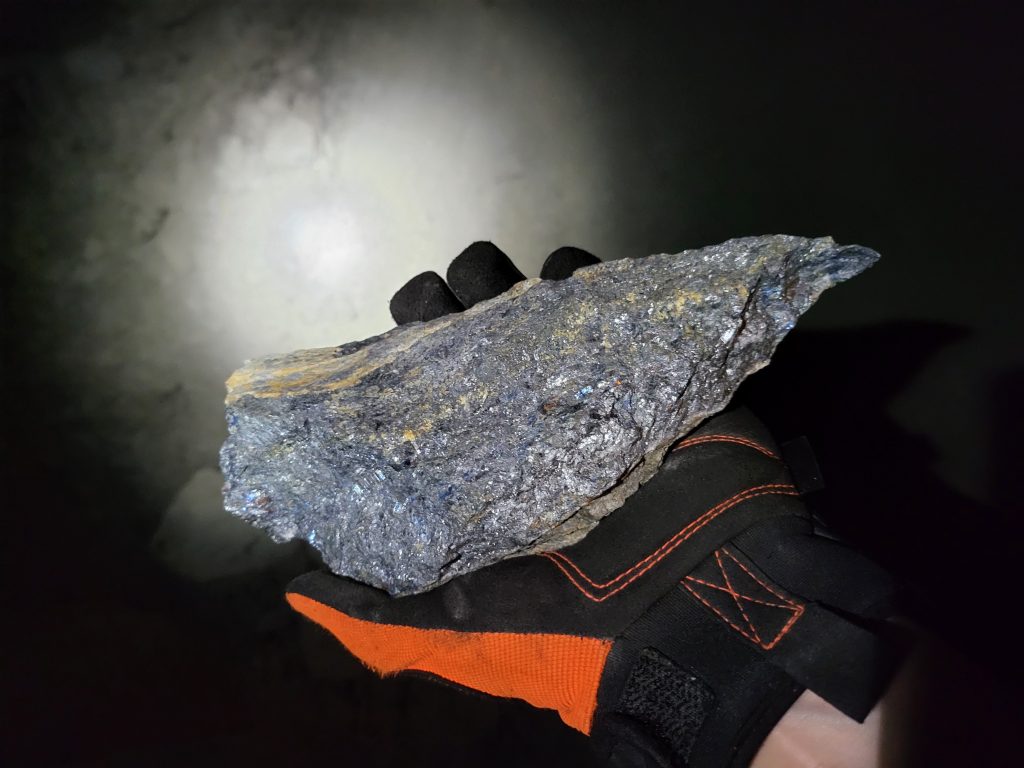
“What has driven the demand for antimony over the last ten years has really been solar panels. You just can’t make a world-class solar panel without antimony,” Mr Heeks said.
The eight year life of the mine has also been revealed as just the opening bid, with Mr Heeks saying Larvotto also planned to start processing tungsten, another mineral found at Hillgrove, alongside the gold and antimony once the processing method was finalised.
“We will end up being one of the largest tungsten mines in Australia as well, when we get the metallurgy sorted out there in the future,” Mr Heeks said.
The company says its Hillgrove workforce has grown to more than 180 people, most of them local, and it has opened a community hub and reference group in Armidale.
In the village of Hillgrove, right next to the mine, the reopening has been welcomed by Scott and Kaye Single, of the Hillgrove Progress Association.
“From a village perspective it’s awesome, the mine is helping us,” Kaye Single said.
“We’re now getting more families, it’s amazing, and it’s just because the mine is active again.”
“I really believe it’s going to be a positive thing for the village,” said Scott Single.
“The village has always had the mine here, and the majority of us are really supportive of it being here.”
The pair praised the company’s community consultation, pointing to the recent provision of a defibrillator for the village after a conversation about what residents needed.
“As we go along hopefully we can work together and get more things done,” Mrs Single said.
Ms Single said fixing the road which runs through the village to the mine site was high on the Association’s list. Stockton Road is visibly cracking and breaking apart near its junction with Waterfall Way, and very narrow for anyone trying to use it at the same time as fully laden B-Doubles of mineral three times a week.
“The mine has had a chequered past which Larvotto is cleaning up, and we feel that what they are doing is going to benefit the village and we won’t have all those legacy issues,” Mr Single said.
“They want to be part of the village and not just next door.”
Better environmental management is one of those past concerns identified by Mr Single. During a tour of the processing plant, Larvotto’s Deputy Operations Manager, Andy Harrington, explained some of the measures to reduce noise and pollution risks. This includes world’s best practice of dry tailings: squeezing the water out of the waste rock until it is a dry, stackable solid, then shaping it into a hill, covering it with topsoil and replanting it with native grasses.
“Dry stack tailings would be world leading technology.”
“This is the safest and the most environmentally friendly way of dealing with tailings,” he said, “It’s good to have it here.”
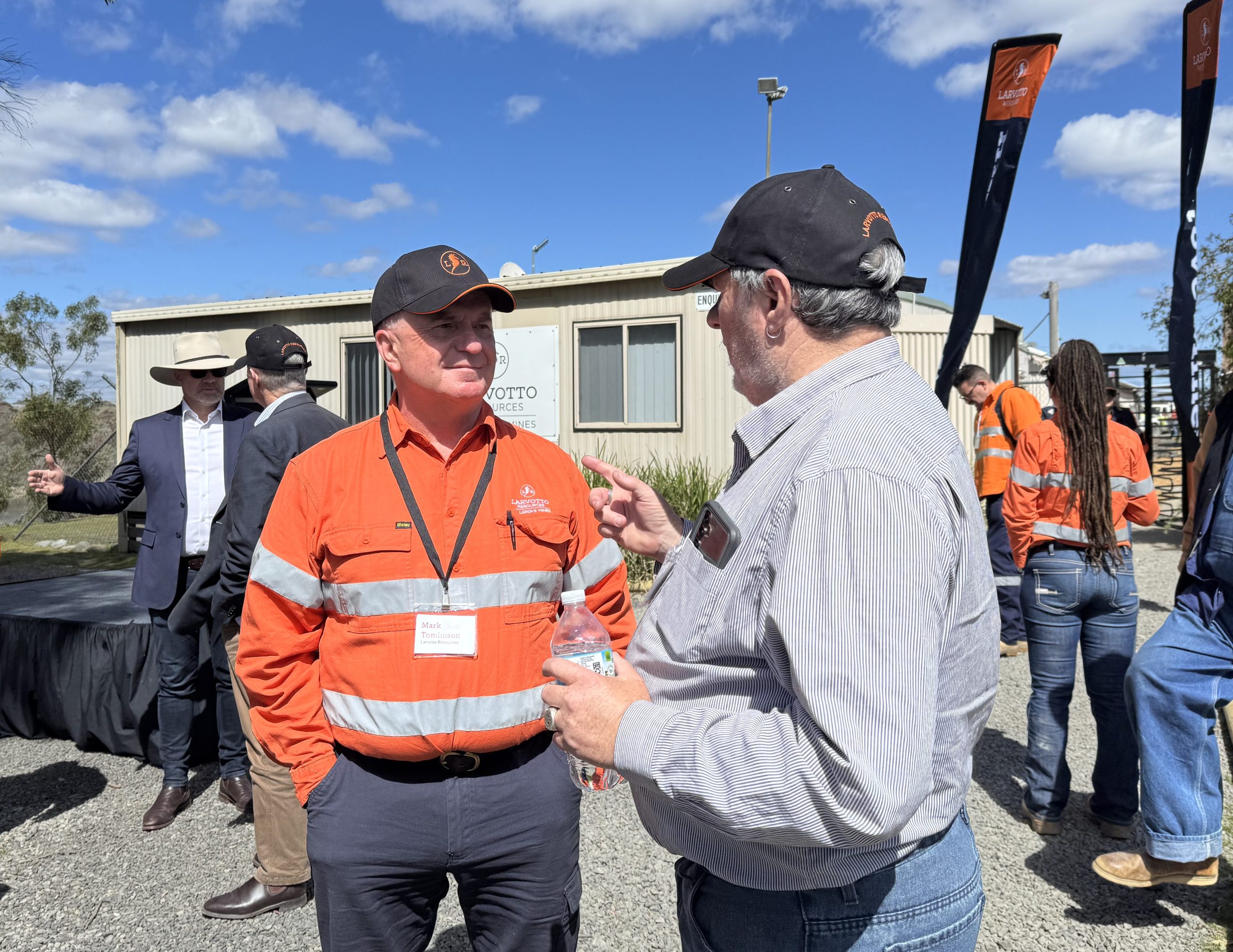
Larvotto Resources board Chair Mark Tomlinson said there is always issues with commissioning a mine, particularly on a historical site, but they want to take care of it and the communities that support them.
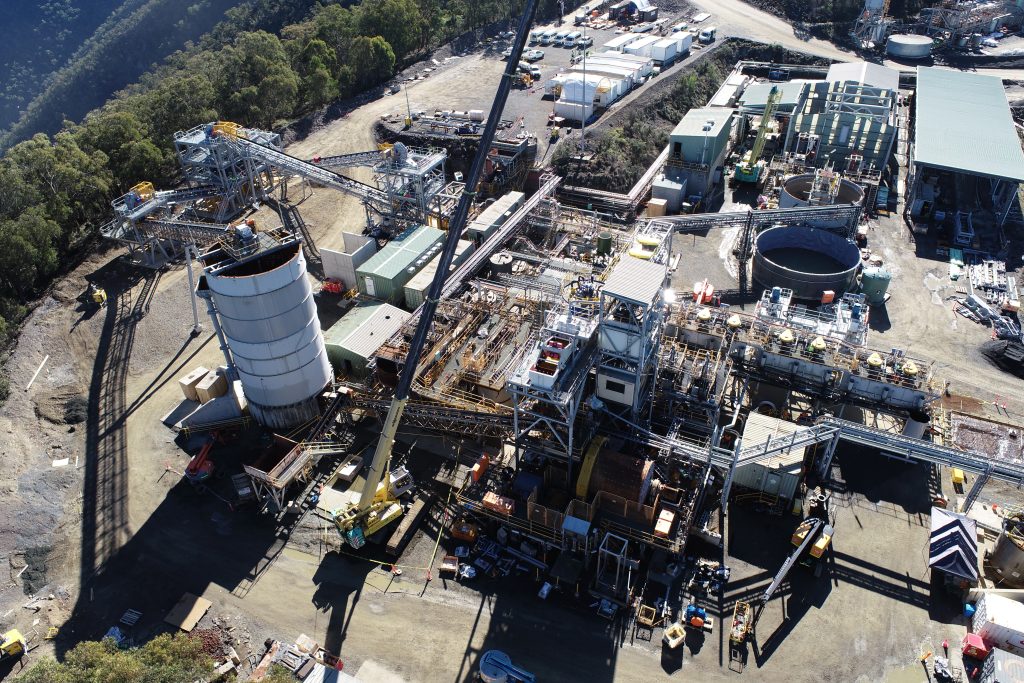
“This is such a beautiful spot, it’s absolutely gorgeous,” he said. “You want to look after it.”
“A development like this is really is almost entirely reliant on support from the surrounding community, and we’re incredibly thankful for the ongoing support that we have and what we have received from these local communities.”
This story had a minor revision to improve accuracy and improve readability.
Like what you’re reading? Support New England Times by making a small contribution today and help us keep delivering local news paywall-free. Donate now