

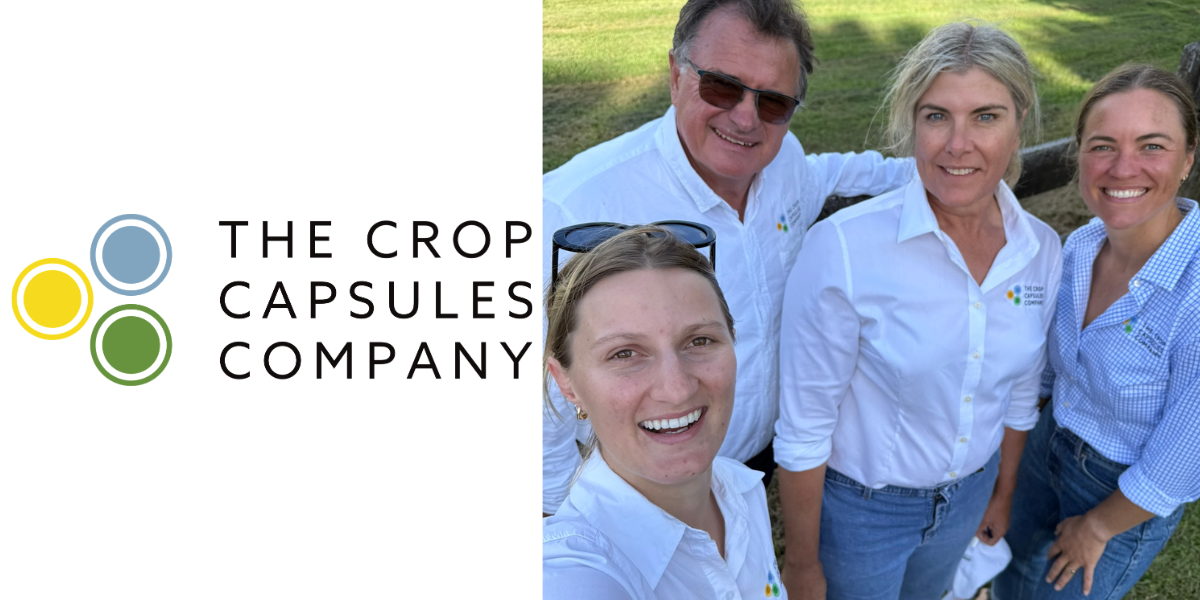
A Wee Waa agricultural business is preparing to pitch a new approach to controlling one of cotton’s most stubborn pests, using predatory mites instead of chemical sprays, at the Australian Cotton Conference on the Gold Coast this August.
Crop Capsules is one of 11 feasibility studies sharing almost $550,000 in funding from the Cotton Research and Development Corporation’s (CRDC) Innovation Call, a national search for bold ideas across three priority areas: preparing for a low pesticide future, optimising nitrogen use, and improving weed management. The projects were selected through a competitive national process, with cotton growers helping prioritise them through the CRDC and Cotton Australia research panels.
The Crop Capsules project is looking at whether predatory mites can be released at scale to suppress two spotted spider mites, a pest that is becoming harder to manage as resistance to chemical sprays increases.
“There’s increasing levels of insecticide resistance found in the two-spotted spider mite population in Australian cotton, which means that we’ve got less tools in the toolbox for control,” said Ms Anna Madden, who runs Crop Capsules with her husband.
Ms Madden said the idea was to apply and establish predatory mite populations that could reduce pest mite numbers through biological control, a method already proven on a smaller scale.
“We know that this works in greenhouse and enclosed and small scale agriculture, so we know it will work. It’s just seeing how we can get it to work on this big scale,” she said.
The study is set to evaluate three release methods: a dry granular system, a liquid phase spray delivery system, and Crop Capsules’ own biodegradable capsule technology, which packages live beneficial mites in protective, plant-based capsules designed to shield them during deployment. However, Ms Madden said the capsule option was now looking less likely to feature in this particular trial.
“It’s less likely the capsule. We just can’t get it. We’d have to be putting too many out, I think,” she said.
Ms Madden and her husband are both agronomists and started the Crop Capsules Company in 2020. The business focuses on applying biocontrol agents, most often parasitic wasps, to keep pest insects suppressed before they become a problem for growers.
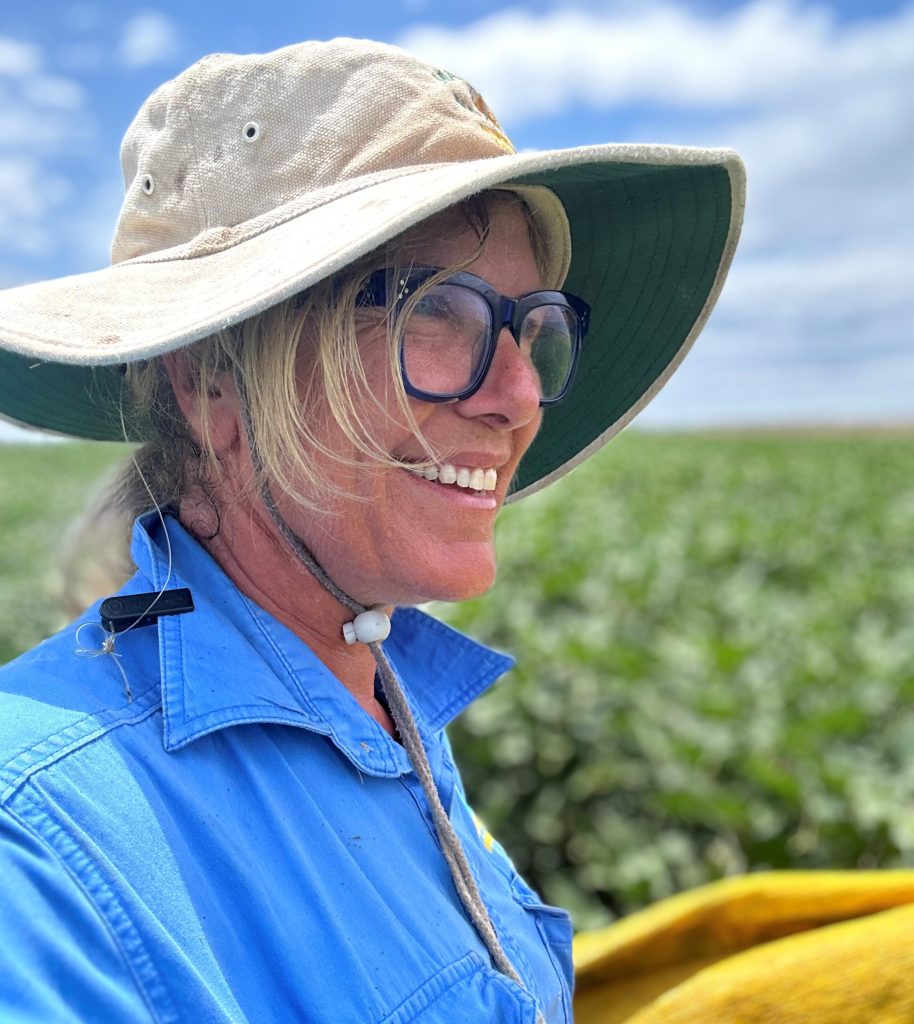
Its flagship product, Cotton Cap, uses a containment device to release parasitic wasps, often distributed by plane across large areas. Ms Madden said aerial application could cover about 500 hectares an hour when needed, and helped growers get beneficial insects into the field quickly despite wet weather or access issues.
Field trials for the mite project will assess predator survival and establishment, how effectively the mites suppress spider mites, and the resulting impact on crop damage. The feasibility study began in March, and organisers describe it as the first field-scale evaluation of biological mite management in broadacre cotton.
Ms Madden said the timing of last year’s project announcement meant field trials had not yet produced results, but the team was working hard to get as much done as possible before the conference.
“Unfortunately, the timing wasn’t right when the projects were announced last year for ideal application timing. So we don’t have any results at this point yet. But we’re trying really hard, we’re really working hard and getting what we can to see what we can actually make work right now,” she said.
CRDC’s Acting General Manager Innovation, Ms Susan Maas, said the calibre of applications reflected the ambition now driving the cotton industry.
“These ideas show just how bold and innovative the cotton industry has become,” Ms Maas said. “By investing early in feasibility studies like these, we’re giving innovators the runway they need to test big ideas with real impact.”
Ms Madden said reducing reliance on chemical sprays was not the only benefit of the project.
“It’s not only is it supporting a reduction in the use of insecticides, it’s actually supporting the use of insecticides and the longevity,” she said. “It’s about rotation.”
At the Australian Cotton Conference, Crop Capsules will pitch the mite project specifically at Innovation Alley, rather than the wider business, giving growers a chance to hear about the work directly. The feasibility study will also help inform a second funding round, where up to $500,000 will be available to advance the most promising projects to proof of concept.
Ms Madden said the business, though based in Wee Waa, worked across a wide area, including St George and Dirranbandi, reflecting her and her husband’s roots as farmers and agriculture consultants in the region.
“It’s a bit of local ingenuity,” she said.
The Crop Capsules team is largely female, something Ms Madden said felt timely given 2026 is the United Nations International Year of the Woman Farmer.
More information on the conference is available at australiancottonconference.com.au
Got something you want to say about this story? Have your say on our opinion and comment hub, New England Times Engage