

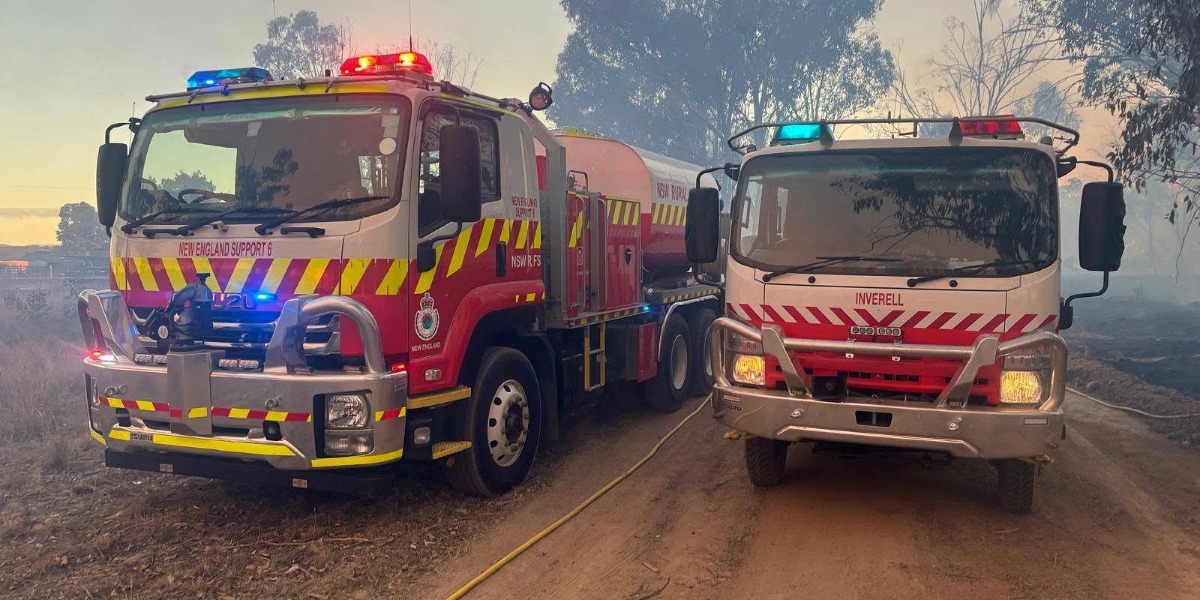
The NSW Government will invest $470 million over the next decade to modernise how the Rural Fire Service manages its truck fleet, in a move set to create jobs in regional communities and end a long-running dispute over who owns the state’s firefighting vehicles.
The investment, announced as part of the 2026-27 NSW Budget, will fund up to eight new RFS regional maintenance hubs and providers, backed by more than $29 million over two years. A further $106 million over four years will go towards critical maintenance and safety upgrades for the fleet.
Emergency Services Minister Jihad Dib said the reform was about making frontline services fit for the future. “This reform is the next step in making our frontline services fit for the future, giving local communities and our RFS volunteers the support they need to respond to bush fires and other emergencies,” Dib said.
Dib said the new maintenance hubs would also support local economies. “By working with local government to establish new fleet maintenance hubs and services we are also supporting local jobs and industry and ensuring communities benefit from this investment,” he said.
As part of the reform, the government will introduce legislation to transfer ownership of the state’s “red fleet”, more than 6,000 firefighting vehicles currently owned by councils, to the RFS. The change will take effect from 1 July 2027 and will consolidate operational responsibility for the fleet under the State Government for the first time since the RFS was established almost 30 years ago.
Local Government Minister Ron Hoenig said the move reflected how the fleet actually operates. “Local councils have made it clear that the existing arrangements no longer reflect the practical reality that the Rural Fire Service operates the fleet, while councils continue to carry ownership and accounting responsibilities,” Hoenig said.
“The Government has now accepted a pathway that aligns ownership with operational responsibility while recognising the continuing and important role councils play in bushfire prevention, hazard reduction and emergency management.”
RFS Commissioner Trent Curtin said the reform marked a major step for the service. “This is a landmark and momentous reform for the RFS and one of the most significant investments in our operational capability in recent years,” Curtin said.
“This reform establishes, for the first time, a consistent and modern approach to fleet management across NSW. It strengthens safety, improves reliability and ensures our members are always ready to respond when communities need them most.”
Councils will be engaged over the next twelve months to support the transition and identify opportunities to assist with future maintenance. The announcement follows more than $34.5 million already invested this financial year to upgrade 28 rural fire brigade stations and Fire Control Centres, part of a wider $716.4 million investment in the RFS.
Local Government NSW President Darcy Byrne said the move would come as a great relief to councils across the state. “For the last 30 years, legislation has said that these assets are owned by councils. Yet councils had no say in the acquisition, usage and disposal of these assets; these were all decisions of the Rural Fire Service,” Byrne said.
Despite this, councils have been required to record the assets in their financial statements and absorb the depreciation expense, as well as the costs of inspecting and recording them in their accounts. Byrne said the reform would be felt most in smaller rural and regional areas, where the Red Fleet had a proportionally larger impact on council books.
“This is a major win for local government and comes after years of persistent advocacy by LGNSW and from our individual councils,” he said.
Byrne said the announcement followed strong representations LGNSW made to a NSW Parliament Public Accounts Committee inquiry, whose final report recommended legal ownership of the fleet be transferred to the RFS as a state agency. “We thank the members of that Committee for recognising this urgent need and we are pleased that the State Government has acted so decisively on this key recommendation to transfer ownership,” he said.
The reform has also been welcomed by the Country Mayors Association of NSW, whose 89 rural, remote and regional council members had long pushed for the change. CMA Chairman Rick Firman said the decision finally brought ownership in line with reality.
“After years of advocacy and a Parliamentary inquiry, the right decision has finally been made: RFS assets should belong to the RFS, not local councils,” Firman said. “Councils across remote, rural and regional NSW strongly support the RFS, but that support should never have included carrying ownership of RFS firefighting equipment and vehicles.”
Firman thanked Minister Dib, Treasurer Daniel Mookhey and Minister Hoenig for working with the association on the issue, and said the CMA looked forward to working with the government on the transition.
“Our CMA Board, 89 rural, remote and regional council members are very happy with this news,” he said.
Got something you want to say about this story? Have your say on our opinion and comment hub, New England Times Engage