

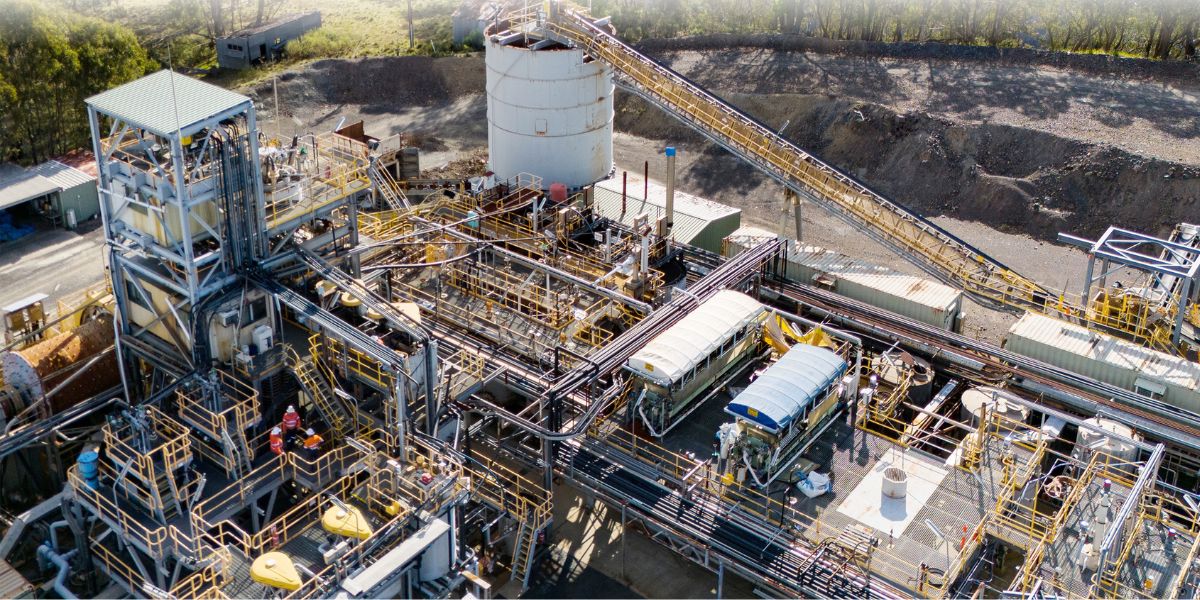
Larvotto Resources says development at the antimony-gold operation east of Armidale is advancing rapidly, with local jobs, regional spending, and long-term economic benefits already flowing.
The mine, located about 25 kilometres east of Armidale, is owned by Western Australia-based Larvotto Resources. The mine was first discovered in 1857 and had a continuous production history of 30 years until 2002. Larvotto acquired the Hillgrove project in December 2023 from Red River Resources.
Larvotto said the project is already supporting more than 150 jobs across the New England region, with most staff and contractors drawn from the local area.
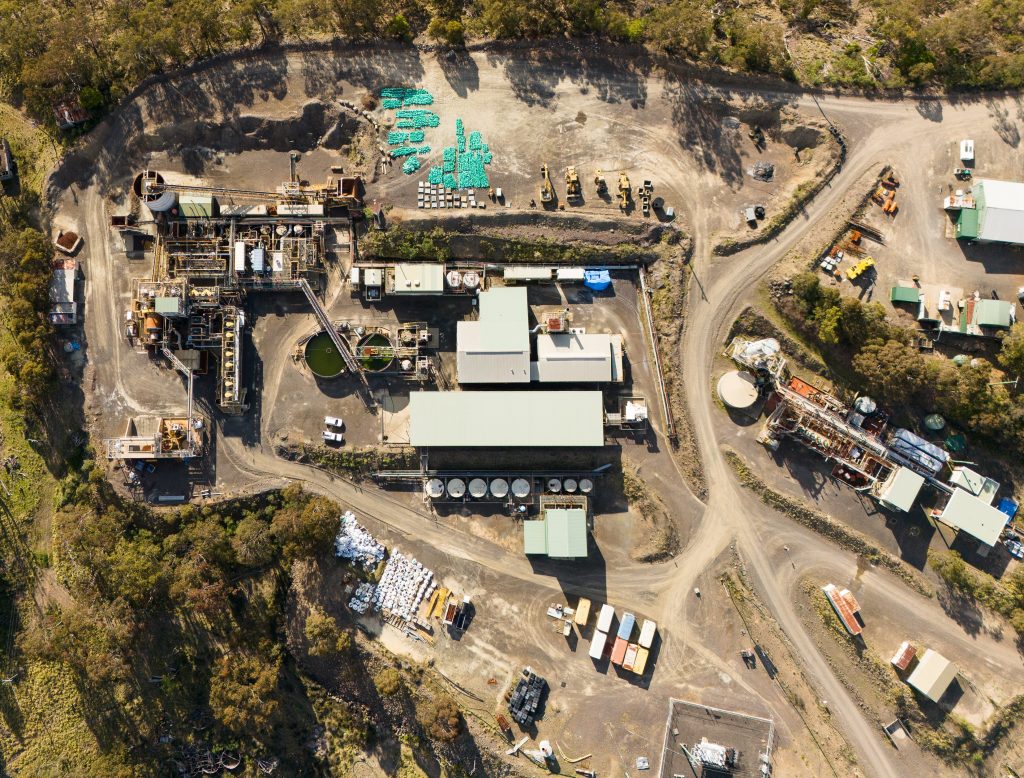
Spokesperson Sonja Neame said around 80 staff are currently working on site, and that the operation has capacity to support up to 250 personnel and contractors as activity ramps up.
“Underground development at the antimony-gold project is well underway and includes rehabilitation activities, ground support installation and haulage,” Ms Neame said.
“There will be major benefits for the New England region, with Larvotto prioritising local recruitment where possible, closely working with regional contractors and suppliers, and helping to maximise employment and training opportunities for people from Armidale, Hillgrove and surrounding communities.”
Ms Neame said roles available at the site span underground and open‑pit mining, processing plant operations, metallurgy, mechanical, electrical and maintenance trades, environmental and safety work, site administration, logistics, engineering, geology, and a range of technical services.
Larvotto said the Hillgrove mine represents a major long‑term investment in the region, with benefits expected to extend across employment, local procurement, and broader economic activity.
“Whilst we currently have an eight-year mine life, our expectation is that resource growth and exploration success has the potential for the mine to be in production for much longer,” Ms Neame said.
“Benefits to the region include long-term skilled employment, strong local spending with contractors, suppliers and service providers, increased economic activity in Armidale and surrounding regions, training and career pathways for young people and trades, and support for regional infrastructure and services.”
“Over the life of the mine, the project is forecast to generate more than $1.2 billion in site expenditure and over $200 million in wages and salaries, making it one of the most significant employers in the region.”
Hillgrove, like the Emmaville Tin Mine, is making a comeback largely due to increased prices for resources and demand for rarer resources. While Hillgrove’s gold is innately valuable, it is the antimony – a mineral used in fire retardants, batteries, and in military applications – that is in greater demand. Antimony has been declared a critical mineral by the US defence force, along with rare earth elements, cobalt, and uranium.
“Hillgrove is expected to become Australia’s largest antimony producer, supporting national supply-chain security for critical minerals used in defence, renewable energy and advanced manufacturing,” Ms Neame said.
So valuable is Hillgrove as a strategic non-Chinese source of antimony that the US Antimony Corporation made a takeover bid of $723m for Larvotto late last year, which the company swiftly rejected. The Australian Government’s $1.2 billion Critical Minerals Strategic Reserve announced earlier this has also targeted antimony as one of three initial prioritised commodities along with gallium and rare earths, underscoring the value of the Hillgrove project to national security as well as to the region.
The company said it is committed to developing Hillgrove as a modern, responsible mining operation that delivers lasting economic benefits while meeting high environmental and safety standards.
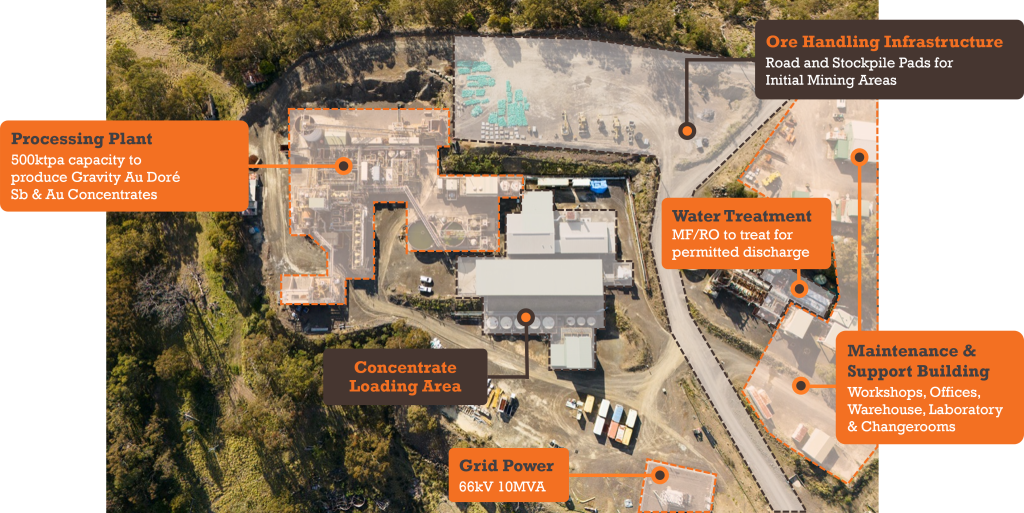
“We utilise a dry-stack tailings system, recognised as one of the safest and most environmentally responsible tailings management methods,” Ms Neame said.
“By utilising the dry-stack tailing system, it removes the need for larger tailings dams, minimises water consumption, and improves long-term rehabilitation outcomes.”
“The company has robust environmental procedures, and we are very conscious of the area we are working in and engage with specialist environmental consultants to manage biodiversity, water quality, and rehabilitation as part of our permitting and approvals framework.”
Larvotto secured formal State Government approval for the project last year, clearing the path for mining and processing to commence.
With development progressing, the Hillgrove project is now positioned to become a globally significant source of antimony – a critical mineral used in flame retardants, batteries, and defence applications – alongside a substantial gold by-product.
Don’t miss any of the important stories from around the region. Subscribe to our email list.