

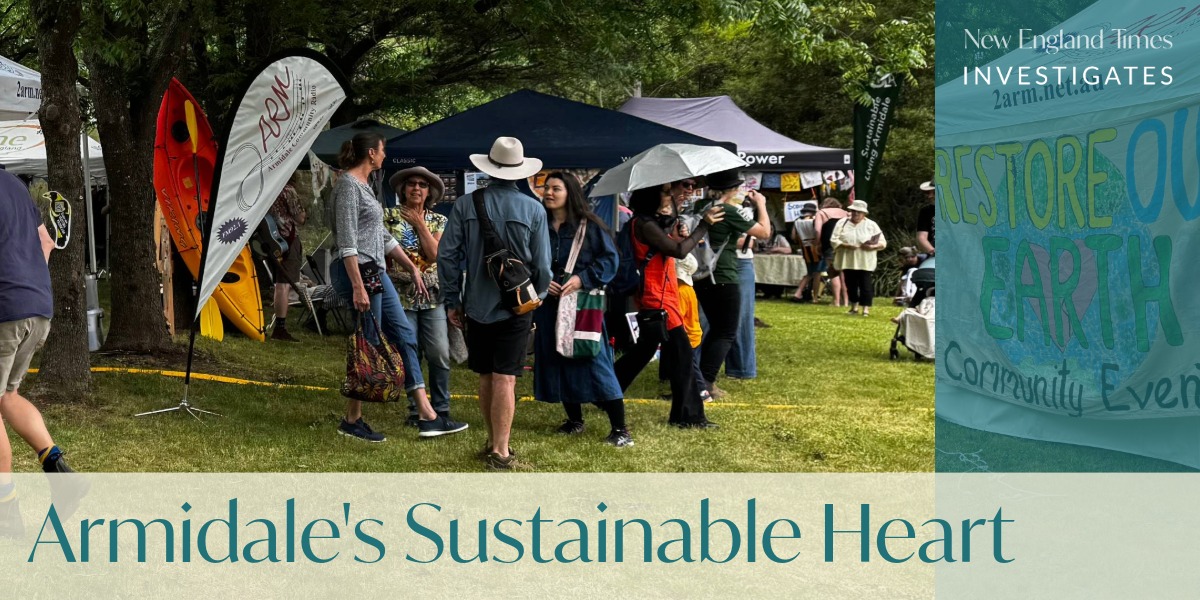
New England is often portrayed as an “anti-net zero” heartland – derided for being sceptical of climate action and resistant to change.
While the electorate has historically leaned conservative, the extreme “anti-net zero” framing is recent and driven by national media. The reality is far more complex and a much longer story.
In part three of our New England Times investigation by Emily Longhurst, we look at how the Sustainable Living Armidale network of action groups is delivering real change.

At the core of Armidale’s sustainable heart is the collaborative community around the Sustainable Living Armidale organisation.
Beyond festivals and tours, Sustainable Living Armidale (SLA) helps residents translate concern about climate change, rising energy costs, and resource pressures into practical action that strengthens resilience and self-reliance. Through a network of action groups, the flat structure of the thriving grassroots organisation empowers locals to drive the initiatives they care about, making real and tangible differences in their own way.
One of the organisation’s flagship action groups is Electrify Armidale, a program supporting households and businesses to transition from fossil fuels to renewable, all-electric living. The focus is tangible: lower energy bills, healthier homes, and more money staying in the local economy.
“Energy in a regional city isn’t just a household issue,” Trevor Brown from Electrify Armidale said. “It’s local economic development, health, and resilience rolled into one.”
“Every efficient electric upgrade keeps money in Armidale, reduces emissions, improves home comfort, and helps tackle issues like winter wood smoke, which is a serious health concern here.”
The program is staged to help participants prioritise high-impact upgrades, including efficient heating and cooling, heat-pump hot water systems, induction cooking, and electric vehicle readiness. Rooftop solar, battery storage, and digital tools make the transition practical, particularly for older residents or those in vulnerable households.
“Socially, the benefits are very tangible,” said Brown.
“Armidale has a real mix of housing quality and incomes. Electrification, done well, reduces energy hardship by lowering bills and improving comfort.”
“For many households, that means being able to keep the home warm in winter and cool in summer without fear of the next power bill. That matters for health, school, and work participation, and the dignity of living in a safe, comfortable home.”
Professor Brown also said that Armidale Council is supporting the change by introducing a local ZapCat pilot program to provide digital support and virtual consultations to help households fully understand their options and connect with installers.
“Interest is strong, especially as bills rise and people look for reliable ways to improve comfort in winter,” he said.
“What stands out is that engagement is not just about technology. It is about trust and practical help. People want to know: What will this cost? Who can I trust? What is the best next step for my house?
“That is why local support, such as the ZapCat pilot and community-facing education, is so important.”
For residents, practical, inclusive action is the key to long-term change.
“Most households won’t do everything at once,” Brown said.
“We start with the upgrades that make the biggest difference: efficient heating and cooling, heat-pump hot water, induction cooking. Add solar and batteries where suitable, and costs drop while emissions fall.”
“Over time, these staged actions make the town healthier, cleaner, and more resilient.”
SLA’s work also extends into quieter, yet significant, community spaces. Through Death Café Armidale and The Natural Burial Group, residents are encouraged to talk openly about death, loss, and environmentally conscious end-of-life choices, including natural burial.
“Death Café is a group-led informal gathering of people wishing to talk about death and dying,” said facilitator Maxine Ross.
“Death Café is not a grief group, but it is common for participants to talk about experiences around loved ones dying to make sense of the process of loss.”
“In Death Café, it is common for people to think about the sort of death they would like, and there are many instances of people talking to friends and family members about this.”
A local group is now exploring the establishment of a natural burial ground in the New England region, an option that supports ecological restoration, promotes biodiversity, and offers a non-consumerist final legacy. Graves are designed to blend with the natural landscape, using biodegradable materials and minimal markers to reduce environmental impact.
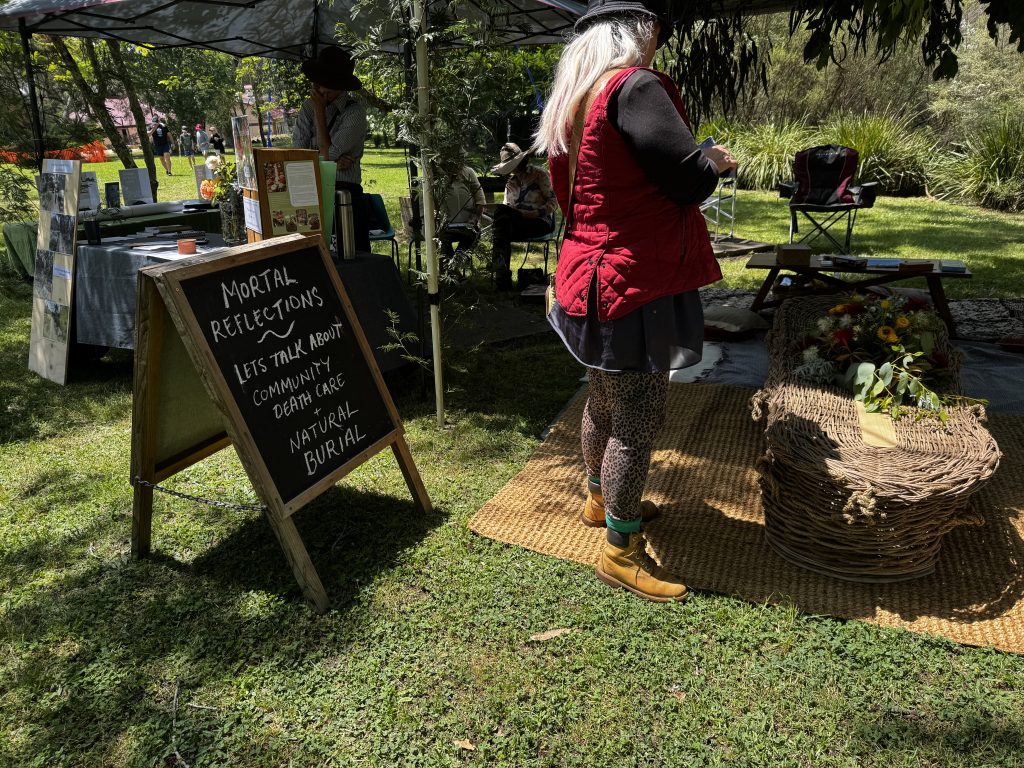
“Natural Burial Ground is often a topic raised in the Death Café,” said Ms Ross.
“They appeal to people of all ages who are concerned about the global climate crisis and are considering a non-consumerist approach to body disposal as their last mortal legacy on this planet.”
This is just one example of how sustainability can take many different forms, and that they’re not always the most obvious ones.
Collaboration and connection also underpin much of SLA’s work. In December 2025, the Armidale branch of the National Parks Association hosted a forum bringing together representatives from 22 local environmental groups.
“We asked groups to give a 5-minute talk on the goals and activities of their group and the possibility of forming a network of local environmental groups,” said Pat Shultz from NPA Armidale.
All 22 groups in attendance responded enthusiastically.
“We discussed the benefits of networking to strengthen our voices and many participants indicated that they would like to continue to meet in order to work together on projects of common concern.”
With the next meeting scheduled for early March, it’s clear that this is another example of successful collaboration between community and environmental groups.
From the vibrant hands-on experiences of the Black Gully Festival to the everyday choices supported by Electrify Armidale and Death Café, the message is clear: sustainability in Armidale isn’t a distant goal, it’s something residents live, share, and shape together.
This is part of an investigative series about the sustainable living movement in Armidale. Read the series.
Like what you’re reading? Support New England Times by making a small contribution today and help us keep delivering local news paywall-free. Donate now